How Aaron Rodgers Turned Draft Day Humiliation Into Greatness
Published on October 26th, 2025 9:12 pm ESTWritten By: Dave Manuel
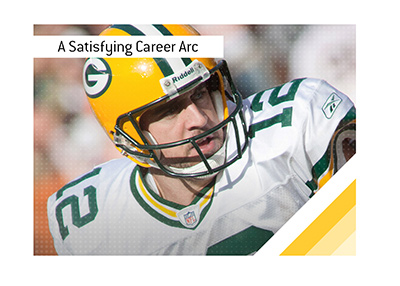 Every NFL fan remembers the image: Aaron Rodgers sitting in the green room, trying to stay composed as pick after pick came and went. That night in April 2005 became one of the defining moments in modern draft history - not for who went first, but for who didn't.
Rodgers entered the 2005 NFL Draft as a Heisman-caliber quarterback out of California. He had lit up the Pac-10 with precision passing, poise, and near-flawless mechanics in Jeff Tedford's system. Many analysts had him pegged as the likely No. 1 overall pick to the San Francisco 49ers, a perfect story for the Chico, California native. But the 49ers went another way, choosing Alex Smith out of Utah. What followed was one of the most uncomfortable freefalls the draft has ever seen.
So what caused the slide? A mix of perception, scheme fit, and timing. Rodgers was considered polished but "system-reliant" - a product of Tedford's quarterback mold, the same school of thought that produced Joey Harrington, Akili Smith, and others who hadn't panned out in the NFL. Scouts questioned his release point, his arm angle, even his personality. He wasn't viewed as the kind of improviser or leader who could immediately elevate a struggling team. Once San Francisco passed, teams picking in the top half of the first round either had a quarterback or weren't willing to use such a high pick on one. The dominoes fell quickly.
By the time the Green Bay Packers selected Rodgers at No. 24 overall, the draft room looked like a rescue mission. The Packers already had Brett Favre, an ironman and future Hall of Famer who hadn't missed a start in over a decade. For Rodgers, that meant waiting, learning, and dealing with three years of public doubt about whether he'd ever start at all.
That wait turned into fuel. Rodgers transformed the frustration of draft night into motivation. He absorbed Mike McCarthy's offense, refined his mechanics, and developed a reputation for surgical accuracy and football IQ. When he finally took over in 2008, he was ready. Within three seasons, he delivered Green Bay its fourth Super Bowl title, earning Super Bowl XLV MVP honors in the process. Over the next decade, he piled up multiple MVP awards, elite passing numbers, and one of the most efficient careers in NFL history.
Rodgers' revenge wasn't loud - it was methodical. He didn't call out teams that passed on him. He didn't need to. His play did it for him. Every precision throw, every back-shoulder laser, every comeback win over franchises that once said "no thanks" turned the slide into a statement. He became the ultimate example of how a fall can turn into a foundation.
In the years since, his 2005 draft story has become a reference point for every quarterback who slips beyond expectations. A reminder that perception doesn't define greatness - production does. What started as embarrassment became one of the most satisfying career arcs in league history.