Who Had The Greatest World Cup Tournament Ever?
Published on June 10th, 2026 9:48 pm ESTWritten By: Dave Manuel
 Some World Cups are won by teams, and some are simply taken by one player while everyone else watches. We built a 100-point index to rank the ten greatest individual tournaments in World Cup history, from Maradona dragging Argentina through Mexico in 1986 to Just Fontaine scoring 13 goals in borrowed boots and still going home with a bronze medal. Seven of the ten lifted the trophy. The three who did not include the record scorer in tournament history and the man who scored a hat trick in the final itself, which tells you everything about how cruel this tournament can be.
Sports-King Feature
The 10 Greatest Individual World Cup Tournaments of All Time
One man, one month, one tournament bent entirely around him. We scored every great one-man World Cup on a 100-point index, and the man who scored the most goals in history finished tenth.
Teams win World Cups. That is the official version, anyway. But every so often the tournament stops being a team event and becomes one player's personal documentary, with 21 other guys appearing as supporting cast. Those are the World Cups people actually remember. So we built a scoring system, argued about it for longer than we will admit, and ranked the ten greatest individual tournaments ever played. Fair warning: the No.1 is not a debate. Everything below it is.
How We Ranked Them
The spine of this list is the Sports-King Player Tournament Index (SKPTI), a 100-point composite built to settle bar arguments. Goals matter most, but goals alone produce a ranking nobody believes, because a man can score 13 of them and still watch someone else lift the trophy. So the index also measures how much of the run happened in the knockout rounds, how badly the team needed him, what he won, and what the month did to the sport's memory. Here is the weighting:The SKPTI weighting (100 points total)
Goal contributions lead at 30 points, covering goals plus recorded assists. Knockout-stage impact rewards damage done when elimination was on the line. Carry factor measures how much of the team's output ran through one man. Silverware covers the trophy and the individual awards, and legacy is what the month still means decades later.
The Verdict
The full board, ranked by SKPTI. The red bars are the heartbreak division: three of the ten greatest individual tournaments ever played ended without the man in question lifting the World Cup, including the most prolific scoring month the tournament has ever seen.Sports-King Player Tournament Index - the full top 10
Gold is the No.1. Red bars mark the three tournaments that ended in something other than a title: two lost finals and one third-place finish.
| Rank | Player & Country | Year | Goals | Result | Honours | SKPTI |
|---|---|---|---|---|---|---|
| 1 | Diego Maradona, Argentina | 1986 | 5 | Champion | Golden Ball | 97.3 |
| 2 | Pele, Brazil | 1970 | 4 | Champion | Best Player | 94.6 |
| 3 | Lionel Messi, Argentina | 2022 | 7 | Champion | Golden Ball | 92.8 |
| 4 | Garrincha, Brazil | 1962 | 4 | Champion | Best Player | 90.7 |
| 5 | Ronaldo, Brazil | 2002 | 8 | Champion | Golden Boot | 89.4 |
| 6 | Paolo Rossi, Italy | 1982 | 6 | Champion | Ball + Boot | 87.6 |
| 7 | Mario Kempes, Argentina | 1978 | 6 | Champion | Golden Boot | 85.9 |
| 8 | Kylian Mbappe, France | 2022 | 8 | Runner-up | Golden Boot | 84.8 |
| 9 | Johan Cruyff, Netherlands | 1974 | 3 | Runner-up | Best Player | 83.2 |
| 10 | Just Fontaine, France | 1958 | 13 | Third place | Top Scorer | 81.5 |
The Countdown
1
Won the World Cup
Goals5
Assists5
Year1986
ResultChampion
HonoursGolden Ball
SKPTI97.3
The moment: the 60-yard slalom past half of England, four minutes after the Hand of God
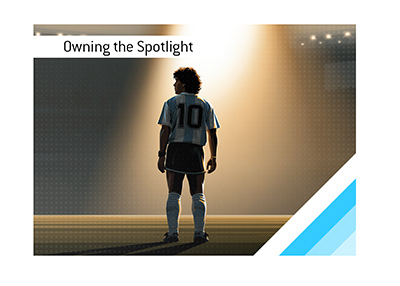
The ceiling. The tournament every other one-man show gets measured against, and the reason the carry factor is worth 20 points. Maradona scored five goals and set up five more in Mexico, a direct hand in 10 of the 14 goals Argentina scored on their way to the title, and he did it as captain of a side nobody had pencilled in as favourites.
The quarter-final against England compressed his entire existence into four minutes: the Hand of God, the most infamous goal ever scored, followed by a run from his own half through the entire England defence and past Peter Shilton that FIFA's own poll later crowned the Goal of the Century. He then scored both goals against Belgium in the semi-final, and when West Germany clawed the final back to 2-2 and the whole planet knew exactly who the ball was going to, he threaded the pass that sent Jorge Burruchaga through for the winner. The Golden Ball was a formality. No player before or since has owned a World Cup so completely, and the SKPTI is not close: the 2.7-point gap to second is the largest between any two neighbours on this board.
The quarter-final against England compressed his entire existence into four minutes: the Hand of God, the most infamous goal ever scored, followed by a run from his own half through the entire England defence and past Peter Shilton that FIFA's own poll later crowned the Goal of the Century. He then scored both goals against Belgium in the semi-final, and when West Germany clawed the final back to 2-2 and the whole planet knew exactly who the ball was going to, he threaded the pass that sent Jorge Burruchaga through for the winner. The Golden Ball was a formality. No player before or since has owned a World Cup so completely, and the SKPTI is not close: the 2.7-point gap to second is the largest between any two neighbours on this board.
Profile of greatness: the top three compared across the SKPTI measures
Maradona maxes four of the five axes, including a perfect carry factor: strip him out of the 1986 squad and Argentina are nobody's favourites. Pele's 1970 leads goal output through sheer involvement, ten of Brazil's 19 goals, but he did it inside the most loaded squad ever assembled, which costs him carry points. Messi's 2022 is the modern bridge between the two.
2
Won the World Cup
Goals4
Assists6
Year1970
ResultChampion
HonoursBest Player
SKPTI94.6
The moment: the no-look lay-off for Carlos Alberto's fourth goal in the final
The most beautiful tournament anyone has ever played. Pelé arrived in Mexico having sworn off World Cups after being kicked out of 1966, and produced a month so complete that even his misses became monuments: the shot from his own half against Czechoslovakia, the dummy on Mazurkiewicz against Uruguay that sent the goalkeeper one way while Pelé ran the other, and the header against England that produced the Gordon Banks save people still argue is the greatest ever made.
The countable stuff was just as absurd. Four goals, six assists, involvement in ten of the 19 goals Brazil scored while winning all six matches, and the opening goal of the final, a header over Italy's Tarcisio Burgnich, who said afterwards that he had told himself Pelé was made of skin and bones like everyone else, and that he had been wrong. The capstone was the pass before Carlos Alberto's thunderbolt, laid into space without looking, weighted to the centimetre. Why second and not first? Because that Brazil side had Jairzinho, Tostao, Rivellino and Gerson, four other forwards good enough to start any team on earth. Pelé conducted the greatest orchestra ever assembled. Maradona was a one-man band.
The countable stuff was just as absurd. Four goals, six assists, involvement in ten of the 19 goals Brazil scored while winning all six matches, and the opening goal of the final, a header over Italy's Tarcisio Burgnich, who said afterwards that he had told himself Pelé was made of skin and bones like everyone else, and that he had been wrong. The capstone was the pass before Carlos Alberto's thunderbolt, laid into space without looking, weighted to the centimetre. Why second and not first? Because that Brazil side had Jairzinho, Tostao, Rivellino and Gerson, four other forwards good enough to start any team on earth. Pelé conducted the greatest orchestra ever assembled. Maradona was a one-man band.
3
Won the World Cup
Goals7
Assists3
Year2022
ResultChampion
HonoursGolden Ball
SKPTI92.8
The moment: scoring in every single knockout round, then twice more in the greatest final ever played
Thirty-five years old, fifth attempt, entire legacy on the line, and the tournament opened with the biggest upset in World Cup history, Saudi Arabia winning a match the books priced at +2249. What followed was the longest sustained high-wire act the event has seen: seven goals, three assists, and a record that had never been touched in the tournament's history, scoring in the group stage and then in every knockout round, last 16, quarter-final, semi-final and final, of the same World Cup.
The final against France was the best match the competition has ever staged, and Messi scored twice in it, the second in extra time of a 3-3 epic that Argentina survived on penalties. He became the first man ever to win the Golden Ball twice, having also taken it in a losing cause in 2014. The SKPTI loves this one for the knockout weighting: the harder the stage, the better he got, which is the exact opposite of how 35-year-old legs are supposed to work. The only quibble keeping it below the top two is the supporting cast, because Emiliano Martinez's glove and Julian Alvarez's legs carried real weight in the rounds where Messi breathed.
The final against France was the best match the competition has ever staged, and Messi scored twice in it, the second in extra time of a 3-3 epic that Argentina survived on penalties. He became the first man ever to win the Golden Ball twice, having also taken it in a losing cause in 2014. The SKPTI loves this one for the knockout weighting: the harder the stage, the better he got, which is the exact opposite of how 35-year-old legs are supposed to work. The only quibble keeping it below the top two is the supporting cast, because Emiliano Martinez's glove and Julian Alvarez's legs carried real weight in the rounds where Messi breathed.
4
Won the World Cup
Goals4
Assists-
Year1962
ResultChampion
HonoursBest Player
SKPTI90.7
The moment: two goals against England and two against Chile with Pelé in street clothes
The forgotten entry, and the purest carry job on the list. Brazil arrived in Chile as champions built around Pelé, and Pelé tore a muscle in the second group game and never played again in the tournament. The title defence now belonged to a winger with a bent right leg, a left leg curved the other way, and no interest whatsoever in tactics. Garrincha responded with the best month of anyone's life.
Two goals against England in the quarter-final, including a thumping header from a corner, a rarity for a man his size. Two more against the host nation in the semi-final, a match so hostile that he was sent off late for retaliating after an evening of being kicked, and a missile thrown from the crowd cut his head open as he walked off. He was permitted to play the final anyway, where Brazil beat Czechoslovakia 3-1, and he finished as the tournament's best player and one of six men tied as top scorer on four goals. The angle that ages best: it is the only time the World Cup's best player award and its defending champion's entire burden landed on a replacement star, and he was better than the man he replaced.
Two goals against England in the quarter-final, including a thumping header from a corner, a rarity for a man his size. Two more against the host nation in the semi-final, a match so hostile that he was sent off late for retaliating after an evening of being kicked, and a missile thrown from the crowd cut his head open as he walked off. He was permitted to play the final anyway, where Brazil beat Czechoslovakia 3-1, and he finished as the tournament's best player and one of six men tied as top scorer on four goals. The angle that ages best: it is the only time the World Cup's best player award and its defending champion's entire burden landed on a replacement star, and he was better than the man he replaced.
The Fontaine paradox: goals scored in the tournament
If goals decided this list, it would be upside down. Just Fontaine's 13 in 1958 remains the single-tournament record and nearly doubles anyone else here, yet he sits tenth, because France finished third and the SKPTI pays for knockout damage, carrying, and silverware, not volume alone. Cruyff ranks ninth with three goals. Greatness and goalscoring are cousins, not twins.
5
Won the World Cup
Goals8
Assists-
Year2002
ResultChampion
HonoursGolden Boot
SKPTI89.4
The moment: both goals past Oliver Kahn in the Yokohama final
The greatest redemption arc in the history of the sport, full stop. Four years earlier, Ronaldo suffered a convulsive fit hours before the 1998 final, played anyway as a ghost, and watched France win 3-0. Then his knees gave out, twice, ruptures so severe that he spent the better part of two years not playing football at all. He arrived in Japan and South Korea in 2002 as a 25-year-old question mark with the haircut of a madman.
He left with eight goals, the most at a World Cup since Gerd Müller's ten in 1970, scoring in every match except the quarter-final against England. The last two were the heaviest: both goals in the final against a Germany side that had conceded once all tournament. The first pounced on a Rivaldo shot that Oliver Kahn, the tournament's Golden Ball winner, could not hold; the second, twelve minutes later, was a low first-time finish into the corner after Rivaldo let Kleberson's pass run through his legs. Brazil took a record fifth title, Ronaldo took the Golden Boot, and the 1998 final stopped being the last word on the most talented striker who ever lived.
He left with eight goals, the most at a World Cup since Gerd Müller's ten in 1970, scoring in every match except the quarter-final against England. The last two were the heaviest: both goals in the final against a Germany side that had conceded once all tournament. The first pounced on a Rivaldo shot that Oliver Kahn, the tournament's Golden Ball winner, could not hold; the second, twelve minutes later, was a low first-time finish into the corner after Rivaldo let Kleberson's pass run through his legs. Brazil took a record fifth title, Ronaldo took the Golden Boot, and the 1998 final stopped being the last word on the most talented striker who ever lived.
6
Won the World Cup
Goals6
Assists-
Year1982
ResultChampion
HonoursBall + Boot
SKPTI87.6
The moment: the hat trick that killed the greatest team never to win it, Brazil at Sarria
Six goals, all of them in the last three matches, after the most scrutinised cold streak a striker has ever survived. Rossi came to Spain weeks removed from a two-year ban in the Totonero match-fixing scandal, a ban he always disputed, and for four games he looked exactly like a man who had not played competitive football in two years. The Italian press demanded he be dropped. Enzo Bearzot kept picking him.
Then came Sarria, and the second-round group decider against the 1982 Brazil of Zico, Socrates and Falcao, a side many still call the best team never to win the World Cup. Rossi scored a hat trick, Italy won 3-2 in the tournament's most replayed match, and the sport changed shape: romance lost, and Rossi just kept scoring. Both goals against Poland in the semi-final. The opener in the final against West Germany. He finished with the Golden Boot, the Golden Ball, a World Cup medal, and the strangest stat line on this board: a tournament-defining month that was scoreless for more than half its length.
Then came Sarria, and the second-round group decider against the 1982 Brazil of Zico, Socrates and Falcao, a side many still call the best team never to win the World Cup. Rossi scored a hat trick, Italy won 3-2 in the tournament's most replayed match, and the sport changed shape: romance lost, and Rossi just kept scoring. Both goals against Poland in the semi-final. The opener in the final against West Germany. He finished with the Golden Boot, the Golden Ball, a World Cup medal, and the strangest stat line on this board: a tournament-defining month that was scoreless for more than half its length.
7
Won the World Cup
Goals6
Assists-
Year1978
ResultChampion
HonoursGolden Boot
SKPTI85.9
The moment: the extra-time surge through the Dutch defence in a final drowning in ticker tape
Cesar Luis Menotti's squad rule was domestic players only, and he broke it exactly once, for the long-haired striker banging in goals for Valencia. Kempes repaid the exemption with the entire tournament. Like Rossi, he started cold, scoreless through the whole first group phase, and like Rossi the dam break was biblical: two against Poland, two against Peru in the 6-0 that sent Argentina to the final, and then the final itself.
Against the Netherlands, in a Monumental buried in ticker tape, Kempes scored the opener, watched the Dutch equalise late and hit the post at the death, and then settled it in extra time, surging onto the ball and forcing it through a thicket of orange shirts for 2-1 before helping create the third. Six goals, the Golden Boot, the host nation's first title, and the tournament's defining image, socks down, hair flying, arms out. Widely regarded as the best player of that World Cup on top of the Boot, he is the reason every striker who disappears for a group stage gets told the same thing: it is not where you start the month.
Against the Netherlands, in a Monumental buried in ticker tape, Kempes scored the opener, watched the Dutch equalise late and hit the post at the death, and then settled it in extra time, surging onto the ball and forcing it through a thicket of orange shirts for 2-1 before helping create the third. Six goals, the Golden Boot, the host nation's first title, and the tournament's defining image, socks down, hair flying, arms out. Widely regarded as the best player of that World Cup on top of the Boot, he is the reason every striker who disappears for a group stage gets told the same thing: it is not where you start the month.
How the ten great runs ended
Seven of the ten ended with the trophy, which tells you the index is doing its job: dragging a team all the way matters. But the two lost finals and Fontaine's third place earn their seats too, because the World Cup's cruellest trick is that the best player of the month and the winning team are not always the same story.
8
Did Not Lift the Trophy
Goals8
Assists2
Year2022
ResultRunner-up
HonoursGolden Boot
SKPTI84.8
The moment: two goals in 97 seconds to drag a dead final back from the grave
The greatest losing performance in the history of the final, and it is not particularly close. France were 2-0 down and lifeless with ten minutes left, the cameras already cutting to Messi's coronation, when Mbappé scored a penalty and then a volley 97 seconds apart to drag the match to 2-2 from nothing. When Messi restored the lead in extra time, Mbappé equalised again from the spot, completing the first hat trick in a World Cup final since Geoff Hurst in 1966. He then converted in the shootout. France lost anyway.
Eight goals took the Golden Boot off Messi's mantle on the last day, and the SKPTI's knockout weighting adores him: no one on this list scored heavier goals later in a tournament and walked away with nothing. At 23, he became the wrong answer to a trivia question that will outlive everyone reading this, the man who scored a hat trick in a World Cup final and lost. The bet here is that he ends up higher on a future version of this list, possibly within the next month.
Eight goals took the Golden Boot off Messi's mantle on the last day, and the SKPTI's knockout weighting adores him: no one on this list scored heavier goals later in a tournament and walked away with nothing. At 23, he became the wrong answer to a trivia question that will outlive everyone reading this, the man who scored a hat trick in a World Cup final and lost. The bet here is that he ends up higher on a future version of this list, possibly within the next month.
9
Did Not Lift the Trophy
Goals3
Assists-
Year1974
ResultRunner-up
HonoursBest Player
SKPTI83.2
The moment: the Turn, invented live on television at the expense of Jan Olsson
Three goals. Lost the final. Ninth place on a list like this, and somehow it still feels low, which is the entire point of Cruyff. The 1974 Netherlands played a brand of football nobody had seen before, defenders attacking, strikers defending, the whole team rotating around one chain-smoking genius, and for a month Total Football made every other side in West Germany look like it was playing a previous version of the sport.
The famous moment is not even a goal. Marking Cruyff against Sweden, Jan Olsson watched him shape to cross, drag the ball behind his own standing leg, and vanish in the other direction; the Cruyff Turn now lives in every training session on the planet. Two goals followed against Argentina in a 4-0, another against Brazil in a 2-0, and then the final began with the most audacious sequence in the event's history: from kickoff, the Netherlands strung passes together until Cruyff ran at the German defence and was brought down inside the box before any West German had touched the ball. Neeskens scored the penalty. West Germany, being West Germany, won 2-1 anyway. The tournament's best player award was his consolation, and the month rewired how football thinks about itself, which is what the legacy column is for.
The famous moment is not even a goal. Marking Cruyff against Sweden, Jan Olsson watched him shape to cross, drag the ball behind his own standing leg, and vanish in the other direction; the Cruyff Turn now lives in every training session on the planet. Two goals followed against Argentina in a 4-0, another against Brazil in a 2-0, and then the final began with the most audacious sequence in the event's history: from kickoff, the Netherlands strung passes together until Cruyff ran at the German defence and was brought down inside the box before any West German had touched the ball. Neeskens scored the penalty. West Germany, being West Germany, won 2-1 anyway. The tournament's best player award was his consolation, and the month rewired how football thinks about itself, which is what the legacy column is for.
10
Did Not Lift the Trophy
Goals13
Assists-
Year1958
ResultThird place
HonoursTop Scorer
SKPTI81.5
The moment: four goals in the bronze-medal match, in a teammate's borrowed boots
Thirteen goals in six games. Read it again. The single-tournament scoring record has stood since 1958, has never been seriously threatened, and was set by a man who broke his boots during the tournament and finished it in a borrowed pair. Fontaine scored a hat trick against Paraguay in his first World Cup match, scored in every game France played, put two past Northern Ireland in the quarter-final, and even scored in the 5-2 semi-final defeat to Brazil, the day a 17-year-old named Pelé announced himself with a hat trick of his own.
Then, in the third-place match nobody is supposed to care about, he scored four against West Germany. Thirteen. The modern Golden Boot is routinely won with six. So why tenth? Because the SKPTI is honest about what it rewards: France went out in the semis, the deepest knockout damage came in a consolation game, and the trophy went home with Brazil. Volume is not the same thing as carrying a team to the summit. But no list of individual World Cups can exist without the most prolific month in the tournament's history, and no one is breaking 13 in our lifetime, 104-match format or not.
Then, in the third-place match nobody is supposed to care about, he scored four against West Germany. Thirteen. The modern Golden Boot is routinely won with six. So why tenth? Because the SKPTI is honest about what it rewards: France went out in the semis, the deepest knockout damage came in a consolation game, and the trophy went home with Brazil. Volume is not the same thing as carrying a team to the summit. But no list of individual World Cups can exist without the most prolific month in the tournament's history, and no one is breaking 13 in our lifetime, 104-match format or not.
Sports-King's Note
Two honesty flags on the numbers, same policy as our upsets list. First, assists: FIFA did not officially track them for most of World Cup history, so the assist column only prints a figure where a consensus count exists from FIFA's own technical studies and modern data reviews, Maradona's 5 in 1986, Pelé's 6 in 1970, Messi's 3 and Mbappé's 2 in 2022. Everyone else gets a dash, not a guess. Second, the awards: the official adidas Golden Ball has only existed since 1982, so honours listed for earlier tournaments, Pelé in 1970, Garrincha in 1962, Cruyff in 1974, Kempes in 1978, reflect the best-player recognition of the day and the historical consensus rather than the modern trophy. Where we write Best Player for a pre-1982 tournament, that is what it means. If that costs us a pub argument or two, fine. Making numbers up would cost more.Just Missed the Cut
The hardest cuts, every one of them a top-ten entry on somebody's version of this list:Eusébio, 1966Nine goals and the top scorer's prize, four of them in 32 minutes to haul Portugal back from 3-0 down against North Korea in the quarter-final. Portugal finished third in their first ever World Cup. Misses the ten by a fingernail, and on another day this card is rank seven.
Gerd Müller, 1970Ten goals, the last man ever to reach double figures at a single World Cup, including extra-time strikes in the Game of the Century semi-final against Italy. West Germany finished third, and Der Bomber settled for the record Ronaldo chased in 2002.
Zinedine Zidane, 2006A 34-year-old playing his final month of professional football dragged France to the final, outplayed Brazil single-handedly in the quarter-final, chipped a Panenka in the final, and won the Golden Ball. Then came Materazzi, the headbutt, and the red card. The most operatic ending on this page, and the reason he is on it.
Salvatore Schillaci, 1990Started Italia 90 on the bench as the host nation's sixth-choice story, came on, scored, and never stopped: six goals, the Golden Boot and the Golden Ball in the only major international tournament he would ever really play. The purest lightning-in-a-bottle month the World Cup has produced.
One Last Word
Maradona is the answer. He was the answer before we built a 100-point index and he was still the answer after, which is how you know the index works. The real argument starts at No.2 and never ends.
The 2026 edition gives somebody 104 matches and a 48-team field to write their way onto this board, and history says the door is open: half this list announced itself when a tournament broke its script, an injured teammate, a dead final, a two-year ban. Somewhere in North America over the next month, a player we have already half-judged is about to have the month of his life.We will be keeping score.