Published on May 22nd, 2026 7:34 pm EST
Written By: Dave Manuel
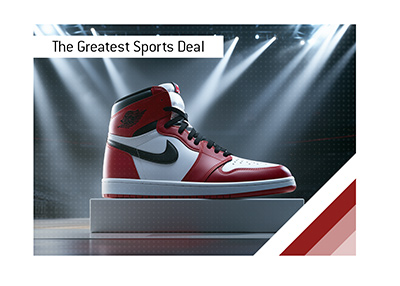 Michael Jordan signed a 5-year, $2.5 million contract with Nike in the fall of 1984 that nobody, including Nike, expected to amount to much. Forty-one years later, the Jordan Brand crossed $7 billion in annual revenue and Jordan personally collected an estimated $300 million from a single year of royalties. We pulled Nike's actual 10-K filings with the SEC, ran the cumulative payments since 1984, and figured out exactly how important Air Jordan has become to one of the world's largest consumer companies. This is the story of the most lopsided endorsement deal in the history of sports.
That much you've probably heard. Here's what you probably haven't.
Forty-one years after that original deal, in Nike's most recent complete fiscal year, the Jordan Brand generated approximately $7 billion in revenue. Michael Jordan personally received an estimated $300 million in royalties from that year alone. He hasn't played professional basketball since 2003.
We pulled Nike's actual 10-K filings with the SEC, reconstructed the cumulative payments to Jordan since 1984, and analyzed exactly how important Air Jordan has become to one of the world's largest consumer companies. Here is the full picture.
In the fall of 1984, before his rookie season had even tipped off, Michael Jordan signed a 5-year contract with Nike worth a guaranteed $500,000 per year, totaling $2.5 million over the life of the deal. To put that in context, the going rate for an NBA rookie endorsement at the time was around $100,000 per year. Adidas, Jordan's preferred brand, had offered him about that. Converse offered $100,000. Nike offered five times the market rate, plus a marketing commitment, plus something almost unheard of at the time: royalties on shoe sales bearing his name.The exact royalty terms have never been publicly disclosed by either Nike or Jordan. Based on industry sources, contemporary reporting, and reverse-engineered math from Nike's filings, the structure was approximately:
But the "25% royalty" figure that gets thrown around in popular culture is misleading. The 25% applied only to specific Air Jordan branded shoes in the original deal. The current royalty rate, applied to the broader Jordan Brand business, is widely estimated at around 5% (with some financial analysts using 4% as a more conservative assumption).The Jordan Brand was specifically called out by Nike's own management in the FY2025 10-K as one of the divisions experiencing the largest declines in the recent fiscal year. But the context matters: the brand grew from $3.6 billion in FY2020 to $7.0 billion in FY2024. That's nearly doubling in four years. The FY2025 dip is a deceleration from extreme growth, not a collapse, and the long-run trajectory remains remarkable.In fiscal 2024, Nike Inc. reported total revenues of $51.4 billion. The Jordan Brand alone accounted for $7.0 billion, or approximately 13.6% of the entire company's revenue.
To put that in perspective: the Jordan Brand by itself, separated from the rest of Nike, would be a Fortune 500 company. As a standalone business, it would generate more revenue than household-name companies like Tiffany & Co, Yeti, Wendy's, or Under Armour.
The most widely cited estimate is 5% of Jordan Brand revenue, though Sportico uses a more conservative 4% in its calculations. We'll show both.
Sportico, in its April 2025 athlete earnings analysis, estimated Jordan's calendar 2024 earnings at approximately $300 million overall, predominantly from Nike royalties. Sportico put Jordan's cumulative career earnings from all sources (NBA salary, endorsements, investments) at $3 billion in nominal dollars, or $4.15 billion adjusted for inflation. Of that, an estimated $2.35 billion, or roughly 78%, came from Nike alone.
His NBA playing salary across 15 seasons was approximately $93.7 million. That works out to less than 3% of his total earnings. Michael Jordan made roughly 30 times more from Nike than he did from playing basketball.Jordan, 23 years into retirement, earns more per year from Nike than every active athlete in the world earns from their entire endorsement portfolio. This is what a royalty structure does that a flat-fee endorsement doesn't.
LeBron James signed his Nike lifetime deal in 2015. It was reported at the time as worth approximately $1 billion over his lifetime, the largest single-athlete endorsement deal ever signed at the time. That works out to roughly $40-80 million per year, depending on how it's structured.
Michael Jordan, paid on a percentage of brand revenue rather than a flat lifetime fee, earned approximately $300 million in 2024 alone. At his current pace, Jordan will collect more in a single year than LeBron will collect across his entire lifetime Nike contract.
Air Jordan started as a basketball performance shoe. Today, fewer than 10% of NBA players actually wear Jordan Brand shoes on court. That's not a problem. Because Jordan Brand has long since stopped being primarily a basketball performance brand. It has become a lifestyle and fashion brand wrapped around the mythology of one athlete's greatness.
Some data points from Nike's own filings and industry research:
Nike, for its part, has been brilliant at managing scarcity. Jordan releases are deliberately limited. Retro drops are timed to maximize hype. The SNKRS app, Nike's direct-to-consumer release platform, treats every major Jordan launch as a digital event. The brand has been managed less like a shoe company and more like a luxury house.
It gave Nike Air Jordan. Without that deal, there is no Jumpman logo, no SNKRS app franchise, no 40-year compounding brand asset.
Let's run the math from Nike's side:
Even at the high-end estimate of $2.35 billion paid to Jordan, the partnership has generated an estimated 10x to 12x that figure in cumulative gross profit for Nike, before counting the brand equity contribution to Nike's overall market value.
Nike's market capitalization is approximately $90 billion (as of mid-2026, varying with share price). Industry analysts estimate that the Jordan Brand, if spun out as a standalone entity, could be worth between $30 billion and $50 billion on its own. That's based on revenue multiples comparable to other premium athletic brands.
So Nike paid Jordan approximately $2.35 billion over 41 years to build an asset that's worth $30-50 billion sitting on its balance sheet. That is the most lopsided endorsement deal in the history of sports, and it's lopsided in Nike's favor.
By any conceivable measure, Jordan won. He just didn't win as much as Nike did. That's the nature of percentage participation: it compounds for whoever holds the underlying asset. Nike held the asset.
1. Royalties beat fixed compensation, if the brand grows. Jordan took less guaranteed money in 1984 than he might have gotten elsewhere. He traded that for percentage participation. That decision converted a $2.5 million contract into $2.35 billion of cumulative income. The same logic applies to LeBron's lifetime deal, Curry's Under Armour equity stake, and dozens of newer deals where athletes accept stock or revenue share in exchange for lower base pay.
2. Brand equity outlasts athletic career. Jordan stopped playing meaningful NBA basketball in 1998 (or 2003 if you count his Wizards comeback). His Nike royalty payments have grown almost every decade since. The brand he built outgrew the basketball player who founded it.
3. Cultural relevance compounds. Jordan didn't just become a great basketball player. He became a cultural archetype that every subsequent generation must encounter. That's worth more than any single championship. Nike's job for the past 25 years has been to keep that mythology alive through controlled scarcity and strategic re-engagement. They've done it perfectly.
4. The structure of the deal matters more than the headline number. Most athlete endorsements get reported as "$X million per year." Those are mostly fixed-fee deals. The few that include royalty or equity participation almost always produce vastly higher long-term outcomes. LeBron's lifetime deal includes Nike equity components. Curry has Under Armour equity. Cristiano Ronaldo's Nike deal is a lifetime contract. These are not coincidences. Every modern athlete and agent learned from Deloris Jordan in 1984.
In Nike's fiscal 2024, the Jordan Brand generated $7.0 billion in revenue, accounting for 13.6% of Nike's entire $51.4 billion business. Jordan personally received an estimated $300 million in royalties from that single year alone, more than 23 years after he last played NBA basketball.
For Nike, it has been an even better deal. The Jordan Brand alone is estimated to be worth $30-50 billion as a standalone asset. Nike paid roughly $2.35 billion to build it. That's a return of approximately 13x to 21x on the cumulative payments to Jordan.
Every modern athlete signature deal, including LeBron's lifetime Nike contract, traces its lineage back to what Deloris Jordan demanded for her son in 1984: percentage participation in the brand bearing his name. That single negotiating decision became the template for athletic wealth-building in the modern era.
Written By: Dave Manuel
Michael Jordan signed a 5-year, $2.5 million contract with Nike in the fall of 1984 that nobody, including Nike, expected to amount to much. Forty-one years later, the Jordan Brand crossed $7 billion in annual revenue and Jordan personally collected an estimated $300 million from a single year of royalties. We pulled Nike's actual 10-K filings with the SEC, ran the cumulative payments since 1984, and figured out exactly how important Air Jordan has become to one of the world's largest consumer companies. This is the story of the most lopsided endorsement deal in the history of sports.NBA · Business · The Greatest Deal Ever Signed
Why Michael Jordan Made $300 Million From Nike Last Year (And He Hasn't Played Basketball In 23 Years)
A 5-year, $2.5 million contract in 1984 has paid Jordan an estimated $2.35 billion to date. The Jordan Brand crossed $7 billion in annual revenue. Forty-one years later, it's still the most lopsided endorsement deal in the history of sports.
Michael Jordan·Nike·Sports Business
In the fall of 1984, a 21-year-old rookie named Michael Jeffrey Jordan signed an endorsement contract with a struggling shoe company that nobody, including the shoe company, thought would amount to much. Nike's revenue had just dropped 29%. The company had posted its first-ever earnings decline. The marketing budget for the entire 1984 NBA Draft class was supposed to be $250,000, spread across three or four players. Nike executive Sonny Vaccaro convinced his bosses to gamble the entire budget on Jordan alone.
What happened next has been told a thousand times. Air Jordan launched in April 1985. The shoes sold $70 million in their first two months. By the end of year one, Jordan Brand had done over $100 million in revenue, against a Nike internal projection of $3 million for year four.That much you've probably heard. Here's what you probably haven't.
Forty-one years after that original deal, in Nike's most recent complete fiscal year, the Jordan Brand generated approximately $7 billion in revenue. Michael Jordan personally received an estimated $300 million in royalties from that year alone. He hasn't played professional basketball since 2003.
We pulled Nike's actual 10-K filings with the SEC, reconstructed the cumulative payments to Jordan since 1984, and analyzed exactly how important Air Jordan has become to one of the world's largest consumer companies. Here is the full picture.
$7.0B
Jordan Brand Revenue FY2024
$2.35B
Cumulative Royalties Since 1984
~5%
Estimated Royalty Rate
13.6%
Share Of Nike's Total Revenue
The Original Deal: What Jordan Actually Signed In 1984
Let's start with the basics, because so much of what gets told about the 1984 deal is half-mythology, half-Hollywood.In the fall of 1984, before his rookie season had even tipped off, Michael Jordan signed a 5-year contract with Nike worth a guaranteed $500,000 per year, totaling $2.5 million over the life of the deal. To put that in context, the going rate for an NBA rookie endorsement at the time was around $100,000 per year. Adidas, Jordan's preferred brand, had offered him about that. Converse offered $100,000. Nike offered five times the market rate, plus a marketing commitment, plus something almost unheard of at the time: royalties on shoe sales bearing his name.
October 1984 · The Signing
The Contract That Changed Sports Endorsements Forever
5 years · $500,000 per year guaranteed · Plus royalties on Air Jordan branded sales · Plus creative input on shoe design
- $500,000 per year guaranteed base compensation, five years
- Royalty on Air Jordan-branded shoe and apparel sales (initial rate reportedly higher on specific Air Jordan products, later restructured)
- Creative input on shoe design
- Personal use of Jordan's likeness for Nike marketing
The Four Escape Clauses
Nike was so worried Jordan might bust that they wrote in four contractual escape clauses. Jordan needed to hit just ONE of them to keep his deal alive:- Be named to an NBA All-Star or All-NBA team in his rookie year
- Win NBA Rookie of the Year
- Average 20+ points per game
- Sell $4 million worth of Air Jordans by end of the contract
Sports-King's Note
The 25% Royalty Myth
The 2023 Ben Affleck movie "Air" is mostly accurate on the broad strokes but takes some Hollywood liberties. The most famous embellishment: the movie portrays Deloris Jordan, Michael's mother, as the one who insisted on the royalty structure that made Jordan a billionaire. That part is real.But the "25% royalty" figure that gets thrown around in popular culture is misleading. The 25% applied only to specific Air Jordan branded shoes in the original deal. The current royalty rate, applied to the broader Jordan Brand business, is widely estimated at around 5% (with some financial analysts using 4% as a more conservative assumption).
How Big Is The Jordan Brand Now?
This is where the numbers get genuinely staggering. The Jordan Brand isn't just an athlete endorsement deal anymore. It's a standalone sub-brand of Nike that generates more annual revenue than the GDP of dozens of small countries.Chart 1
Jordan Brand Annual Revenue, Fiscal Years 2017-2025 (US$ Billions)
Source: Nike Inc. annual reports (10-K filings, SEC). Nike's fiscal year ends May 31. The Jordan Brand more than doubled between FY2020 and FY2024 before declining approximately 16% in FY2025 amid broader Nike marketplace challenges. Bar widths scaled to $8B maximum for visual consistency.
How Important Is Jordan To Nike's Entire Business?
This is the question that should make Nike shareholders pay attention.Chart 2
Jordan Brand As A Share Of Total Nike Revenue, FY2017-2025
Jordan Brand grew from approximately 9% of Nike's total revenue in FY2017 to a peak of 13.6% in FY2024. The FY2025 share declined modestly to 12.7% as Jordan Brand revenue fell faster than Nike's overall business. Bar widths scaled to 16.5% maximum.
To put that in perspective: the Jordan Brand by itself, separated from the rest of Nike, would be a Fortune 500 company. As a standalone business, it would generate more revenue than household-name companies like Tiffany & Co, Yeti, Wendy's, or Under Armour.
If Jordan Brand were a standalone company, it would be larger than Under Armour, Yeti, and Wendy's combined.
And this share has grown structurally. In FY2017, Jordan Brand was approximately 9% of Nike's revenue. By FY2024 it peaked at 13.6%. The brand has become a structural pillar of Nike's overall business, not just a celebrity side bet.So How Much Money Has Michael Jordan Personally Made From Nike?
Cracking this question requires some careful work, because Nike has never publicly disclosed the royalty rate Jordan receives, and Jordan has never confirmed it. But financial reporters at Sportico, Forbes, and other outlets have produced reasonable estimates based on industry standard royalty structures and reverse-engineering from disclosed compensation figures.The most widely cited estimate is 5% of Jordan Brand revenue, though Sportico uses a more conservative 4% in its calculations. We'll show both.
Chart 3
Estimated Cumulative Payments From Nike To Michael Jordan, 1984-2024 (US$ Billions)
Cumulative payments to Jordan from 1984 through fiscal 2024. Estimates assume approximately 5% royalty on Jordan Brand revenue plus the original $2.5M guaranteed contract. Sportico's more conservative 4% estimate produces a cumulative figure of approximately $2.0 billion. The widely-cited consensus figure is $2.35 billion.
| Era | Approximate Royalty Range | Notes |
|---|---|---|
| 1985-1994 | $50-100 million | Original deal era, peak NBA playing years |
| 1995-2004 | $200-400 million | Post-first-retirement comeback, second championship run |
| 2005-2014 | $500-800 million | Brand globalization, retro release era |
| 2015-2024 | $1.2-1.4 billion | Streetwear boom, international expansion, women's expansion |
| Total since 1984 | ~$2.0 to $2.35 billion | Most widely cited figure: $2.35B |
His NBA playing salary across 15 seasons was approximately $93.7 million. That works out to less than 3% of his total earnings. Michael Jordan made roughly 30 times more from Nike than he did from playing basketball.
Sports-King's Note
The Numbers Carry A Caveat
Nobody outside Jordan's inner circle and Nike's legal team knows the precise royalty rate. Public estimates range from 4% (Sportico) to 5% (most other sources). At a Jordan Brand revenue of $7.0 billion in FY2024, the difference between a 4% and 5% royalty rate is the difference between $280 million and $350 million for Jordan personally. We've used the 5% figure throughout this article because it's the most commonly cited rate in financial media, but the truth might be slightly lower. Sportico's specific "approximately $300 million for 2024" estimate sits roughly in the middle of that range.The Comparison That Should Make Every Athlete's Agent Furious
Let's put Jordan's annual Nike royalties in context with what other top-paid athletes earn from their entire endorsement portfolios.Chart 4
2024 Annual Endorsement Income, Michael Jordan vs Top Active Athletes (US$ Millions)
Sources: Sportico Athlete Earnings 2024-25; Forbes Highest-Paid Athletes reporting. Jordan's figure is Nike royalties alone, not total earnings. Other figures are total off-court endorsement income from all brands combined. LeBron's Nike deal alone is a lifetime contract estimated at $1 billion total.
LeBron James signed his Nike lifetime deal in 2015. It was reported at the time as worth approximately $1 billion over his lifetime, the largest single-athlete endorsement deal ever signed at the time. That works out to roughly $40-80 million per year, depending on how it's structured.
Michael Jordan, paid on a percentage of brand revenue rather than a flat lifetime fee, earned approximately $300 million in 2024 alone. At his current pace, Jordan will collect more in a single year than LeBron will collect across his entire lifetime Nike contract.
Why Is The Jordan Brand Still Growing 28 Years After His Last Championship?
This is the most fascinating part of the story, and it's the answer that explains why Nike continues to write Jordan a check that gets bigger almost every year.Air Jordan started as a basketball performance shoe. Today, fewer than 10% of NBA players actually wear Jordan Brand shoes on court. That's not a problem. Because Jordan Brand has long since stopped being primarily a basketball performance brand. It has become a lifestyle and fashion brand wrapped around the mythology of one athlete's greatness.
Some data points from Nike's own filings and industry research:
- Approximately 89% of the US population is aware of the Jordan brand. In the UK, that figure is 76%.
- The average resale premium on Jordan Brand shoes was approximately 59% in 2022, meaning the secondary market values them at 1.59x retail on average.
- Jordan Brand has expanded heavily into women's and kids' product lines in recent years, broadening beyond the original male basketball customer.
- International expansion has accelerated. Jordan Brand's European business grew 18-20% in FY2023. Asia-Pacific (excluding Greater China) grew 25-28% in the same year.
- The brand makes approximately 60 million pairs of shoes per year. In 1985, it made 4 million. That's a 14x increase in production over 40 years.
Jordan's last championship was 28 years ago. The brand bearing his name has more than doubled in revenue since.
The strategic genius of the Jordan Brand is that it captured a moment of cultural saturation that has actually compounded rather than faded. Every new generation discovers Jordan through documentaries (Netflix's "The Last Dance" added an estimated $300M to Jordan Brand revenue in the two years after its 2020 release), through pop culture references, through fashion drops, through hip-hop, through nostalgia, through their parents' stories. Jordan has transcended athletic relevance and become a permanent cultural reference point.Nike, for its part, has been brilliant at managing scarcity. Jordan releases are deliberately limited. Retro drops are timed to maximize hype. The SNKRS app, Nike's direct-to-consumer release platform, treats every major Jordan launch as a digital event. The brand has been managed less like a shoe company and more like a luxury house.
How Did Nike Get The Deal So Wrong (In Their Favor)?
Here's the thing nobody likes to talk about: as good as Jordan's deal was for him, it was an even better deal for Nike. The royalty structure that Deloris Jordan demanded in 1984, and that has produced an estimated $2.35 billion in cumulative payments to her son, also gave Nike something it could never have purchased with cash.It gave Nike Air Jordan. Without that deal, there is no Jumpman logo, no SNKRS app franchise, no 40-year compounding brand asset.
Let's run the math from Nike's side:
| Item | Approximate Value |
|---|---|
| Cumulative Jordan Brand revenue since 1984 | $60-70 billion (estimate based on disclosed figures) |
| Cumulative gross margin (at approximately 45%) | $27-31 billion |
| Cumulative payments to Jordan (estimated) | $2.35 billion |
| Marketing and operating costs | Embedded in Nike consolidated accounts |
| Net value created for Nike from Jordan partnership | Tens of billions of dollars in equity value |
Nike's market capitalization is approximately $90 billion (as of mid-2026, varying with share price). Industry analysts estimate that the Jordan Brand, if spun out as a standalone entity, could be worth between $30 billion and $50 billion on its own. That's based on revenue multiples comparable to other premium athletic brands.
So Nike paid Jordan approximately $2.35 billion over 41 years to build an asset that's worth $30-50 billion sitting on its balance sheet. That is the most lopsided endorsement deal in the history of sports, and it's lopsided in Nike's favor.
Sports-King's Note
Don't Feel Too Bad For Jordan
He's a billionaire several times over, primarily thanks to this deal. He sold the Charlotte Hornets in 2023 for an estimated $3 billion, contributing the bulk of his $4.3 billion current Forbes-estimated net worth. The Jordan Brand has paid him an estimated $2.35 billion. He played basketball for 15 NBA seasons and won six championships.By any conceivable measure, Jordan won. He just didn't win as much as Nike did. That's the nature of percentage participation: it compounds for whoever holds the underlying asset. Nike held the asset.
The Lesson For Modern Athletes
The Jordan-Nike deal has been studied at every major business school and used as the template for nearly every signature athlete partnership of the last 30 years. Here is what athletes (and their agents) actually learned from it:1. Royalties beat fixed compensation, if the brand grows. Jordan took less guaranteed money in 1984 than he might have gotten elsewhere. He traded that for percentage participation. That decision converted a $2.5 million contract into $2.35 billion of cumulative income. The same logic applies to LeBron's lifetime deal, Curry's Under Armour equity stake, and dozens of newer deals where athletes accept stock or revenue share in exchange for lower base pay.
2. Brand equity outlasts athletic career. Jordan stopped playing meaningful NBA basketball in 1998 (or 2003 if you count his Wizards comeback). His Nike royalty payments have grown almost every decade since. The brand he built outgrew the basketball player who founded it.
3. Cultural relevance compounds. Jordan didn't just become a great basketball player. He became a cultural archetype that every subsequent generation must encounter. That's worth more than any single championship. Nike's job for the past 25 years has been to keep that mythology alive through controlled scarcity and strategic re-engagement. They've done it perfectly.
4. The structure of the deal matters more than the headline number. Most athlete endorsements get reported as "$X million per year." Those are mostly fixed-fee deals. The few that include royalty or equity participation almost always produce vastly higher long-term outcomes. LeBron's lifetime deal includes Nike equity components. Curry has Under Armour equity. Cristiano Ronaldo's Nike deal is a lifetime contract. These are not coincidences. Every modern athlete and agent learned from Deloris Jordan in 1984.
The Bottom Line
Michael Jordan's 1984 Nike contract is the most successful athlete endorsement deal in sports history. The original $2.5 million, 5-year deal has paid him an estimated $2.35 billion over 41 years through royalties on Jordan Brand revenue.In Nike's fiscal 2024, the Jordan Brand generated $7.0 billion in revenue, accounting for 13.6% of Nike's entire $51.4 billion business. Jordan personally received an estimated $300 million in royalties from that single year alone, more than 23 years after he last played NBA basketball.
For Nike, it has been an even better deal. The Jordan Brand alone is estimated to be worth $30-50 billion as a standalone asset. Nike paid roughly $2.35 billion to build it. That's a return of approximately 13x to 21x on the cumulative payments to Jordan.
Every modern athlete signature deal, including LeBron's lifetime Nike contract, traces its lineage back to what Deloris Jordan demanded for her son in 1984: percentage participation in the brand bearing his name. That single negotiating decision became the template for athletic wealth-building in the modern era.
• • •
The Air Jordan story is, more than anything else, a story about getting the structure of a deal right. Nike could have offered Jordan a flat $5 million or $10 million signing bonus in 1984 and he probably would have taken it. Instead, the company that gambled its entire 1984 marketing budget on one rookie agreed to share the upside of whatever brand they could build together.
Forty-one years later, the structure has produced an asset worth tens of billions of dollars and a personal fortune that puts Jordan at the top of every "athletes by net worth" list anyone has ever published. The basketball player who signed that deal is now 63 years old. The shoe brand he signed it for has more than doubled in revenue during the years since he last played professional basketball.
If you want to understand how modern wealth gets built around sports, this is the deal you study first.
Sources: Nike Inc. Form 10-K Annual Reports for fiscal years ended May 31, 2024 and May 31, 2025 (filed with the SEC); Sportico Athlete Earnings analysis (April 2025); Sportico Jordan Brand Revenue analysis (June 2024 and June 2025); Forbes Highest-Paid Athletes 2024 and 2025; Investormint Michael Jordan Net Worth 2026 analysis (April 2026); Celebrity Net Worth tracking analysis (2024); European Business Magazine analysis (February 2026); SportsRush, RunRepeat, and Boardroom industry reporting; "Air" (2023) historical references.Caveat: Nike has never publicly disclosed the royalty rate paid to Michael Jordan. All royalty figures cited are estimates based on industry-standard reverse engineering by financial reporters at Sportico, Forbes, and Celebrity Net Worth. The range cited (4% to 5%) reflects the most commonly used analyst assumptions. The actual rate could be higher or lower. Treat all dollar figures attributed to Jordan personally as informed approximations, not verified compensation data.19+. Sports-King.com is an editorial sports business analysis site. This article is provided for informational purposes only and does not constitute financial, investment, or business advice.Forty-one years later, the structure has produced an asset worth tens of billions of dollars and a personal fortune that puts Jordan at the top of every "athletes by net worth" list anyone has ever published. The basketball player who signed that deal is now 63 years old. The shoe brand he signed it for has more than doubled in revenue during the years since he last played professional basketball.
If you want to understand how modern wealth gets built around sports, this is the deal you study first.