From 1973 to 2026: The Complete History of the Knicks Drought
Published on May 31st, 2026 4:55 pm ESTWritten By: Dave Manuel
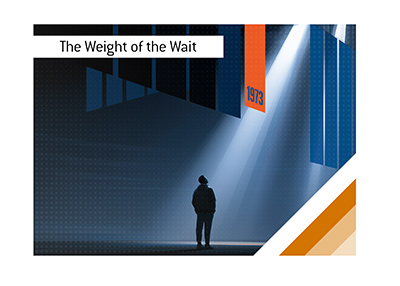 The New York Knicks have not won an NBA championship since 1973. Fifty-three years. The longest drought of any major-market franchise in American sports, served up with a side of the world's most famous arena, the league's deepest pockets, and a parade of superstars who somehow never got it done. Now, finally, this team is one win series away from ending all of that. Here is the full story of how the Knicks lost half a century and then quietly built the team that might finally win it back.
NBA Feature · Knicks 2026 Finals
The New York Knicks have not won a championship since 1973. Fifty-three years. Three days from now, against the San Antonio Spurs, that drought might finally end.
The Knicks just swept the Cleveland Cavaliers 4-0 to win the 2026 Eastern Conference Finals. It is the franchise's first NBA Finals appearance since 1999, a 27-year wait that was, by any reasonable measure, supposed to be a lot shorter.This is a team that plays in Madison Square Garden, the most famous arena on the planet. They share the world's biggest media market with nobody. Their owner is one of the richest in American sports. They have routinely run the highest payroll in the league. They have employed more All-Stars over the past four decades than any rebuilding small-market team could ever hope to land in a generation.
And until this season, they had two championships. Both of them won before the average current Knicks fan was born.
How does that happen? How does a franchise this rich, in a market this big, with this much access to talent, go more than half a century without a parade? The honest answer is that it happens slowly, then all at once, and then it happens for so long that you stop noticing the shape of it. The Knicks have been mismanaged in nearly every era. They have been the victims of catastrophic bad luck. They have run into all-time great teams at exactly the wrong moments. They have signed terrible contracts, made indefensible trades, and put basketball decisions in the hands of people who had no business making them. And then, finally, in the last six years, they slowly stopped doing all of those things and built a team good enough to be one series away from ending the wait.
Here is the story of how the Knicks lost half a century. And how, on Wednesday night in San Antonio, this version of the Knicks gets a chance to win it all back.
Two championships, both in the early 1970s. Eight Finals appearances all-time. Twenty-seven years between Finals visits. The visual case for why this current run feels different.
Act 1: The Title Era That Felt Like a Beginning
If you are looking for the moment the Knicks became a great franchise rather than just an old one, you start with the 1969-70 season. Coach Red Holzman's team won 60 games behind a starting five that would eventually put four players in the Basketball Hall of Fame: Willis Reed at center, Dave DeBusschere at power forward, Bill Bradley at small forward, Walt Frazier at point guard, and Dick Barnett at shooting guard.They beat the Los Angeles Lakers in the 1970 Finals in seven games, and the Game 7 itself produced the single most famous image in Knicks history: Willis Reed, hobbled by a torn thigh muscle, walking out of the tunnel to start the game, scoring the first two baskets, and then handing the rest of the night to Frazier, who put up 36 points and 19 assists in one of the great Finals performances of all time.
Two seasons later, in 1972, the Knicks went back to the Finals and lost to a Lakers team that had won a then-record 33 games in a row during the regular season. The next year, they ran it back. The 1972-73 Knicks added Earl "The Pearl" Monroe to the backcourt, and the New York team that took the floor in May 1973 had five future Hall of Famers in its rotation. They beat the Lakers in five games. The 1973 Finals were the last Finals series the Knicks would win for a very long time.
3
Finals trips in 4 years
1970, 1972, 1973
5
Hall of Famers on the 1973 team
Reed, DeBusschere, Bradley, Frazier, Monroe
1
Coach for both titles
Red Holzman (HOF, 1986)
The franchise had been to the Finals three times in four years and won twice. It would not return for twenty-one years.
Act 2: The Bernard King "What If"
Before Patrick Ewing, before the 1985 lottery, before any of it, there was Bernard King. He was, briefly, the best basketball player on Earth. And the Knicks had him, and they lost him, and most people have forgotten how good he actually was.King arrived in New York in October 1982, traded from Golden State for Micheal Ray Richardson. He was 25 years old, a Brooklyn native, and he had just made his first All-Star team the previous season with Golden State. He had not yet become what he became in New York.
What he became was the most pure scorer in the NBA. In 1983-84 he averaged 26.3 points per game and finished second in MVP voting. The 1984 playoffs were a Bernard King highlight reel. In the first round against Detroit, he averaged 42.6 points a game over five games, including a 44-point performance in the deciding Game 5 with two dislocated middle fingers and the flu. In the second round against Boston, he averaged 29.1 against an eventual NBA champion. The 1984 King was an unguardable two-way scorer who could get to any spot on the floor and shoot over any defender in the league.
The next season, 1984-85, he won the scoring title at 32.9 points per game. Then, on March 23, 1985, the Knicks were playing the Kansas City Kings. King landed awkwardly, planted, and tore the anterior cruciate ligament in his right knee.
Sports-King's Note
ACL surgery in 1985 was not what ACL surgery is today. Players did not come back from torn ACLs the way they do now. King missed all of the 1985-86 season. He returned in April 1987 for six games, played reasonably well, then went to free agency and signed with Washington. He had one more All-Star season in him, in 1990-91, but he was never again the player who had averaged 32.9 in a season or 42.6 in a playoff round. The Knicks had the best scorer in basketball, and they had him for exactly two and a half seasons.What actually happened is that King's knee gave the Knicks something even more consequential than a missing star. It gave them the 1984-85 record of 24-58. That record put them in the 1985 draft lottery.
Act 3: The Frozen Envelope and the Patrick Ewing Era (1985-2000)
On May 12, 1985, NBA commissioner David Stern reached into a clear plexiglass drum on a Manhattan stage, pulled out an envelope, and announced that the New York Knicks had won the first NBA Draft Lottery. The pick was Patrick Ewing.People have argued for forty years about whether the lottery was fixed. The envelope had a creased corner. The league was negotiating a new TV deal. Bill Simmons later wrote about "indisputable video evidence." Nothing was ever proven, and no respectable journalist has gotten further than "suspicious circumstances." What is provable, in retrospect, is that David Stern's league got the absolute best possible outcome on the night of the first lottery: the most hyped college center in fifteen years was about to play in Madison Square Garden.
Ewing arrived in October 1985, won Rookie of the Year, and immediately became the most important Knick of the post-championship era. Across fifteen seasons in New York, he made eleven All-Star teams, was named to seven All-NBA squads, finished in the top five in MVP voting six times, and led the Knicks to thirteen playoff appearances. He is the franchise's all-time leader in points, rebounds, blocks, and steals. He is, by almost any honest measure, the greatest player to ever wear a Knicks uniform.
He never won a championship.
The Jordan Problem
Patrick Ewing was born in August 1962. Michael Jordan was born in February 1963. Hakeem Olajuwon was born in January 1963. The three of them were born within six months of each other, and from 1990 through 1998, the NBA championship went to either Jordan's Bulls or Olajuwon's Rockets every single year.Ewing's Knicks played the Bulls in five playoff series during that stretch. They lost all five. The 1992 series went seven games. The 1993 Eastern Conference Finals went six. The 1994 Eastern Conference semifinal, with Jordan briefly retired and playing minor-league baseball, was the closest the Knicks ever came to escaping Jordan's shadow. They beat the Bulls in seven games, made it to the Eastern Conference Finals, beat the Pacers, and went to the NBA Finals for the first time since 1973.
That is where they ran into the other guy.
1994: The Finals That Should Have Been
The 1994 NBA Finals were Pat Riley's Knicks against Hakeem Olajuwon's Houston Rockets. The series went seven games. The Knicks won three of the first five and led the series 3-2 heading back to Houston. They were one win from the parade.Game 6 produced the Olajuwon Block. With the Knicks down two points and the season in the balance, Patrick Ewing kicked the ball to John Starks in the right corner. Starks went up for a three-pointer that would have won the championship. Olajuwon got his fingertip on the ball just enough to alter the shot. Rockets 86, Knicks 84. Game 7 in Houston, on June 22, 1994.
What happened in Game 7 has its own permanent address in Knicks history. John Starks, who had been the team's second-leading scorer in the series, went 2-for-18 from the field. He went 0-for-11 from three-point range, which remains an NBA Finals record for three-point attempts without a make. Pat Riley refused to take him out. The Rockets won 90-84. The championship the Knicks had been a Starks corner three away from winning was gone.
Sports-King's Note
It is worth saying out loud: the 1994 Knicks were not a team that overachieved. They went 57-25 in the regular season. They had two future Hall of Famers (Ewing and Riley). They had the deepest playoff run of any Knicks team between 1973 and the present moment. They were good enough to win a championship. They lost because John Starks had the worst shooting night of his life on the night that mattered most, and because Pat Riley made his "biggest mistake" (his own words, years later) by leaving Starks in the game. Those are two coin flips that could have gone the other way. They did not. And every Knicks fan who watched that game in 1994 has carried that Game 7 around with them for thirty-one years.1995-1998: The Years of the Close Call
The years between the 1994 Finals and the 1999 Finals are the part of Knicks history that gets remembered as "tough, hard-nosed basketball" in the franchise's mythology and as "a series of brutal late-playoff losses" in everyone else's. Both are true.In May 1995, the Knicks were up 6 with 18.7 seconds left in Game 1 of the Eastern Conference semifinals against Indiana. Reggie Miller scored eight points in nine seconds, including two three-pointers, and the Pacers won by two. The Knicks would lose the series in seven games. Hubert Davis missed two free throws that could have won Game 6.
In June 1995, Pat Riley resigned by fax. He turned up running the Miami Heat a week later. The Knicks would spend the next four years being eliminated by his Heat teams in increasingly painful ways.
In 1997, Charlie Ward got into a tangle with P.J. Brown in Game 5 of the second round against Miami. Players left the bench. The NBA suspended Ewing for Game 6. The Knicks, leading the series 3-2, lost Games 6 and 7. In 1998 and 1999 they lost to the Heat again, with Allan Houston's game-winning runner in the 1999 first round being one of the iconic shots in franchise history.
1999: The 8 Seed That Made The Finals
The 1999 season was lockout-shortened to 50 games. The Knicks went 27-23 and snuck into the playoffs as the 8 seed. Patrick Ewing was 36 years old, dealing with a chronic Achilles problem that would tear partway through the playoff run. They had no business winning anything.They beat Miami in the first round on the Houston runner. They beat Atlanta in the second round. In the Conference Finals they ran into a Pacers team that had finished 17 games ahead of them in the standings, and somehow won that series 4-2 with Larry Johnson's four-point play in Game 3 (the Knicks were down three in the final 12 seconds, Johnson caught a pass, hit a three while being fouled by Antonio Davis, made the free throw with 5.7 seconds left, and the Knicks held on to win 92-91). It remains one of the strangest, most improbable playoff runs in NBA history.
The Finals were against the San Antonio Spurs, the franchise the Knicks will see again in three days. The 1999 Spurs had Tim Duncan in his second year and David Robinson in the back half of his Hall of Fame career. Patrick Ewing tore his Achilles partway through the Pacers series and missed the entire Finals. The Knicks lost 4-1. They have not been back since.
15
Seasons
Ewing in New York
13
Playoff appearances
in 15 seasons
2
Conference titles
1994, 1999
0
NBA titles
all-time greatest Knick
Act 4: The Lost Decade (2000-2010)
What happened to the Knicks in the 2000s is the part of the story most fans would prefer to skip. It is also the part of the story that, more than any other, explains why the championship drought is fifty-three years and not, say, thirty-five.The franchise spent the entire decade rotating between two failure modes. Mode one: spend obscene amounts of money on the wrong players. Mode two: trade away future draft assets for short-term mediocre veterans. The decade produced two playoff appearances, zero playoff series wins, four head coaches, three team presidents, multiple federal courtroom dates, and a $124 million payroll that posted a 23-59 record. It is the worst sustained stretch of basketball decision-making in modern NBA history. Most franchises have a bad decade. The Knicks had a decade that bordered on performance art.
The Isiah Years
James Dolan hired Isiah Thomas as president of basketball operations in December 2003. Thomas was a Hall of Fame point guard. He was not a Hall of Fame executive.The list of Isiah Thomas roster moves between December 2003 and his firing in April 2008 is genuinely difficult to read in one sitting. Stephon Marbury, acquired in a January 2004 trade for Antonio McDyess and a package of role players, became one of the most unhappy and corrosive presences any New York team has ever had. The Knicks traded for Eddy Curry in October 2005, giving the Chicago Bulls a 2006 first-round draft pick (which Chicago used to select LaMarcus Aldridge at #2) and a 2007 first-round pick swap (which Chicago used to select Joakim Noah at #9). LaMarcus Aldridge and Joakim Noah went on to long All-Star careers. The Knicks got four mediocre seasons of Eddy Curry.
That summer Thomas signed Jerome James to a five-year, $30 million contract on the strength of a hot 2005 playoff series with Seattle. James played a total of 90 games for the Knicks over four years. He averaged 3.0 points per game. The contract was a punchline in real time.
In 2006, with the 20th pick of the draft, Thomas selected Renaldo Balkman. Two picks later, the Boston Celtics selected Rajon Rondo, who would win an NBA championship in 2008 and be named to four All-Star teams. The Knicks fan base booed the Balkman pick live on draft night.
In November 2006 in a game against the Denver Nuggets, a bench-clearing brawl broke out, with Carmelo Anthony throwing the most famous punch of his career on Mardy Collins. The NBA suspended ten players for a combined 47 games. The Knicks were 47-115 over the next two seasons under Isiah.
The Lawsuit
In October 2007, a federal jury found Isiah Thomas and Madison Square Garden liable for sexual harassment in a lawsuit brought by Anucha Browne Sanders, a former senior vice president of marketing for the Knicks. The verdict was for $11.6 million. The jury found that Thomas had created a hostile work environment and that Madison Square Garden had retaliated against Browne Sanders after she complained.James Dolan did not fire Isiah Thomas after the verdict. He fired him six months later, in April 2008, after a 23-59 season. The two events were treated as unrelated.
Sports-King's Note
The 2005-06 Knicks ran the highest payroll in NBA history at the time, $124 million in salary and luxury tax. They went 23-59. Larry Brown, who had won an NBA championship 18 months earlier with the Detroit Pistons, was the head coach. He lasted one season. The whole thing was a five-alarm fire that James Dolan was personally responsible for, that nobody in the building had the standing to stop, and that the rest of the league watched with a mixture of pity and amusement. The Knicks were the most expensive team in basketball and the worst team in basketball at the same time. This is a difficult thing to do. It requires real effort.Act 5: Carmelo, Linsanity, and the False Dawns (2010-2018)
The Donnie Walsh era, which began in 2008, was supposed to be the reset. Walsh shed contracts, accumulated cap space, and built a roster around the Mike D'Antoni offense and a young, fun core. The 2010-11 Knicks were on track to be a small but real success story. They went 28-26 over the first 54 games of that season with a starting five built around Amar'e Stoudemire (signed in free agency), Wilson Chandler, Danilo Gallinari, Raymond Felton, and Landry Fields.Then James Dolan got involved.
The Carmelo Trade
Carmelo Anthony was a Denver Nugget on an expiring contract in February 2011. He was going to be a free agent in July. The Knicks could have signed him in the summer for nothing but cap space. They had been positioning for exactly that scenario for two years.James Dolan did not want to wait. He wanted Carmelo Anthony in a Knicks uniform immediately, and he wanted the trade announced before the All-Star Game in Los Angeles, where he was hosting events. Walsh objected. He was overruled.
The Knicks traded Wilson Chandler, Danilo Gallinari, Raymond Felton, Timofey Mozgov, a 2014 first-round pick, two second-round picks, and roughly $3 million for Carmelo Anthony, Chauncey Billups, Shelden Williams, Anthony Carter, and Renaldo Balkman. Three months later, Donnie Walsh resigned.
Carmelo Anthony was, on his own, an excellent basketball player. He averaged 24.7 points per game across his seven seasons in New York and won the scoring title in 2012-13. He was the leader of the only Knicks team between 2000 and 2026 to win more than 50 games. The problem was never Carmelo. The problem was that the trade had stripped the roster of every supporting piece Donnie Walsh had spent three years collecting, and the Knicks never figured out how to build around their new star.
Linsanity
For a four-week stretch from February 4, 2012 to March 7, 2012, the Knicks were the most-watched team in basketball, and the entire planet was talking about a previously-anonymous backup point guard named Jeremy Lin. Lin scored 25 points off the bench against the New Jersey Nets in his first significant appearance, then went on a run of seven consecutive starts in which he averaged 24.4 points and 9.1 assists per game. He outscored Kobe Bryant in a 38-point performance against the Lakers. He hit a game-winning three against Toronto. The Knicks won twelve of his first thirteen starts.Linsanity ended on March 24, 2012. Lin was forced out of a game against Detroit with knee soreness; an MRI two days later revealed a torn meniscus, and the surgery that followed ended his Knicks tenure for the season. In July 2012, with Lin a restricted free agent, the Houston Rockets offered him a three-year, $25 million contract. The Knicks chose not to match. James Dolan reportedly viewed the offer as personally insulting. Lin spent the next five years bouncing around the league. The Knicks never replaced him.
The 54-Win Season
The 2012-13 Knicks won 54 games, finished as the 2 seed in the Eastern Conference, and lost to the Indiana Pacers in the second round. They have not won that many games again until 2024-25. The roster had Carmelo (scoring title), Tyson Chandler (Defensive Player of the Year the year before), Raymond Felton, J.R. Smith (Sixth Man of the Year), Jason Kidd, and Pablo Prigioni. It was, on paper, a legitimate contender. It got bounced by the Roy Hibbert / Paul George Pacers in six games. That, until 2025, was as deep as the Knicks had gone in the playoffs in twenty years.The Phil Jackson Presidency
James Dolan hired Phil Jackson as president of basketball operations in March 2014. Jackson had eleven championship rings as a coach. He had never run a front office. He installed the triangle offense, which had not really been used in the NBA in a decade. He signed Joakim Noah to a four-year, $72 million contract in 2016. Noah played 53 games for the Knicks across two seasons before being waived.The one good thing Phil Jackson did was use the 2015 fourth overall pick on Kristaps Porzingis, the 19-year-old Latvian center who looked, briefly, like the most promising big man prospect in years.
Then Jackson feuded with Carmelo Anthony in the press, feuded with Porzingis in the press, and was eventually fired in June 2017. Carmelo Anthony was traded to Oklahoma City in September 2017 for Enes Kanter, Doug McDermott, and a second-round pick. Porzingis tore his ACL in February 2018, sat out the entire 2018-19 season, then forced a trade out of New York in January 2019 because of disagreements over how the team was being run. The Mavericks acquired him for a package that included Dennis Smith Jr., DeAndre Jordan, Wesley Matthews, and two future first-round picks. The Knicks finished the 2018-19 season 17-65, the worst record in the NBA. They had now lost the franchise center they had drafted in 2015. They were once again at zero.
It was, somehow, the best thing that had happened to the franchise in twenty years.
The Superstars Who Never Won
One of the more painful facts about Knicks history is the list of franchise-changing players who put in genuine star-level seasons in New York and walked away with nothing to show for it. This is not a complete list. It is, intentionally, the players whose careers in New York were good enough that they would have meant a championship in almost any other context.| Player | Knicks Years | Peak NYK Season | How It Ended |
|---|---|---|---|
| Bernard King | 1982-1987 | 32.9 ppg (1984-85, scoring title) | ACL tear, signed with Washington |
| Patrick Ewing | 1985-2000 | 28.6 ppg, 10.9 rpg (1989-90) | Traded to Seattle, 1999 Finals loss |
| Charles Oakley | 1988-1998 | 11.8 ppg, 11.7 rpg (1993-94) | Traded to Toronto for Marcus Camby |
| Allan Houston | 1996-2005 | 22.5 ppg (2002-03) | Knee injury forced retirement at 34 |
| Latrell Sprewell | 1999-2003 | 18.6 ppg (2001-02) | Traded to Minnesota |
| Carmelo Anthony | 2011-2017 | 28.7 ppg (2012-13, scoring title) | Traded to Oklahoma City |
| Kristaps Porzingis | 2015-2019 | 22.7 ppg, 2.4 bpg (2017-18) | ACL tear, forced trade to Dallas |
The Close Calls
The drought is not just about the years the Knicks were bad. The drought is also about the years they were good, and lost anyway. There have been seven playoff series since 1973 where a Knicks loss feels, in retrospect, like it locked in another five-to-ten years of waiting. They are all listed below.| Year | Round | Opponent | Result | The Defining Moment |
|---|---|---|---|---|
| 1994 | NBA Finals | Houston Rockets | L, 4-3 | Starks 2-of-18 in Game 7; Olajuwon's Game 6 block |
| 1995 | Conf Semis | Indiana Pacers | L, 4-3 | Reggie Miller's 8 points in 9 seconds, Game 1 |
| 1997 | Conf Semis | Miami Heat | L, 4-3 | Ewing suspended for Game 6 after bench-clearing brawl |
| 1999 | NBA Finals | San Antonio Spurs | L, 4-1 | Ewing torn Achilles, missed entire series |
| 2000 | Conf Finals | Indiana Pacers | L, 4-2 | Reggie Miller again, 17 fourth-quarter points in Game 6 |
| 2013 | Conf Semis | Indiana Pacers | L, 4-2 | Carmelo shoots 9-for-26 in Game 6; J.R. Smith implodes |
| 2024 | Conf Semis | Indiana Pacers | L, 4-3 | Anunoby, Robinson, Bogdanovic, Randle all injured |
| 2025 | Conf Finals | Indiana Pacers | L, 4-2 | Haliburton's 32-15-12 in Game 4 |
The Worst Contracts of the Dark Age
The Knicks of the 2000s were the most expensive bad team in NBA history. Below are the six contracts that explain most of how that happened. These are not all of the bad signings (Stephon Marbury was a trade rather than a free agent signing). They are the worst free agent and extension decisions of the post-Ewing, pre-Brunson era.| Player | Year | Contract | What Happened |
|---|---|---|---|
| Allan Houston | 2001 | 6 yr / $100M extension | Played 70 games after Year 3 due to knee; led to the "Allan Houston Rule" |
| Jerome James | 2005 | 5 yr / $30M | Played 90 total games over 4 years, averaging 3.0 ppg |
| Eddy Curry | 2005 (trade) | 6 yr / $60M assumed | Trade also sent Bulls two firsts: LaMarcus Aldridge and Joakim Noah |
| Stephon Marbury | 2004 (trade) | $76M remaining | Locker-room fire; suspended late in tenure |
| Joakim Noah | 2016 | 4 yr / $72M | Played 53 games in two seasons, waived in 2018 |
| Tim Hardaway Jr. | 2017 | 4 yr / $71M offer sheet | Restricted free agent the Knicks had just traded a year earlier; traded back to Dallas in 2019 |
Sports-King's Note
The Allan Houston Rule, formalized in the 2005 collective bargaining agreement, is the only NBA rule named after a Knicks contract. It allowed teams a one-time amnesty waiver to remove a player from the salary cap and luxury tax calculation while continuing to pay him. The Knicks did not use it on Allan Houston. They used it on Jerome James in 2008. Make of that what you will.The Big-Market Drought, in Context
One way to understand the Knicks drought is to look at what the other big-market teams have been doing while New York has been wandering in the desert. The chart below shows total NBA Finals appearances since 1973, the year of the last Knicks championship. The Lakers and Celtics are the only two franchises whose Finals presence dwarfs the entire post-1973 NBA in raw count, but the comparison group worth focusing on is the other major-market franchises.NBA Finals appearances by franchise, 1973-present, including the 2026 Finals appearance. The Knicks have made just three Finals in fifty-three years. Their rivals in the largest media markets have lapped them.
Act 6: The Rebuild That Worked (2019-2024)
The Knicks of February 2019 were 10-43, with the worst record in the NBA and no obvious path forward. The Porzingis trade had cleared cap space but had cleared away the franchise's only real building block at the same time. What happened over the next five years was the slowest, most patient, and most boringly competent rebuild the franchise has ever executed. There is no single moment to point to. There is no draft pick that changed everything. There is a series of small good decisions, made consistently over five years, by people who were finally allowed to do their jobs.Leon Rose and Tom Thibodeau
James Dolan hired Leon Rose as president of basketball operations in March 2020. Rose was a longtime player agent at CAA, and he was specifically known as the agent who had represented every player worth representing at one point or another, including Carmelo Anthony, LeBron James, Allen Iverson, and a young point guard named Jalen Brunson, whose father Rick Brunson had been Rose's very first client back in 1998. The Brunson family connection would matter quite a bit later.Four months later, in July 2020, the Knicks hired Tom Thibodeau as head coach. Thibodeau had won Coach of the Year in 2011 with the Bulls. He had been fired from Minnesota in 2019. He was 62 years old and not exactly viewed around the league as the architect of any future renaissance.
What Rose and Thibodeau did, beginning immediately, was something genuinely novel in the post-1973 history of the Knicks: they ran the franchise like a real basketball operation. They drafted modestly. They signed contracts that could be moved. They did not give James Dolan large public roles in personnel meetings. They identified Julius Randle as the kind of veteran who could anchor a young roster, and they extended him before he hit free agency. In 2020-21, Thibodeau's first season, the Knicks went 41-31 and finished as the 4 seed in the Eastern Conference. They lost in five games to Atlanta in the first round. Thibodeau won Coach of the Year. Randle won Most Improved Player.
The next season was a regression (37-45). The season after that they bounced back, won 47 games, beat Cleveland in the first round, lost to Miami in the second. It was the first time the Knicks had won a playoff series since 2013.
None of it would have mattered without the move they made in the summer of 2022.
July 12, 2022: The Brunson Signing
Jalen Brunson was a 25-year-old backup point guard for the Dallas Mavericks at the end of the 2021-22 season. He had spent four years playing behind Luka Doncic. He had averaged 16.3 points per game in his most recent season. The market for his services that summer was not robust. The Mavericks had a chance to extend him during the season at four years and roughly $55 million; they passed.On July 12, 2022, the New York Knicks signed Jalen Brunson to a four-year, $104 million contract. The deal was widely panned around the league as an overpay. Mavericks owner Mark Cuban was so unhappy with how the negotiations had been handled that the NBA later fined Dallas $750,000 for what the league office described as "impermissible communications" with Brunson's camp during the previous season. Rick Brunson was an assistant coach for the Knicks at the time of the signing. Leon Rose, who had represented Rick Brunson as his very first client a quarter-century earlier, had quietly engineered the entire thing.
Jalen Brunson's first season in New York: 24.0 points per game, second-round playoff appearance, All-NBA Third Team. His second season: 28.7 points per game, top-five MVP finish, All-NBA Second Team, six straight 40-plus playoff games in the 2024 first round against Philadelphia, an Eastern Conference Semifinals appearance derailed only because half the roster got hurt against Indiana.
The contract that was viewed in July 2022 as an overpay turned out to be the steal of the decade. It was also the move that opened up everything that followed.
The $113 Million Discount
On July 12, 2024, exactly two years after he originally signed in New York, Jalen Brunson signed a four-year, $156.5 million contract extension with the Knicks. This was, on its face, a normal-looking contract for an All-NBA guard.What made it remarkable was that Brunson was eligible to sign a five-year, $269.1 million super-max extension instead. He chose, voluntarily, to leave $113 million on the table. He did this because the Knicks could not have made the two trades they were about to make if he had taken the max.
Three weeks earlier, the Knicks had traded for Mikal Bridges, sending the Brooklyn Nets a package that included five first-round draft picks. Three months later, in October 2024, the Knicks would trade for Karl-Anthony Towns, sending the Minnesota Timberwolves Julius Randle, Donte DiVincenzo, and a first-round pick. Without Brunson voluntarily taking $37 million per year instead of the maximum $54 million, the Knicks would not have had the cap space to acquire both players. Brunson's decision to take the discount is the single most important contract decision in modern Knicks history.
Sports-King's Note
Star players almost never take this kind of discount. The contracts available to them under the collective bargaining agreement are enormous and they are entitled to take them in full. Brunson did not. The combination of his father coaching the team, his father's lifelong friendship with the team's president, and his own family ties to New York produced a situation where the franchise's best player decided to take a financial haircut to make the team better. This does not happen in the NBA. It happened here.Act 7: Where We Are Now (2025-2026)
The 2024-25 Knicks won 51 regular-season games, swept the Detroit Pistons in the first round of the playoffs, beat the defending NBA champion Boston Celtics in six games in the second round, and then ran into the Indiana Pacers in the Eastern Conference Finals. The series went six. The Pacers won. Tyrese Haliburton had a 32-point, 15-assist, 12-rebound game that ranks as one of the best playoff performances anybody had ever turned in. The Knicks went home in the conference finals for the first time since 2000, and it was not yet the moment.The 2025-26 season was the moment.
The 2025-26 Season
The Knicks won the NBA Cup in December 2025, becoming the first New York team since the 1973 Knicks themselves to win a meaningful league-wide title of any kind. They finished the regular season at 60 wins, the third seed in the Eastern Conference. Brunson averaged 29.1 points per game and Karl-Anthony Towns averaged 21.6, the first time in NBA history that two Knicks teammates combined for 50 points per game across consecutive seasons. Mikal Bridges and OG Anunoby formed one of the best perimeter defensive pairings in the league. Josh Hart, the rebounding-and-effort guard the Knicks had stolen from Portland two years earlier, started every meaningful game and led the team in plus/minus.The 2026 Playoff Run
The first round against the Atlanta Hawks went six games, with the Knicks winning 4-2. They were tested. Brunson missed time with an ankle issue late in the regular season and looked, in spots, like a player still finding his rhythm. Atlanta won Game 3 by one point and Game 2 by one point. New York closed it out in Game 6 with a 140-89 demolition, the largest margin of victory in any playoff game in Knicks franchise history.The second round against Philadelphia was the moment the Knicks announced themselves to the rest of the league. They swept the 76ers in four games. Game 1 ended 137-98. Game 4 ended 144-114. The Knicks dropped 100 in three straight games. The starting five posted shooting numbers that would have looked excessive in an All-Star Game.
The Eastern Conference Finals against Cleveland was something else entirely. The Cavaliers had finished the regular season with the best record in the East. They were a 64-win team featuring Donovan Mitchell, Darius Garland, Jarrett Allen, and Evan Mobley. They were the favorite. The Knicks beat them by 11, 16, 13, and 37. The Game 4 final on May 25 was 130-93. It was the most dominant Eastern Conference Finals performance in twenty-five years.
The Knicks averaged a +12.4 point differential across the entire 2026 playoff run, the best Eastern Conference postseason margin since the 2017 Cleveland Cavaliers. The sweep of Cleveland was the most dominant Conference Finals performance of the post-2010 era.
12-2
2026 Playoff Record
.857 win percentage
10
Straight playoff wins
10th team in NBA history
4-0
Sweep of Cleveland
in Eastern Conference Finals
+18.5
Avg margin vs CLE
most dominant ECF in 25 years
The Knicks are favored against the Spurs in seven games by exactly zero serious analysts. But they have a chance. That is more than the franchise has been able to say at any point since 1999, and more than most Knicks fans would have believed possible in February 2019, when the team was 10-43 and the future contained nothing but unanswered questions about Kristaps Porzingis's knee.
Three Days Until Game 1
The 2026 NBA Finals begin Wednesday, June 3 at the Frost Bank Center in San Antonio. The opening tip is at 8:30 PM Eastern. ABC has the broadcast. The Knicks are the road team in Games 1 and 2.The San Antonio Spurs are the favorite, and they should be. They went 65-17 in the regular season, the best record in the NBA. Victor Wembanyama, in his third year, has become exactly the player everybody hoped he would become: a 7-foot-3 wing-defender, primary shot creator, and rim protector all in the same body. Wembanyama averaged 29 points, 12 rebounds, and 4 blocks per game in the regular season. He is the favorite to win MVP. He is making his first NBA Finals appearance.
Current betting markets give the Spurs a 64.9 percent chance of winning the series. The Knicks are a 35 percent dog, which is roughly the same probability that a fair coin lands heads twice in a row.
Whatever happens, this is the closest the Knicks have come to ending the fifty-three-year drought since 1994. Whatever happens, they are going to play in front of every Knicks fan who has watched a Patrick Ewing playoff loss, an Isiah Thomas press conference, a Jeremy Lin highlight, a Carmelo Anthony elimination game, a Phil Jackson tweet, and a Kristaps Porzingis ACL diagnosis. There has been a lot of pain. There has been a lot of pain that didn't need to happen. There has been a lot of pain that came from genuinely catastrophic bad luck and even more pain that came from something other than luck.
The Knicks have been one of the worst-run franchises in American professional sports for fifty years. And now, in spite of all of it, they have a chance.
Game 1 is Wednesday. The wait is almost over, one way or the other.