How Rain Created Baseball's First Double-Header
Published on October 16th, 2025 11:39 am ESTWritten By: Dave Manuel
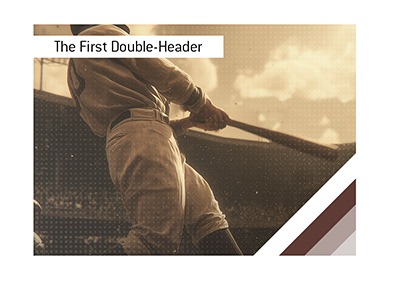 The first double-header in Major League Baseball history dates all the way back to September 25, 1882. The teams? Providence Grays and Worcester Ruby Legs of the National League. It happened at Messer Street Grounds in Providence, Rhode Island. Back then, fans didn't even know what a "double-header" was supposed to be. Two games, same teams, same day - one ticket.
It wasn't planned as a marketing idea. The reason was simple: weather. A rained-out game earlier in the season had to be made up, and the league's schedule was closing fast. So Providence and Worcester decided to play twice in one day. No fancy television contracts. No split admission. Just baseball from start to finish.
The first game saw the Grays roll past the Ruby Legs. They won 4-0 behind the arm of John Montgomery Ward, one of baseball's early two-way stars. The second game was more of the same - another win for Providence, though by a tighter margin. The sweep wasn't just another pair of results. It also locked the Grays into a strong finish, while Worcester - already on the brink of folding - ended the season in financial ruins.
That day set a precedent that would define decades of baseball scheduling. Teams quickly realized double-headers drew crowds. Fans got more value. Clubs could clean up the gate receipts from postponed games. By the early 1900s, double-headers were a fixture of the summer calendar, especially on holidays and Sundays.
In the early days, players had no clubhouse comforts or recovery routines. They played two full nine-inning games, often with the same lineup. Pitchers threw both ends more than once in those years. It was baseball stripped down to its simplest form - all-day competition and pure stamina.
The Providence Grays won the National League title that year. The Worcester Ruby Legs disappeared from the league shortly after. One club made history, the other faded away. But their meeting on September 25, 1882, wrote the first line in one of baseball's most enduring traditions - the double-header.