The Day Messi Told Spain No - and the Final That Settles It
Published on July 16th, 2026 11:00 am ESTWritten By: Dave Manuel
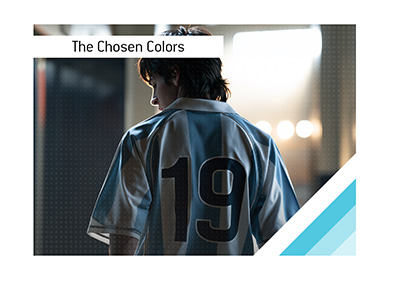 Sunday's World Cup final between Spain and Argentina at MetLife Stadium carries a 22-year-old subplot: Lionel Messi, who has lived in Spain since age 13, was actively pursued by the Spanish federation as a teenager - a U17 offer was made and, by Jose Pekerman's account, paperwork toward capping him was underway - before Argentina locked him in with a hastily arranged U20 friendly against Paraguay on June 29, 2004, found his family through the Rosario Yellow Pages, and got his name on a FIFA match sheet in an 8-0 where he scored the seventh. Messi's own explanation never changed: Argentina's were the only colours he wanted to wear. Since the choice, Spain have won four majors without him and Argentina three with him - and on Sunday, at 39, fresh off assisting both goals of the semifinal comeback against England, he faces the road not taken with the trophy in between. The complete story: the tape, the Finland semifinal, Spain's approaches, the phone booth, the friendly, and the final.
Sports-King Feature
The Road Not Taken
Sunday's World Cup final is Spain against Argentina, which means it is also this: Lionel Messi, at 39, against the country that tried to cap him at 16 - the choice he made in 2004, settled by a VHS tape, a phone booth, a hastily arranged friendly and an 8-0, finally meeting its counterfactual on the biggest stage football has.
The MachineSpainResidency. Citizenship. Paperwork underway.The FlagArgentinaA phone booth. A friendly. The only colours.
Every World Cup final carries subplots, but Sunday's at MetLife Stadium carries a whole alternate universe. Twenty-two years ago, the Spanish federation moved to make Lionel Messi - a 16-year-old Rosario kid who had lived in Barcelona since he was 13 - a Spain youth international, and by the accounts of the men involved, the paperwork was underway. Argentina's counter was not a marketing campaign or a bidding war. It was a VHS tape that took two months to cross the Atlantic, a federation employee calling every Messi in the Rosario phone book from a phone booth because nobody had the family's number, and a friendly against Paraguay arranged at Diego Maradona's old stadium for essentially one purpose: get the boy on the pitch, get his name on the match sheet, send it to FIFA, and end the conversation forever. Messi came on, scored in an 8-0, and - in the words of the man who orchestrated it - it was Spain, never again. On Sunday, the two roads finally intersect: the European champions Spain became without him against the back-to-back-chasing Argentina he chose, with Messi one match from becoming the first man since 1962 to retain the World Cup and only the second ever, after Cafu, to play in three finals. This is the full story of the choice - what happened, why he had the option, what Spain actually did to get him, and what decided it - told while its epilogue waits in New Jersey.
The Choice MadeJune 29, 2004
The Friendly8-0
Majors Since, ESP-ARG4-3
The EpilogueSunday
1
One VHS, two months in transit
The ScoutClaudio Vivas
The CargoA VHS of a Barca kid
Transit TimeTwo months
The RecipientHugo Tocalli
The Timing15 days before Finland
The VerdictNot this time
The signature: the future of Argentine football spent two months as an unwatched cassette because the national team staff was on tour
The story begins, perfectly for its era, with physical media. Claudio Vivas, then an assistant to Marcelo Bielsa, obtained a videotape of a Rosario-born teenager tearing through Barcelona's youth ranks and sent it toward the national youth setup - where it took two months to arrive, because the staff was abroad with the senior team. When Vivas finally delivered it, he went straight from the airport to hand it to Hugo Tocalli, coach of Argentina's youth teams, with a line that has aged into legend for its understatement: here is a kid from Rosario playing in Spain, see if you like him, and if not, that's fine. The problem was the calendar. The 2003 Under-17 World Cup in Finland was fifteen days away, Tocalli's squad had been together for two years, and he made the defensible, fateful call not to parachute in a boy he had seen only on tape. Messi stayed home. Argentina went to Finland without him - and walked directly into the match that would set the whole race in motion.
2
The defeat that told Argentina exactly what Spain knew
The MatchU17 World Cup semifinal
The LeadArgentina, 2-0
The Collapse3-2, Biglia hurt
The ExecutionerCesc Fabregas, twice
The DetailMessi's Barca teammate
The ConfessionOver dinner
The signature: Spain beat Argentina with Messi's own club teammate - then told the Argentines they would have won the whole tournament with the kid both sides were now thinking about
In the Finland semifinal, Argentina led 2-0, lost Lucas Biglia to injury, and lost the match 3-2 - the last two goals scored by a small Spanish midfielder named Cesc Fabregas, who happened to be Messi's teammate and close friend in Barcelona's cadet sides. The symbolism needed no polishing: Spain had beaten Argentina with one half of Barca's teenage midfield while the other half sat in Catalonia, eligible - in practical terms - for either country. What happened next is the part the men involved have told for two decades. At the post-tournament dinner where the two federations' officials mingled, Messi's name came up, and members of the Spanish coaching staff told their Argentine counterparts, in words Jose Pekerman has repeated ever since, that if they had had that kid, they would have won it. It was meant, perhaps, as a compliment. Buenos Aires received it as a starting gun. Spain's youth machine - the same apparatus that had just polished Fabregas and would soon produce the greatest national team era in European history - had identified Messi, wanted Messi, and was in a position to get Messi. Argentina now knew it. The race was on, and Argentina was starting from a phone booth.
3
The option, explained
Why EligibleIn Spain since age 13
The First MoveA U17 squad offer
The SecondU20 paperwork underway
PerPekerman's account
The BlueprintFabregas and Pique's path
Messi's AnswerOnly one shirt
The signature: Spain's pursuit was real enough that Argentina's coaches believed the documents were moving - and Messi's refusal predated all of it
Why did Messi have the option at all? Because since 2000 he had been a resident of Spain - the family had moved when Barcelona agreed to pay for the growth-hormone treatment Rosario could not fund, the famous first contract sketched on a napkin - and Spain's federation, which tracks La Masia the way a customs office tracks cargo, had watched him become the best teenager in the country it was responsible for. The approaches were concrete. The RFEF moved to offer him a place in its under-17 setup, and by 2004, in Pekerman's telling, the paperwork to have him play for Spain at youth level was already underway - the same naturalization-and-cap pathway Spain's system had used and would use for others, with Messi's Spanish citizenship attainable through residency (he would in fact formalize it in 2005, for club registration purposes). Under the FIFA rules of the era, one competitive youth appearance would effectively have settled his allegiance for life. Against all of that stood one immovable object: the player. Messi has told the story himself with characteristic flatness - he was asked, informally, whether he wanted to play for Spain, and always answered that he wanted his own national team, that he loved Argentina, and that those were the only colours he wanted to wear. He had grown up watching the albiceleste on television in Rosario because he could never go to the grounds. Spain was offering a machine. He wanted the flag.
4
The most consequential friendly ever staged
The ProblemAFA had no phone number
The FixRosario Yellow Pages
The ChainGrandmother, uncle, father
The MatchARG U20 8, Paraguay 0
The VenueMaradona's old stadium
The PurposeSign the sheet
The signature: Pekerman's instruction was explicit - he did not need the kid to star, he needed his name on a FIFA match sheet. Messi scored anyway
The rescue operation's first obstacle was almost comically pre-digital: the Argentine federation resolved to call Messi up and discovered nobody had the family's phone number in Barcelona. An AFA staffer named Omar Souto solved it the old way - he went to a phone booth, requested the Rosario Yellow Pages, found the letter M, and dialed Messis one by one until a grandmother answered, who supplied an uncle, who supplied Jorge Messi. From there the machinery moved with a speed the AFA has rarely managed before or since. Pekerman briefed president Julio Grondona; Tocalli, whose under-20 squad was already set, was told the point was not to play the boy heavy minutes but to get him onto a pitch in an official shirt - sign the match sheet, send it to FIFA, and, in the phrase Pekerman still uses, Spain, never again. On June 29, 2004, at the Argentinos Juniors stadium where Diego Maradona had announced himself a generation earlier, Argentina's under-20s played a friendly against Paraguay that existed, in every meaningful sense, for one substitute. Messi came on in the second half of an 8-0 and scored the seventh, dribbling through the visitors as his new teammates - Zabaleta among them - watched what one of them later called the realization that they were looking at a phenomenon. A second arranged friendly against Uruguay followed to make the tie airtight. The most important recruitment battle in the history of international football was settled by a teenager's cameo in a meaningless rout, witnessed by almost nobody, decided years earlier in a boy's living room in Rosario.
5
The final as the counterfactual, resolved
The FinalSpain vs Argentina, Jul 19
The StakesFirst repeat since 1962
Messi's FinalsHis 3rd World Cup final
Only Other ManCafu
The Semifinal2 assists at 39
The OddsArgentina, underdog
The signature: the machine Spain built without him against the flag he chose instead - with the trophy both careers were pointed at sitting between them
Both roads led somewhere extraordinary, which is what makes Sunday the rarest kind of final: a counterfactual with a scoreboard. Spain, denied Messi, built the greatest international machine of the modern era anyway - Euro 2008, the 2010 World Cup, Euro 2012, and, with a new generation, Euro 2024 - and arrives in New Jersey as European champion and the bookmakers' favorite. Argentina, chosen by Messi, made him carry the weight of the choice through four lost finals and a brief, heartbroken international retirement in 2016 before the dam broke: the 2021 Copa America, the 2022 Finalissima, the 2022 World Cup, the 2024 Copa - and now, at this tournament, a 39-year-old who assisted both late goals of Wednesday's 2-1 semifinal comeback against England - the 85th-minute equalizer and the stoppage-time winner, extended his record to ten career World Cup knockout assists (nobody else in sixty years has more than four), and became the second man in history, after Cafu, to reach three World Cup finals. Win, and Argentina becomes the first nation to retain the trophy since Brazil in 1962 and the choice of 2004 acquires its final, unanswerable punctuation. Lose, and Spain's trophy case makes the counterfactual argument out loud forever. Either way, the 16-year-old who told the machine no gets to settle the matter in person - which is more than history usually allows.
The Choice, Dated
From Rosario to MetLife in fourteen rows. The gold rows are the two days the choice was made and vindicated; the red row is Sunday, where its epilogue kicks off.
| # | Date | What Happened |
|---|---|---|
| 1 | Jun 24, 1987 | Born in Rosario; grows up watching the albiceleste on television because tickets are out of reach |
| 2 | 2000 | The family moves to Barcelona after the club agrees to fund his growth-hormone treatment; the first agreement is famously sketched on a napkin |
| 3 | 2003 | Claudio Vivas sends a VHS of the teenager to Argentina's youth setup; it takes two months to arrive |
| 4 | Aug 2003 | Tocalli receives the tape 15 days before the U17 World Cup and leaves Messi out of the Finland squad |
| 5 | Aug 2003 | Finland semifinal: Spain beat Argentina 3-2, Fabregas scoring twice; Spanish staff tell the Argentines they would have won it with the Barca kid |
| 6 | 2003-04 | The RFEF moves: a Spain U17 offer, and - per Pekerman - paperwork underway toward capping him at youth level |
| 7 | 2004 | The AFA, lacking a phone number, finds the family via the Rosario Yellow Pages from a phone booth |
| 8 | Jun 29, 2004 | The arranged friendly: Argentina U20 8, Paraguay 0 at the Argentinos Juniors stadium; Messi comes on, scores the seventh, and the match sheet goes to FIFA |
| 9 | 2004 | A second arranged friendly against Uruguay makes the tie airtight |
| 10 | 2005 | Wins the U20 World Cup as its best player; makes his senior debut in August and is sent off inside two minutes; formalizes Spanish citizenship for club purposes - too late to matter |
| 11 | 2007-2016 | Four major finals, four defeats - Copa 2007, World Cup 2014, Copa 2015 and 2016 - and a brief international retirement |
| 12 | 2021-2024 | The dam breaks: Copa America 2021, the Finalissima, the 2022 World Cup, Copa America 2024 |
| 13 | Jul 15, 2026 | At 39, assists both late goals in the 2-1 semifinal comeback against England in Atlanta |
| 14 | Jul 19, 2026 | The final: Spain vs Argentina, MetLife Stadium - the machine he refused against the flag he chose |
The Arithmetic
Three charts that frame Sunday. What each road has won since the choice, the shape of Messi's nine major finals, and the knockout-stage record he extended on Wednesday at an age when most careers are long finished.
Major trophies since the choice
Both roads worked - that is what makes the final a genuine referendum rather than a gloat. Spain leads the majors count 4-3 (Argentina's 2022 Finalissima win over Italy not counted as a major here). Sunday is, quite literally, the tiebreaker.
Messi's major finals with Argentina
The career the choice bought him: four finals of heartbreak, a retirement he reversed, then four finals of catharsis. Sunday is the ninth - and the first ever against the country that offered him the other road.
World Cup knockout-stage assists, all time (past 60 years)
Both England goals on Wednesday came from his passes, at 39 - a record now two and a half times the next-best mark in six decades, per ESPN's tally. The boy on the VHS tape is still the delivery mechanism.
The Record Book
The margins of the file: the man who scored twice in Finland, the other federations in this genre, the 47 seconds nobody mentions, and where our coverage of this World Cup connects.
The Fabregas FootnoteThe player who beat Argentina in the 2003 semifinal - and in doing so accidentally started the race - spent the next two decades as the counterfactual's best witness. Cesc Fabregas, Messi's cadet-team midfield partner at La Masia, was capped by Spain, won the 2010 World Cup and two Euros, and has said publicly that while Spain missed out, Messi's decision to choose Argentina was the right one. The two remained close through it all, which gives the story its gentlest irony: the machine's poster boy and the machine's great refusal grew up passing to each other in the same youth midfield.
The GenreMessi's case is the masterpiece of a whole genre: federations racing to cap dual-eligible teenagers before rivals do. Spain itself has won plenty of these races; Argentina has lost some. The mechanics that decided 2004 - one youth appearance effectively locking allegiance - have since been loosened by FIFA, which now allows switches under defined conditions, meaning the modern version of this story (see our multi-national stars feature, where this tournament's own eligibility sagas live) plays out with lawyers instead of phone booths. It will never again be settled by a Yellow Pages and an 8-0, which is precisely why the 2004 version deserves its own file.
The 47 SecondsThe choice's first senior chapter was farce. Messi's Argentina debut, in an August 2005 friendly against Hungary, ended inside two minutes of his introduction: sent off for an elbow flagged as retaliation while trying to escape a shirt-pull, before he had completed more than a handful of touches. He reportedly wept in the dressing room. It remains the great comic footnote of the whole saga - the most consequential international recruitment in history, secured by a federation's full institutional panic, debuting to a red card in under 120 seconds. The second chapter, for the record, was the 2005 U20 World Cup: champion, best player, top scorer. The trajectory recovered.
Elsewhere in Our CoverageThis file sits inside a World Cup cluster. The eligibility mechanics and this tournament's own dual-national sagas live in our multi-national stars feature; the political dimensions of this World Cup, including Sunday's trophy presentation, live in our political interference file; the comebacks canon - which Argentina's current run keeps auditioning for - lives in our greatest comebacks feature, and Saturday's France-England third-place game belongs to our feature on the match nobody wants. When the final ends, several of those files update within the day. This one gets its epilogue either way.
Sports-King's Note
Now for the fine print. The spine of the 2003-04 narrative - the Vivas tape and its two-month journey, the fifteen days before Finland, the phone-booth Yellow Pages search, Pekerman's account that Spain's paperwork was underway, the sign-the-sheet instruction and the Spain-never-again line - follows the principals' own tellings, principally the oral-history record and Pekerman's recent public retelling, and is attributed as their account throughout. Messi's motive is given in his own published words (asked informally about Spain; wanted only Argentina's colours). The June 29, 2004 date follows the standard record; one recent retelling dates the match a day earlier, and we note it. The friendly finished 8-0 with Messi scoring the seventh; the second arranged friendly against Uruguay is per the standard record. His senior-debut red card is described as inside two minutes rather than by an exact second count, since tellings vary. The majors chart counts continental championships and World Cups only, and says so; the Finalissima is disclosed alongside rather than counted. The knockout-assists figure (10, next-best 4 in 60 years) is ESPN's published tally after the England semifinal. Sunday's odds line (Argentina underdog) is as posted by major books at publication and will move. Update trigger: the final itself - this file gets its closing paragraph on Sunday night, whichever road wins.One Last Word
Strip the legend down and the choice was never actually close, which is the detail every retelling risks losing. Spain had the residency, the citizenship pathway, the youth machine, the paperwork and the polish. Argentina had a boy's certainty and a federation scrambling through a phone book. The machine offered him inevitability. The flag offered him nothing but itself. He took the flag, and then spent twenty years making it inevitable anyway.
On Sunday at MetLife the two roads finally share a pitch, and for ninety minutes or more the counterfactual gets the only hearing it will ever receive. If Spain win, the machine's argument stands: look what we built without you. If Argentina win, a 39-year-old in his third final retains the World Cup, matches a feat last managed when his parents were children, and closes the file on June 29, 2004 with the only sentence it ever needed. Either way, somewhere in Rosario there is a phone booth that deserves a plaque.