Too Small for Buchtel: The Real Story of LeBron's High School
Published on July 15th, 2026 10:00 am ESTWritten By: Dave Manuel
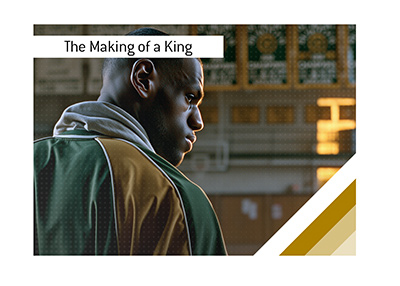
LeBron James's four years at St. Vincent-St. Mary are the most documented high school career in sports history, and this file publishes the whole thing: every game he played, all 106 of them, with full box lines from December 1999 to the March 2003 state final - plus the answers to the questions around the log. Why SVSM? Because Buchtel's coach told his best friend Dru Joyce III he was too small, and the Fab Four followed their point guard. How big was the attention? Home games moved to a university arena in his SOPHOMORE year, a Sports Illustrated cover at 17, ESPN2 broadcasts and $7.95 pay-per-view. How heavily was he recruited? Ranked No. 1 in the class of 2003 and pursued by every blueblood as a formality - the real bidding war was Nike vs Reebok vs adidas, ending at roughly $90 million, and the only sincere college letters came from football programs like Notre Dame. Three state titles, a national championship, two investigations, one forfeit, a 52-point answer.
Sports-King Feature
Four Winters in Akron
He picked his high school because his point guard was told he was too small. He picked his shoe company with a $90 million pen. In between: three state titles, a magazine cover that named him at 17, two investigations, one forfeit, and the most documented high school career ever played. The complete file - including every single game.
2000DIII State Champions2001DIII State Champions2002
The One
Roger Bacon Kept2003DII + National Title
The One
Roger Bacon Kept2003DII + National Title
No athlete's adolescence has ever been recorded like LeBron James's, which makes his high school career the rare legend that can be audited. From December 3, 1999 - fifteen points against Cuyahoga Falls as a 14-year-old - to the state final of March 22, 2003, every box line survives, and this article publishes all of it: 106 documented games, 2,667 points, four seasons that took a Catholic school of a few hundred students to three Ohio titles, a USA Today national championship, and a 101-6 record. Around the log sits the story the numbers keep interrupting: why the most coveted teenager in America was at St. Vincent-St. Mary at all (because a coach told his best friend he was too small), what the attention actually looked like (arena relocations, national tours, $7.95 pay-per-view, a Sports Illustrated cover at 17), who was recruiting him (everyone, for nothing - the letters that mattered came from Nike, Reebok and adidas, and from Notre Dame's FOOTBALL office), and the winter Ohio's amateurism rules went to war with a Hummer and lost to a pair of throwback jerseys. Four winters, complete. Pull up a chair.
Games Logged106
Career Record101-6
State Titles3
Career High52
1
The decision that started everything - and it was not his
The PlanBuchtel, all four of them
The ProblemDru was "too small"
The CoachKeith Dambrot, SVSM
The SwayDru convinced LeBron
The PactFab Four together
The CostCalled sellouts at home
The signature: LeBron James's high school was chosen by a 5-foot-nothing point guard with a grudge and a coach who liked little guards
The four of them - LeBron, Dru Joyce III, Sian Cotton, Willie McGee, the self-named Fab Four from the Northeast Ohio Shooting Stars AAU team - had a pact to attend high school together, and everyone in Akron assumed that meant Buchtel, the big public basketball power on the West Side where Dru's own father was an assistant coach. Then word reached Little Dru that Buchtel's varsity coach considered him too small to play any time soon, and the smallest member of the group made the biggest decision in the city's history. Keith Dambrot - a former Central Michigan head coach rebuilding his life as a financial planner who ran community-center clinics, hired by St. Vincent-St. Mary in 1998 - had coached Dru at those clinics and liked little guards. Dru announced he was going to SVSM, where he could play varsity as a freshman; and as Dambrot later put it, Dru and LeBron were always going to be together, so Dru convinced LeBron, and Cotton and McGee followed. The fallout was real and racial: four Black kids leaving a historically Black public school for a mostly white private Catholic one were called sellouts by parts of their own community, a wound the group has spoken about for decades. The basketball answer arrived quickly - they went 27-0 and won the state title as freshmen, beat Buchtel head-to-head every time they met until the forfeit, and by the time it was over the little guard's grudge had produced a 101-6 dynasty. Buchtel did not win a state title until 2023.
2
The circus, itemized
Sophomore YearMoved to Rhodes Arena
Junior YearThe SI cover, at 17
Senior Year$7.95 pay-per-view
Dec 12, 2002Oak Hill on ESPN2
The TourPhilly, LA, Pittsburgh, Greensboro
The RankingsUSA Today No. 1
The signature: a high school moved its home games to a university arena as a SOPHOMORE accommodation - and the arena still was not big enough by senior year
The attention arrived in stages, each one unprecedented. As a sophomore, demand from alumni, fans and the NBA scouts already showing up forced St. Vincent-St. Mary to move home games to the University of Akron's Rhodes Arena. As a junior, Sports Illustrated put him on the cover of its February 2002 issue as The Chosen One - a high school junior anointed on the newsstand at 17, a decision so consequential the jersey he wore for the shoot has since sold at auction for more than half a million dollars. By his senior season the school was, in effect, a touring production: a national schedule built to play NBA-sized arenas in Pittsburgh, Philadelphia, Los Angeles and Greensboro at near-sellouts, the December 12 Oak Hill Academy showdown broadcast nationally on ESPN2 - he answered with 31 points and 13 rebounds, and the log below has the line - and, most 2002 of all, Time Warner Cable selling St. Vincent-St. Mary games to Ohio subscribers at $7.95 a game on pay-per-view. A Catholic school of a few hundred students had a broadcast rights deal. The kid on the honor roll at the center of it, as he reminded an awards-dinner crowd that winter, carried a 3.5 grade-point average through the whole storm.
3
Everyone called; nobody was really calling about college
Recruiting RankNo. 1, class of 2003
College BasketballA formality nobody believed
The Real BiddersNike, Reebok, adidas
The Football FileNotre Dame, for real
Junior YearExplored early NBA entry
May 2003Nike, ~$90M, pre-draft
The signature: the only recruiting letters with a live chance of landing LeBron James came from a shoe war and a football office
On paper he was the No. 1 recruit in the class of 2003, and every blueblood program duly wrote. In practice, college basketball's pursuit of LeBron James was a polite fiction from about his sophomore year, when NBA scouts became fixtures at Rhodes Arena and the question stopped being where he would enroll and became when he could leave. After his junior season he explored the possibility of entering the NBA draft a year early - the league's rules said no, and he returned for a senior year everyone understood as a farewell tour. The genuine recruiting war was fought by sneaker companies: a three-way Nike-Reebok-adidas bidding contest that ran through his entire senior year - adidas courting him through the grassroots circuit, Reebok famously putting a $10 million check on the table in a story James has told for years, and Nike closing it in May 2003, weeks BEFORE the draft, at approximately $90 million over seven years. The one recruitment that was entirely real came from the other sport: as a two-way wide receiver he was first-team all-state as a sophomore and led the football team to a state semifinal as a junior, and Division I programs - Notre Dame among them - recruited him for football until a wrist injury ended his career before his senior season. The greatest basketball recruit ever was, formally speaking, a football recruit.
4
January 2003: amateurism vs the inevitable
The H2A birthday gift, ~$50k
The VerdictCleared - a family loan
The JerseysSayers + Unseld, $845
The RulingIneligible, Jan 31
The AppealCut to two games
The Answer52 in his return
The signature: cleared over a fifty-thousand-dollar truck, convicted over two shirts - and he answered the whole month with a toy Hummer and 102 points in two games
The senior-year investigations are the part of the story where the era indicts itself. For his 18th birthday, his mother Gloria gave him a Hummer H2 worth roughly $50,000, financed with a loan secured against her son's obvious future earnings - and Ohio's amateur bylaws treated it as a two-week scandal, complete with national hand-wringing about how a poor kid got an expensive truck. He answered the coverage by driving a remote-control Hummer around the court before his next game and scoring 50 on Mentor with eleven three-pointers; two weeks later the OHSAA cleared him, since a mother is not a booster. The association got him anyway, and the pettiness of the winning charge remains breathtaking: a local clothing store gave him two throwback jerseys - Gale Sayers and Wes Unseld, $845 combined - in exchange for posing for photos, and on January 31 commissioner Clair Muscaro declared his amateur status forfeit and his career over. St. Vincent-St. Mary's win over Buchtel was stripped - the only loss on the senior schedule, and the reason the log below records that game as an L despite the 64-58 scoreline. A court challenge cut the penalty to two missed games, and his first night back, February 8 in Trenton against Los Angeles powerhouse Westchester, produced the single most famous line in the log: 52 points, a career high, delivered as a closing argument. The whole affair helped change how America thinks about amateurism; two decades later the man once suspended over free jerseys was being paid to endorse Hummers.
5
The career, computed from the log
Freshman18.0 ppg, 27-0, title
Sophomore25.7 ppg, 26-1, title
Junior28.0 ppg, 23-4
Senior29.2 ppg, 25-1, title
Career Points2,667 logged
Documented Games106
The signature: the averages rose every single season while the opposition went from Ohio Division III to the best teams in America
The shape of the four years is visible in three numbers per winter, and all of them point the same direction. As a freshman he was a 6-foot-2 complementary star on an unbeaten state champion; as a sophomore, the leading man on a repeat champion, and the first sophomore ever named Ohio Mr. Basketball or USA Today All-USA First Team. The junior season is the interesting wrinkle: the schedule hardened into a national gauntlet, the team lost four times - including the Roger Bacon state final, the only title-game defeat of his life - and his production jumped anyway, which is the year the scouts' last doubts died. The senior year needs no adjective: a national schedule, a two-game suspension, and averages of 29.2 points, computed from the log below, on a team that lost exactly one game it actually played and finished No. 1 in the USA Today rankings - the national championship of the sport as it then existed. He left with three Ohio titles in four finals, three Mr. Basketball awards - the first player ever to win it three times - two national player of the year seasons, and the McDonald's All-American Game MVP as the exit music. Then the Cavaliers won the lottery, and Akron kept him anyway.
The Complete Log
Every documented game of LeBron James's high school career, season by season, as preserved in the sport's standard game-log record. Gold rows are state finals; red rows are the strange ones - the losses, the forfeit, and the two games amateurism took. Reading the four tables top to bottom is watching a career happen at one row per night.
Freshman, 1999-2000
27-0, Division III state champions. 27 games, 18.0 points and 6.2 rebounds per game at age 15 - the only unbeaten boys team in Ohio that season.
| # | Date | Opponent | W/L | PTS | FG | 3P | FT | REB / AST |
|---|---|---|---|---|---|---|---|---|
| 1 | Dec 3, 1999 | Cuyahoga Falls | W | 15 | 6-10 | 1-2 | 2-2 | 8 / 2 |
| 2 | Dec 4, 1999 | Cleveland Central Catholic | W | 21 | 9-15 | 2-5 | 1-1 | 7 / 2 |
| 3 | Dec 7, 1999 | Garfield | W | 11 | 4-16 | 0-8 | 3-3 | 5 / 2 |
| 4 | Dec 17, 1999 | Benedictine | W | 27 | 10-16 | 2-4 | 5-6 | 4 / 1 |
| 5 | Dec 18, 1999 | Detroit Redford (MI) | W | 18 | 8-17 | 0-2 | 2-4 | 8 / 2 |
| 6 | Dec 28, 1999 | Mansfield Temple Christian | W | 20 | 9-16 | 0-1 | 2-2 | 6 / 1 |
| 7 | Dec 30, 1999 | Mapleton | W | 21 | 7-14 | 5-8 | 2-2 | 3 / 0 |
| 8 | Jan 4, 2000 | Central-Hower | W | 21 | 10-18 | 1-3 | 0-1 | 6 / 4 |
| 9 | Jan 7, 2000 | Massillon | W | 14 | 7-17 | 0-3 | 0-0 | 5 / 4 |
| 10 | Jan 11, 2000 | Padua | W | 14 | 5-12 | 1-2 | 3-3 | 4 / 8 |
| 11 | Jan 12, 2000 | Maple Heights | W | 8 | 4-12 | 0-5 | 0-0 | 8 / 5 |
| 12 | Jan 14, 2000 | Linsly Academy (WV) | W | 17 | 7-12 | 0-0 | 3-3 | 1 / 5 |
| 13 | Jan 15, 2000 | Western Reserve Academy | W | 12 | 5-17 | 2-6 | 0-0 | 5 / 3 |
| 14 | Jan 25, 2000 | Youngstown Ursuline | W | 13 | 3-8 | 2-5 | 5-6 | 6 / 3 |
| 15 | Jan 28, 2000 | Walsh Jesuit | W | 15 | 6-17 | 0-2 | 3-4 | 6 / 2 |
| 16 | Feb 1, 2000 | Coventry | W | 22 | 9-15 | 2-2 | 2-2 | 6 / 4 |
| 17 | Feb 5, 2000 | Ashland Crestview | W | 23 | 10-12 | 2-3 | 1-2 | 2 / 5 |
| 18 | Feb 15, 2000 | CVCA | W | 17 | 7-17 | 1-3 | 2-3 | 6 / 4 |
| 19 | Feb 23, 2000 | Youngstown Rayen | W | 18 | 7-11 | 1-5 | 3-3 | 9 / 6 |
| 20 | Feb 27, 2000 | Archbishop Hoban | W | 27 | 11-17 | 3-6 | 2-3 | 7 / 4 |
| 21 | Mar 3, 2000 | Loudonville | W | 17 | 8-12 | 0-1 | 1-2 | 6 / 6 |
| 22 | Mar 6, 2000 | Hillsdale | W | 23 | 11-19 | 1-3 | 0-1 | 7 / 5 |
| 23 | Mar 11, 2000 | Waynedale | W | 17 | 7-15 | 0-2 | 3-4 | 11 / 4 |
| 24 | Mar 16, 2000 | Newton Falls | W | 14 | 6-11 | 0-1 | 2-2 | 6 / 2 |
| 25 | Mar 18, 2000 | Villa Angela-St. Joseph | W | 18 | 7-16 | 2-4 | 2-2 | 6 / 5 |
| 26 | Mar 24, 2000 | Canal Winchester | W | 19 | 6-12 | 0-3 | 7-9 | 11 / 2 |
| 27 | Mar 25, 2000 | Jamestown Greeneview - State final - first title | W | 25 | 10-12 | 2-4 | 3-4 | 9 / 5 |
Sophomore, 2000-01
26-1, Division III state champions again - the lone loss to national power Oak Hill, with 33 from LeBron. 25.7 points, 7.4 rebounds and 5.8 assists per game, and by February the home games lived at a university arena.
| # | Date | Opponent | W/L | PTS | FG | 3P | FT | REB / AST |
|---|---|---|---|---|---|---|---|---|
| 1 | Dec 3, 2000 | Cape Henry Collegiate (VA) | W | 23 | 8-12 | 3-5 | 4-10 | 4 / 2 |
| 2 | Dec 6, 2000 | Garfield | W | 34 | 12-19 | 2-5 | 8-11 | 6 / 5 |
| 3 | Dec 9, 2000 | Orange | W | 25 | 9-14 | 0-0 | 7-8 | 12 / 6 |
| 4 | Dec 16, 2000 | Racine Case (WI) | W | 29 | 12-20 | 4-6 | 1-1 | 5 / 8 |
| 5 | Dec 17, 2000 | Detroit Redford (MI) | W | 16 | 5-13 | 0-1 | 6-7 | 7 / 3 |
| 6 | Dec 19, 2000 | Cleveland Central Catholic | W | 21 | 8-19 | 1-4 | 4-6 | 6 / 9 |
| 7 | Dec 29, 2000 | Ashland Crestview | W | 15 | 7-12 | 0-3 | 1-1 | 3 / 9 |
| 8 | Jan 5, 2001 | Massillon | W | 24 | 10-18 | 1-3 | 3-5 | 7 / 9 |
| 9 | Jan 7, 2001 | Kennedy Christian (PA) | W | 20 | 7-13 | 2-5 | 4-8 | 9 / 4 |
| 10 | Jan 13, 2001 | Oak Hill Academy (VA) - First Oak Hill duel | L | 33 | 13-26 | 5-11 | 2-4 | 4 / 4 |
| 11 | Jan 19, 2001 | Youngstown Rayen | W | 20 | 8-18 | 1-3 | 3-3 | 6 / 4 |
| 12 | Jan 25, 2001 | Walsh Jesuit | W | 31 | 13-20 | 0-2 | 5-8 | 7 / 4 |
| 13 | Jan 28, 2001 | Buchtel - Beat the school they left | W | 33 | 9-15 | 1-4 | 14-15 | 4 / 1 |
| 14 | Feb 2, 2001 | Villa Angela-St. Joseph | W | 15 | 4-9 | 1-2 | 6-10 | 7 / 10 |
| 15 | Feb 3, 2001 | Benedictine - First 40-point night | W | 41 | 16-20 | 1-3 | 8-12 | 9 / 6 |
| 16 | Feb 10, 2001 | Youngstown Ursuline | W | 26 | 11-16 | 0-1 | 4-5 | 6 / 9 |
| 17 | Feb 11, 2001 | Archbishop Hoban | W | 27 | 11-17 | 2-3 | 3-3 | 2 / 7 |
| 18 | Feb 16, 2001 | Western Reserve Academy | W | 29 | 12-14 | 3-5 | 2-2 | 9 / 5 |
| 19 | Feb 21, 2001 | George Jr. Republic (PA) | W | 24 | 8-15 | 1-2 | 7-9 | 7 / 7 |
| 20 | Feb 25, 2001 | Central-Hower | W | 26 | 9-18 | 0-0 | 8-11 | 11 / 4 |
| 21 | Mar 3, 2001 | United Local | W | 19 | 9-15 | 0-3 | 1-2 | 9 / 5 |
| 22 | Mar 5, 2001 | Lisbon David Anderson | W | 31 | 13-19 | 1-3 | 4-5 | 6 / 7 |
| 23 | Mar 9, 2001 | N. Middletown Springfield | W | 14 | 6-14 | 1-2 | 1-4 | 7 / 6 |
| 24 | Mar 15, 2001 | Hillsdale | W | 24 | 10-26 | 1-4 | 3-4 | 14 / 6 |
| 25 | Mar 17, 2001 | Villa Angela-St. Joseph | W | 30 | 11-17 | 2-3 | 6-8 | 14 / n/a |
| 26 | Mar 22, 2001 | Haviland Wayne Trace | W | 29 | 12-19 | 0-1 | 5-6 | 9 / n/a |
| 27 | Mar 24, 2001 | Casstown Miami East - State final - second title | W | 35 | 11-14 | 0-0 | 3-5 | 10 / n/a |
Junior, 2001-02
23-4 against a national schedule, with the Chosen One cover landing mid-season and the year ending in the Roger Bacon state final - the only championship game he ever lost. 28.0 points, 8.9 rebounds and 6.0 assists per game.
| # | Date | Opponent | W/L | PTS | FG | 3P | FT | REB / AST |
|---|---|---|---|---|---|---|---|---|
| 1 | Nov 30, 2001 | Avon Lake | W | 28 | 13-19 | 2-3 | 0-1 | 12 / 6 |
| 2 | Dec 1, 2001 | Germantown Academy (PA) | W | 38 | 15-23 | 2-3 | 6-14 | 17 / 4 |
| 3 | Dec 9, 2001 | St. Louis Vashon (MO) | W | 26 | 10-21 | 0-3 | 6-10 | 11 / 2 |
| 4 | Dec 15, 2001 | Louisville Male (KY) | W | 37 | 15-24 | 2-6 | 5-5 | 5 / 7 |
| 5 | Dec 22, 2001 | Cincinnati Roger Bacon | W | 29 | 9-18 | 0-4 | 11-20 | 9 / 4 |
| 6 | Dec 23, 2001 | Detroit Redford (MI) - Career high to date | W | 43 | 16-27 | 3-8 | 8-16 | 9 / 8 |
| 7 | Dec 28, 2001 | St. Benedict (NJ) | W | 18 | 7-14 | 0-3 | 4-8 | 9 / 8 |
| 8 | Dec 30, 2001 | Amityville (NY) | L | 39 | 12-29 | 4-11 | 11-13 | 6 / 5 |
| 9 | Jan 6, 2002 | University School | W | 20 | 9-15 | 1-2 | 1-3 | 7 / 1 |
| 10 | Jan 11, 2002 | Franklin (PA) | W | 22 | 10-15 | 1-2 | 1-2 | 3 / 6 |
| 11 | Jan 13, 2002 | Brush | W | 24 | 8-21 | 1-5 | 7-11 | 7 / 8 |
| 12 | Jan 18, 2002 | East Liverpool | W | 26 | 9-17 | 1-6 | 7-10 | 11 / 6 |
| 13 | Jan 20, 2002 | Villa Angela-St. Joseph | W | 23 | 10-15 | 3-6 | 0-3 | 8 / 11 |
| 14 | Jan 25, 2002 | Walsh Jesuit | W | 30 | 11-24 | 4-9 | 4-6 | 2 / 6 |
| 15 | Jan 27, 2002 | Buchtel | W | 33 | 13-22 | 4-10 | 3-5 | 8 / 10 |
| 16 | Feb 3, 2002 | Archbishop Hoban | W | 32 | 15-23 | 2-5 | 0-0 | 8 / 4 |
| 17 | Feb 10, 2002 | Oak Hill Academy (VA) - The SI-week loss | L | 36 | 12-28 | 2-8 | 10-13 | 10 / 5 |
| 18 | Feb 17, 2002 | George Jr. Republic (PA) | L | 20 | 8-20 | 0-5 | 4-6 | 10 / 1 |
| 19 | Feb 20, 2002 | Orange | W | 33 | 15-24 | 0-4 | 3-5 | 7 / 8 |
| 20 | Feb 24, 2002 | Central-Hower | W | 24 | 11-18 | 1-2 | 1-4 | 14 / 3 |
| 21 | Mar 1, 2002 | Firelands | W | 22 | 10-13 | 1-1 | 1-3 | 8 / 5 |
| 22 | Mar 6, 2002 | Archbishop Hoban | W | 20 | 7-10 | 4-6 | 2-3 | 4 / 6 |
| 23 | Mar 9, 2002 | Central-Hower | W | 32 | 13-23 | 1-7 | 5-8 | 17 / 8 |
| 24 | Mar 13, 2002 | Warrensville Heights | W | 16 | 6-12 | 1-2 | 3-4 | 10 / 8 |
| 25 | Mar 16, 2002 | Ottawa-Glandorf | W | 21 | 8-12 | 1-3 | 4-6 | 16 / 9 |
| 26 | Mar 21, 2002 | Poland Seminary | W | 32 | 14-22 | 4-10 | 0-1 | 9 / 6 |
| 27 | Mar 23, 2002 | Cincinnati Roger Bacon - State final - the only title-game loss | L | 32 | 14-22 | 3-7 | 1-2 | 4 / 6 |
Senior, 2002-03
25-1 on the court and No. 1 in America, with the single official loss a forfeit over two jerseys. 29.2 points, 9.3 rebounds and 4.7 assists per game across 25 games played, around a two-game suspension.
| # | Date | Opponent | W/L | PTS | FG | 3P | FT | REB / AST |
|---|---|---|---|---|---|---|---|---|
| 1 | Nov 30, 2002 | Wellston - Game suspended | W | 11 | 4-9 | 2-6 | 1-2 | 4 / 2 |
| 2 | Dec 1, 2002 | George Jr. Republic (PA) | W | 21 | 9-18 | 1-5 | 2-2 | 14 / 7 |
| 3 | Dec 7, 2002 | Chicago Julian (IL) | W | 15 | 5-17 | 1-5 | 4-5 | 16 / 6 |
| 4 | Dec 12, 2002 | Oak Hill Academy (VA) - The ESPN2 night | W | 31 | 12-25 | 2-6 | 5-8 | 13 / 6 |
| 5 | Dec 15, 2002 | New Castle (PA) | W | 32 | 14-22 | 2-5 | 2-4 | 10 / 4 |
| 6 | Dec 17, 2002 | Willard | W | 36 | 15-24 | 6-9 | 0-0 | 8 / 2 |
| 7 | Dec 22, 2002 | Strawberry Mansion (PA) | W | 26 | 7-17 | 3-9 | 9-11 | 7 / 7 |
| 8 | Dec 28, 2002 | Columbus Brookhaven | W | 27 | 11-22 | 1-6 | 4-7 | 10 / 3 |
| 9 | Jan 4, 2003 | Mater Dei (CA) - Pauley Pavilion, sold out | W | 21 | 8-24 | 0-9 | 5-5 | 9 / 7 |
| 10 | Jan 7, 2003 | Villa Angela-St. Joseph | W | 40 | 16-27 | 2-7 | 6-7 | 8 / 3 |
| 11 | Jan 12, 2003 | Detroit Redford (MI) | W | 30 | 12-20 | 2-4 | 4-5 | 14 / 4 |
| 12 | Jan 14, 2003 | Mentor - The remote-control Hummer game | W | 50 | 19-25 | 11-17 | 1-2 | 9 / 2 |
| 13 | Jan 20, 2003 | RJ Reynolds (NC) | W | 32 | 14-23 | 1-5 | 3-6 | 10 / 2 |
| 14 | Jan 24, 2003 | Walsh Jesuit | W | 30 | 10-17 | 2-6 | 8-8 | 5 / 8 |
| 15 | Jan 26, 2003 | Buchtel - Won 64-58, forfeited over the jerseys | L | 25 | 11-21 | 0-6 | 3-3 | 15 / 8 |
| 16 | Feb 2, 2003 | Canton McKinley | W | DNP - Ruled ineligible to play | ||||
| 17 | Feb 8, 2003 | LA Westchester (CA) - The return: career high, Trenton NJ | W | 52 | 21-34 | 6-9 | 4-8 | 7 / 2 |
| 18 | Feb 14, 2003 | Zanesville | W | 46 | 19-26 | 4-7 | 4-5 | 4 / 5 |
| 19 | Feb 16, 2003 | Kettering Alter | W | 22 | 10-17 | 0-3 | 2-3 | 11 / 3 |
| 20 | Feb 24, 2003 | Firestone | W | DNP - Ruled ineligible to play | ||||
| 21 | Feb 28, 2003 | Kenmore | W | 30 | 13-23 | 4-5 | 0-2 | 2 / 6 |
| 22 | Mar 4, 2003 | Archbishop Hoban | W | 24 | 11-17 | 1-3 | 1-3 | 6 / 3 |
| 23 | Mar 8, 2003 | Central-Hower | W | 41 | 17-30 | 4-8 | 3-3 | 14 / 5 |
| 24 | Mar 13, 2003 | Tallmadge | W | 19 | 8-13 | 3-5 | 0-0 | 6 / 9 |
| 25 | Mar 15, 2003 | Ottawa-Glandorf | W | 25 | 11-19 | 0-3 | 3-7 | 11 / 5 |
| 26 | Mar 21, 2003 | Canton South | W | 19 | 8-16 | 1-6 | 2-4 | 9 / 6 |
| 27 | Mar 22, 2003 | Kettering Alter - State final - third title | W | 25 | 10-21 | 1-3 | 4-8 | 11 / 2 |
The Arithmetic
Everything below is computed directly from the log above - no secondhand averages. The trajectory chart, the greatest nights, and the 30-point count that shows the fourth option of December 1999 becoming the main event of American basketball.
Points per game, season by season
Computed from the game log. Published season averages circulate in slightly different versions (the senior year appears as both 30.4 and 31.6 in reputable sources); the log is the auditable version, and it is the one we print.
The seven greatest scoring nights
The top two are the suspension arc in miniature: 50 with a toy Hummer on the floor while the OHSAA investigated the real one, and 52 in the first game back after the jersey ruling - the two loudest closing arguments a teenager ever filed.
30-point games per season
None as a freshman on a team of stars; 12 as a senior against the best schedule in the country. The freshman year is the anomaly that proves the story: he shared that team with three best friends, and shared willingly.
The Record Book
The margins of the file: what happened to the other four, the trophies in aggregate, the football career that produced the only honest recruiting letters, and where the numbers live.
The Other FourThe Fab Four became the Fab Five when Romeo Travis transferred in as a sophomore, and the point of the story is that none of them evaporated when the cameras left. Dru Joyce III - the too-small point guard who chose the school - walked on at Akron under Dambrot, earned a scholarship, played nearly a decade of professional basketball in Europe, and is now a Division I assistant coach reunited with Dambrot at Duquesne. Travis was the MAC Player of the Year at Akron and played professionally across Europe for a decade. Sian Cotton took a football scholarship to Ohio State and later a music career; Willie McGee earned a football scholarship, a degree and a Master's, and went into athletics administration. Dru Joyce II, who left Buchtel's staff to stay with the group and took over as head coach when Dambrot departed for Akron, is an Ohio coaching institution with a stack of state titles at the school his son chose.
The Trophy AggregateThree Division III and II state championships in four finals appearances. A USA Today national championship as the top-ranked team of 2002-03. Three straight Ohio Mr. Basketball awards - no player had ever won three. Three straight USA Today All-USA First Team selections, the first ever by a sophomore. Back-to-back national player of the year seasons as a junior and senior, the McDonald's All-American Game MVP in 2003, and a No. 23 that St. Vincent-St. Mary retired and a home court the school later renamed the LeBron James Arena. The recruiting services ranked him the No. 1 player in the class of 2003, a formality he made obsolete on draft night that June.
The Football FileThe only recruitment conducted in good faith was for the other sport. As a sophomore wide receiver he was first-team all-state; as a junior he led the Fighting Irish to a state semifinal, and Division I programs including Notre Dame recruited him seriously. A wrist injury suffered in an AAU basketball game ended his football career before his senior season, and the what-if has employed sports-radio hosts ever since - coaches and NFL players alike have speculated for two decades that the 6-foot-8 receiver would have played on Sundays. The football detour also explains a line in the basketball log: the physicality that made rebounding at 15 look effortless was built catching passes over the middle.
Where the Numbers LiveA note on the spine of this article: the game-by-game record printed above is preserved in Basketball-Reference's high school log - box lines for every documented game across all four seasons, an artifact that exists for essentially no other high school career of the era. That it exists at all is the attention machine's one unambiguous gift: LeBron James was covered like a professional at 15, so his adolescence has a professional's paper trail. A handful of assist figures from the 2001 state tournament did not survive, and the log's computed averages differ by fractions from the school's published ones; the fine print handles the reconciliation.
Sports-King's Note
Now for the fine print. The game log is reproduced from the sport's standard game-by-game record of the four seasons and is the article's statistical spine: all averages, the 30-point counts and the career figures printed here are computed from it, not copied from secondary sources. Reconciliations, disclosed: the log documents 2,667 points in 106 games, while the school's traditionally cited career total is 2,657 (a small number of early games have incomplete secondary documentation); published season averages circulate in variant forms - the senior year appears as both 30.4 and 31.6 points per game in reputable outlets, and a 21-point freshman average also circulates - and where sources disagree we print the log's arithmetic. Three assist figures from the March 2001 state tournament are not preserved and are marked n/a; those games are excluded from the sophomore assists-per-game computation only. The senior team's 25-1 record reflects the forfeited Buchtel win (a 64-58 victory on the floor), and the log records that game as the official loss with his 25-point line intact; his two missed games (February 2 and 24, 2003) are shown as DNP rows, and the season-opening Wellston game - suspended mid-play, his 11-point partial line preserved - is shown in the log but is not part of the official 25-1; the career record of 101-6 reconciles exactly on that basis. The Reebok $10 million check is presented as the story James himself has told; the Nike deal is the widely reported approximately $90 million over seven years, signed May 2003, before the draft. The Hummer and jersey facts follow the contemporaneous reporting and the OHSAA's own statements. Update triggers: none - the file is evergreen, though any new auction of Chosen One-era memorabilia or anniversary retrospective slots naturally into the Attention Machine section.One Last Word
Read the log top to bottom and the strangest thing about the most publicized high school career ever is how ordinary its shape is: a kid gets better every winter, wins with his friends, loses four times as a junior when the competition spikes, and peaks exactly when it matters. The circus - the covers, the investigations, the pay-per-view - never once shows up in the box scores. That is the whole verdict on him, really. The noise was unprecedented. The work was a metronome.
And the file's best detail remains its first one: none of it happens if a varsity coach at Buchtel had seen something in a small point guard. Dru Joyce III was too little, so the four of them walked across town, and a Catholic school of a few hundred students got the most famous teenager in the history of American sports. The lesson has outlived the dynasty, and it is the same one the Greyhounds taught in 1977: the risk is never taking the wrong kid. It is believing the reasons not to take the right one.