The Naming Rights File: What Every NFL Stadium Name Is Actually Worth
Published on July 24th, 2026Written By: Dave Manuel
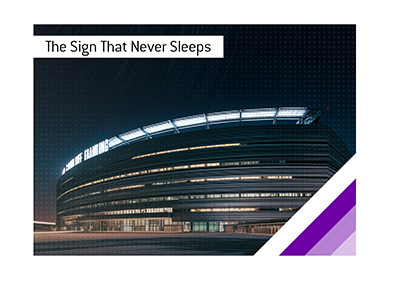
Thirty NFL stadiums, thirty-two teams, and one question nobody answers cleanly: what is a stadium name actually worth? The honest answer is that it ranges from more than $31 million a year to precisely nothing, that the biggest deal on the list is not the one usually reported as the biggest, and that most of these contracts are private - their terms surfacing only when a sponsor gets acquired, goes public, or collapses. This file works through all thirty buildings the way an auditor would: who bought the name, what they pay per year, when they signed, how long they are locked in, and which figures are confirmed rather than estimated. Along the way it finds the one deal whose exact payment schedule is a matter of public record, the company that pays roughly three and a half times what its predecessor paid for the same building, the sign that follows its team to a stadium that does not exist yet, and the two clubs that have never sold their names at all.
Sports-King Feature
The Price of the Letters
Thirty stadiums, thirty-two teams, one ledger. What every NFL stadium name costs per year, who signed it, when it expires - and which of those numbers anybody has actually confirmed.
Top of the Market$31.25M
Longest Deal Signed30 Yrs
Teams That Never Sold2
Figures That Are Estimates22 of 28
A stadium name is the only advertisement in sport that never switches off. It is on the building at four in the morning in February. It is in the address, the traffic reports, the wedding photos taken outside, and every broadcast graphic for two decades. Which is why the numbers attached to it have climbed from the low millions to the low tens of millions inside a single generation - and why the market has quietly become one of the least transparent in American business. Of the twenty-eight financial figures in the ledger below, exactly two come from documents anybody can check. Four more were announced by the parties at signing. The other twenty-two are either estimates that have been copied between articles until they hardened into fact, or terms that were never published at all. This file separates them. Every entry states what is confirmed, what is reported, and what is simply not known. The ledger runs from the largest annual figure in the league down to the two clubs that have never taken the money - and the first entry is the only one in the NFL where you can read the exact payment schedule for yourself.
01
Ledger Entry 01 · Inglewood, CaliforniaSPONSOR ....... SOFI (SOCIAL FINANCE)SIGNED ........ SEPTEMBER 2019
TERM .......... 20 YEARS, 2020 TO 2040
TOTAL ......... $625,000,000PER YEAR ...... $31,250,000 AVERAGECONFIRMED - FILED WITH THE SEC, NOT ESTIMATED
Nearly every article about this deal reports $400 million. The real figure is in SoFi's own filings with the Securities and Exchange Commission, because the sponsor is a public company and had to disclose its commitments: payments under the Naming and Sponsorship Agreement total $625 million, running from 2020 to 2040. The filings even publish the year-by-year schedule, which reveals something the headline number hides - the payments escalate. SoFi owed about $16.9 million in 2020, $24.4 million in 2021, roughly $25 million in each of the next three years, and $29.2 million in 2025, with $479 million still to come after that. Two honest caveats: the agreement bundles the naming rights with official partnerships with both the Rams and the Chargers, plus lease obligations and advertising across the surrounding entertainment district, so not every dollar is buying letters. And it is the only such schedule in the league available to read. Every other number in this file is a team announcement, a reported estimate, or a silence.
02
Ledger Entry 02 · Paradise, NevadaSPONSOR ....... ALLEGIANT TRAVEL CO.SIGNED ........ 2019
TERM .......... 30 YEARS, TO 2049
PER YEAR ...... ABOUT $25,000,000STATUS ........ REPORTED, NOT CONFIRMEDTHE LONGEST TERM SIGNED BY ANY NFL SPONSOR
The second-largest annual figure in the league belongs to the longest commitment anyone has made. Allegiant, a regional airline headquartered in Las Vegas, put its name on a $1.9 billion stadium for three decades - a term that runs to 2049, by which point the building will be twenty-nine years old and the deal will have outlasted most of the executives who signed it. Terms were never officially released; the roughly $25 million figure comes from consistent reporting rather than any document. Worth noting for the taxpayer angle: about 39.5 per cent of the stadium's construction cost, some $750 million, came from a hotel tax. The airline gets its name on the roof in perpetuity-adjacent terms. Clark County got the bill.
03
Ledger Entry 03 · Arlington, TexasSPONSOR ....... AT&TSIGNED ........ 2013
TERM .......... NOT DISCLOSED
PER YEAR ...... ESTIMATED $17M TO $20MSTATUS ........ TERMS NEVER PUBLISHEDTHE STADIUM WENT FOUR YEARS WITH NO SPONSOR AT ALL
The most valuable franchise in world sport runs the most opaque naming deal in its league. When the building opened in 2009 it was simply Cowboys Stadium - Jerry Jones reportedly holding out rather than accept a price he considered beneath the property - and it stayed that way for four seasons until AT&T, headquartered in Dallas, took the name in 2013. Neither the annual value nor the length of the agreement has ever been published. Estimates cluster between $17 million and $20 million a year, which would place it third in the league, but no filing or announcement confirms it and the expiry date is genuinely unknown outside the two organisations. It is the clearest illustration of this file's central problem: the bigger the brand, the less anyone has to tell you.
04
Ledger Entry 04 · East Rutherford, New JerseySPONSOR ....... METLIFESIGNED ........ 2011
TERM .......... 25 YEARS, TO 2036
TOTAL ......... ABOUT $400,000,000PER YEAR ...... ABOUT $16,000,000, SPLIT TWO WAYSREPORTED AS THE RICHEST IN THE NFL WHEN SIGNED
When MetLife signed in 2011 it was the largest naming rights deal in NFL history, and the arithmetic underneath it is unusual: the money is divided between two franchises who share the building and hate sharing anything else. Roughly $16 million a year, split, means each club books around $8 million - which would rank the Giants and Jets individually somewhere in the middle of this ledger despite playing in the largest market in the country. The deal runs through 2036, and the stadium is already scheduled to host the biggest fixture in world sport before then, which is the kind of exposure no sponsor could buy at signing and every sponsor since has been chasing.
05
Ledger Entry 05 · Pittsburgh, PennsylvaniaSPONSOR ....... ACRISURESIGNED ........ 2022
TERM .......... 15 YEARS, TO 2036
TOTAL ......... MORE THAN $150,000,000PER YEAR ...... $10,000,000 PLUSPREDECESSOR HEINZ PAID $2.85M A YEAR FOR THE SAME BUILDING
This is the single clearest demonstration of what happened to this market. Heinz - a Pittsburgh institution, and a naming deal so beloved that fans called the end zones the Heinz Field ketchup bottles - paid $57 million across twenty years, an average of $2.85 million a season. When the deal came up, Heinz did not walk away. Heinz was outbid. Acrisure, a Michigan insurance broker most Pittsburghers had never heard of, took the name in 2022 on a fifteen-year agreement reported at more than $150 million, which is over $10 million a year: more per season than Heinz paid across any four. The lesson is not sentimental. It is that a name attached to a twenty-one-year-old stadium in the league's twenty-sixth-largest market more than tripled in price within one contract cycle.
06
Ledger Entry 06 · Cincinnati, OhioSPONSOR ....... PAYCOR HCMSIGNED ........ AUGUST 2022
TERM .......... 16 YEARS
TOTAL ......... $66,700,000PER YEAR ...... $4,160,000TERMS EMERGED ONLY WHEN PAYCHEX BOUGHT PAYCOR FOR $1.4 BILLION
The Bengals sold in 2022, after decades of refusing to remove Paul Brown's name from the building, and the terms were withheld at the time in the usual way. They surfaced two and a half years later for an entirely unrelated reason: Paychex acquired Paycor for $1.4 billion, and the disclosure requirements that come with a transaction of that size dragged the contract into daylight - sixteen years, $66.7 million, an average of $4.16 million a season. There is a second number here that almost never gets published. Under the Bengals' lease with Hamilton County, the club keeps the first $60.5 million of naming revenue and then splits the remainder seventy-thirty with the county. The public built the stadium and, in this case, contracted for a slice of the sign.
07
Ledger Entry 07 · Denver, ColoradoSPONSOR ....... EMPOWER RETIREMENTSIGNED ........ 2019
TERM .......... 21 YEARS, TO 2039
TO THE DISTRICT $3,000,000 A YEAR
TO THE CLUB ... PRIVATEPER YEAR ...... ABOUT $6,000,000 ESTIMATED TOTALTHE $3M FIGURE IN CIRCULATION IS ONLY THE PUBLIC AUTHORITY SHARE
Denver is where this file learned to distrust its own sources. The figure in wide circulation for Empower is about $3 million a year, which would make it one of the cheapest names in the league - and it is real, but it is not the deal. The stadium is owned by the Metropolitan Football Stadium District, a public authority, and the published contract covers what Empower pays the district: $351,000 in year one, $1.25 million in year two, then $3 million annually across a 21-year term running to 2039. What Empower pays the Broncos on top of that is private. Local reporting at the time estimated the full arrangement at roughly $6 million a year if the split is even. Two other things make Denver unusual: the words Mile High are not for sale, so sponsors buy only the prefix, which is a materially weaker product than naming a building outright; and the club had to pay the district $3.6 million simply to take ownership of the naming rights after the previous sponsor collapsed. The lesson generalises. A published number is often one party's slice, not the price.
08
Ledger Entry 08 · Landover, MarylandSPONSOR ....... NORTHWEST FEDERAL CREDIT UNIONSIGNED ........ AUGUST 2024
TERM .......... 8 YEARS, THROUGH 2031
PER YEAR ...... ABOVE $7,500,000STATUS ........ NOT DISCLOSED, REPORTED ABOVE FEDEXFEDEX QUIT TWO YEARS EARLY AFTER 25 SEASONS
FedEx put its name on this building in 1999 under a 27-year, $205 million agreement worth about $7.6 million a year, and then did something the standard contract does not usually permit: it left early. The change of ownership that brought Josh Harris in triggered an exit right, FedEx used it in February 2024, and the stadium spent part of a year as the placeholder Commanders Field. Northwest Federal Credit Union - a considerably smaller institution than a global logistics giant - took the name that August at a rate reported to be higher than FedEx was paying. The most revealing clause is what the new deal does not include: no option on the naming rights of the new stadium the club intends to build. The credit union bought eight years on a building everyone expects to be replaced.
09
Ledger Entry 09 · Cleveland, OhioSPONSOR ....... HUNTINGTON NATIONAL BANKSIGNED ........ SEPTEMBER 2024
TERM .......... 20 YEARS
PER YEAR ...... NOT DISCLOSEDSTATUS ........ TERMS WITHHELDTHE NAME TRANSFERS TO A STADIUM THAT DOES NOT EXIST YET
Huntington signed a twenty-year agreement in 2024 knowing the building might not survive it, and wrote the solution into the contract: the name follows the franchise. If the Browns leave the lakefront for the proposed domed stadium in Brook Park, the sign goes with them. As the bank's chief executive put it, the deal is with the Cleveland Browns, so wherever the Browns play, the name will be there. Buffalo did the same thing in reverse - Highmark carried its name across the road into the new stadium that opened this year, on a fresh agreement negotiated separately from the one covering the old building. The modern naming deal has quietly stopped being a contract about a building. It is a contract about a team, and the concrete is incidental.
10
Ledger Entry 10 · Tampa, FloridaSPONSOR ....... RAYMOND JAMES FINANCIALSIGNED ........ 1998
TERM .......... RUNS TO 2028
PER YEAR ...... ABOUT $3,100,000STATUS ........ LONGEST CONTINUOUS NFL NAMETHE ONLY ACTIVE DEAL SIGNED IN THE 1900s
Every other naming agreement in the NFL was signed this century. Raymond James, a financial services firm headquartered a short drive from the stadium, has held this one since the building opened in 1998 and is contracted through 2028 - thirty unbroken years of the same name, which in this market counts as an eternity. The annual figure is small by modern standards and that is precisely why it has survived: a deal cheap enough never to be worth cancelling, on a building the club has continuously renovated rather than replaced. In a file full of names that lasted four years, or ended in bankruptcy, or moved cities, the least dramatic entry on the list is arguably the most successful one.
11
Ledger Entry 11 · Green Bay and ChicagoSPONSOR ....... NONESIGNED ........ N/A
TERM .......... N/A
PER YEAR ...... $0FOREGONE ...... ROUGHLY $8M TO $15M EACH, ANNUALLYTWO BUILDINGS, TWO REFUSALS, ONE CENTURY EACH
Green Bay named its stadium after Curly Lambeau in 1965, two months after his death, and the club - which is publicly owned and therefore answerable to shareholders who would notice the money - has declined to sell ever since. Team president Mark Murphy has said flatly that it will always be Lambeau Field, though the Packers do sell naming rights to areas within the stadium, which is the compromise position. Chicago has held Soldier Field since 1924 as a memorial to Americans who died in the First World War, a name that would be genuinely difficult to sell and would cost the club far more in goodwill than it would earn. Both are leaving real money on the table every year - somewhere between $8 million and $15 million each on comparable deals - and both have decided that some names are worth more unsold. If the Bears build in the suburbs, that calculation is widely expected to change.
The Full Ledger
All thirty stadiums, ranked by reported annual value. The confidence column is the important one: Filed means the figure appears in a regulatory document, Disclosed means exact terms surfaced through a corporate transaction rather than by choice, Announced means the parties published a value at signing, Reported means credible outlets have estimated it, and Withheld means the terms have never been made public.
| Stadium | Team | Signed | Runs To | Per Year | Confidence |
|---|---|---|---|---|---|
| SoFi Stadium | Rams / Chargers | 2019 | 2040 | $31.25M | Filed |
| Allegiant Stadium | Raiders | 2019 | 2049 | ~$25M | Reported |
| AT&T Stadium | Cowboys | 2013 | Unknown | ~$17-20M | Withheld |
| MetLife Stadium | Giants / Jets | 2011 | 2036 | ~$16M | Reported |
| Hard Rock Stadium | Dolphins | 2016 | 2034 | ~$13.9M | Reported |
| Mercedes-Benz Stadium | Falcons | 2015 | 2042 | ~$12M | Reported |
| Levi's Stadium | 49ers | 2013 | 2033 | ~$11M | Announced |
| Lumen Field | Seahawks | 2004 / ext 2017 | 2033 | ~$10.8M | Reported |
| Acrisure Stadium | Steelers | 2022 | 2036 | $10M+ | Reported |
| NRG Stadium | Texans | 2000 | 2032 | ~$9.4M | Announced |
| U.S. Bank Stadium | Vikings | 2015 | 2040 | ~$8.8M | Reported |
| Gillette Stadium | Patriots | 2002 | 2031 | ~$8M | Reported |
| Northwest Stadium | Commanders | 2024 | 2031 | $7.5M+ | Withheld |
| Nissan Stadium | Titans | 2015 / 2023 | 2047 | ~$7.5M | Withheld |
| State Farm Stadium | Cardinals | 2018 | 2036 | ~$7M | Withheld |
| Bank of America Stadium | Panthers | 2004 / ext 2026 | Long term | Undisclosed | Withheld |
| Caesars Superdome | Saints | 2021 | 2041 | ~$6.9M | Reported |
| Lincoln Financial Field | Eagles | 2002 | Extended | ~$6.6M | Announced |
| M&T Bank Stadium | Ravens | 2003 | 2037 | ~$6M | Withheld |
| Lucas Oil Stadium | Colts | 2006 | 2027 | ~$6.1M | Announced |
| Highmark Stadium | Bills | 2021 / 2023 | New build | ~$5M | Reported |
| GEHA Field at Arrowhead | Chiefs | 2021 | Undisclosed | Undisclosed | Withheld |
| EverBank Stadium | Jaguars | 2023 / 2024 | 2027 | ~$4.3M | Reported |
| Paycor Stadium | Bengals | 2022 | 2038 | $4.16M | Disclosed |
| Huntington Bank Field | Browns | 2024 | 2044 | Undisclosed | Withheld |
| Raymond James Stadium | Buccaneers | 1998 | 2028 | ~$3.1M | Reported |
| Empower Field at Mile High | Broncos | 2019 | 2039 | ~$3M | Reported |
| Ford Field | Lions | 1996 | Long term | ~$2M | Reported |
| Lambeau Field | Packers | Never | - | $0 | No deal |
| Soldier Field | Bears | Never | - | $0 | No deal |
The Arithmetic
Three ways to read the ledger: the ladder itself, the repricing that has happened inside single buildings, and the calendar of expiries that will reset the market.
The ladder - annual value, top to bottom
The top of the market is more than ten times the bottom of it, and the gap between the largest deal and the second-largest is bigger than most deals in the league. Both zero entries are deliberate refusals, not failures to sell.
The repricing - same building, new sponsor
Two buildings, two handovers, one direction of travel. In Pittsburgh a global food brand was replaced by an insurance broker at three and a half times the price; in Landover a logistics giant walked and a regional credit union paid more than it had been.
The expiry calendar - when the market resets
Jacksonville reaches the market first, in 2027. Las Vegas is committed until 2049. In between sits every renegotiation that will set the next generation of prices - and, on recent evidence, each one lands higher than the deal it replaces.
The Record Book
The margins of the ledger: the names that died with their sponsors, the reason so few numbers are public, the cities that take a cut, and the holdouts who eventually folded.
When the Sponsor CollapsesThe nightmare scenario has happened repeatedly, and Tennessee has lived it. The Titans opened in 1999 as Adelphia Coliseum, named for a cable company whose founders were later convicted in one of the era's major corporate fraud cases; the name came off, the building spent time simply as The Coliseum, then became LP Field, then Nissan Stadium in 2015. Houston had Enron Field on its baseball park until the energy company's collapse made the name toxic, and Miami had FTX Arena for barely eighteen months before the exchange's implosion. Every one of these deals looked prudent on signing day. A stadium name is a twenty-year bet on a company still existing and still being respectable, and the failure rate is not zero.
Why Nobody Tells YouRoughly a third of the NFL's naming agreements have never had terms published, and the silence is deliberate on both sides: teams do not want to set a visible benchmark for the next negotiation, and sponsors do not want shareholders scrutinising the return on a nine-figure marketing spend. Which is why the exceptions matter so much. SoFi's numbers are public because SoFi is a public company that had to file them. Paycor's numbers only emerged when Paychex bought the company. Both figures arrived through regulatory obligation rather than generosity - and both landed higher than the estimates that had circulated for years.
The Public's CutMost of these stadiums were built with taxpayer participation, and a few authorities negotiated a share of the naming money in return. Cincinnati is the clearest case: under the Bengals' lease, the club keeps the first $60.5 million of naming revenue and then splits the rest with Hamilton County, seventy-thirty. Denver's money is divided with the Metropolitan Football Stadium District, which is the only reason any Empower figure is public at all. Jacksonville held a 25 per cent share of its naming revenue and voted to waive it so the club could bank the full amount. The pattern across the league is that the public frequently funds the building and rarely retains the sign - which makes the handful of revenue-sharing clauses some of the most valuable paragraphs any city ever negotiated.
The Name That Kept Changing HandsNot every renaming means a new deal. Seattle has been Seahawks Stadium, Qwest Field, CenturyLink Field and now Lumen Field - four names since 2002, but only one continuous commercial relationship: Qwest was acquired by CenturyLink in 2011, CenturyLink rebranded itself as Lumen in 2020, and the stadium name simply followed the sponsor's own identity each time under an agreement that dates to 2004 and was extended in 2017, reportedly at $162 million for fifteen years, through the 2033 season. Denver went the other way: when Sports Authority liquidated, its naming rights became an asset in bankruptcy court, put to auction by a specialist broker - and initially drew no bidders at all. A stadium name can outlast the company that bought it, be inherited by an acquirer, or end up on a receiver's inventory.
The Holdouts Who FoldedThe list of teams refusing corporate names used to be much longer. Kansas City sold the field inside Arrowhead to GEHA in 2021 while keeping the stadium name itself - a hybrid that let the club take the money without losing the landmark. Cincinnati resisted for over two decades out of respect for Paul Brown before selling in 2022, with Mike Brown noting plainly that around thirty teams had this revenue stream and the Bengals needed it to keep up. That leaves two. Green Bay is publicly owned and has said the name is permanent; Chicago's is a war memorial. Both positions are firm, and the Bears one is widely expected to soften if they ever build somewhere new.
Sports-King's Note
Now for the fine printHow this ledger was built, and what it cannot tell you. Naming rights agreements are private contracts between clubs and sponsors, and there is no central registry - so every figure here carries a confidence label rather than false precision. Filed means the number appears in a regulatory document: SoFi's $625 million total and its year-by-year payment schedule come from Social Finance's filings with the Securities and Exchange Commission, which describe a twenty-year agreement entered in September 2019 covering naming rights to the stadium plus partnerships with the Rams and Chargers and obligations across the surrounding district - so the average of $31.25 million a year is the whole package, not the letters alone. Paycor's sixteen-year, $66.7 million agreement became public through reporting tied to the Paychex acquisition. Announced means the parties published a headline value at signing. Reported means credible outlets have published estimates that have not been confirmed by either party - most of the middle of this table sits here, and figures such as the roughly $25 million for Allegiant, $16 million for MetLife, $12 million for Mercedes-Benz and the reported $162 million fifteen-year Seattle extension should be read as the market's best understanding rather than as audited fact. Denver is handled separately and deliberately: the $3 million annual figure widely attributed to Empower is what the sponsor pays the Metropolitan Football Stadium District under the published contract, the club's additional share is private, and the roughly $6 million total is a contemporaneous local estimate assuming an even split - it is the one entry in this file where the commonly cited number is demonstrably only part of the deal. Withheld means the terms were explicitly not released: AT&T, Huntington, GEHA, Nissan's new agreement, State Farm, M&T, Northwest and the Panthers extension announced in July 2026 alongside a $1.3 billion renovation all fall here, and in several of those cases even the expiry year is an inference. Where a deal has been renewed or extended - Baltimore through the 2037 season, Tennessee's twenty-year agreement covering the new stadium opening in February 2027 and running to 2047, Jacksonville's three-year extension to 2027, Buffalo's separate agreement for the stadium that opened this year - the ledger reflects the current arrangement rather than the original. Annual figures for multi-year deals are simple averages of reported totals and will not match the actual payment in any given year, since escalators are standard and, in SoFi's case, documented. Stadium counts run to thirty buildings for thirty-two teams because two pairs of clubs share venues. Values foregone by Green Bay and Chicago are this file's own estimate based on comparable deals, and are labelled as such. Everything here reflects the public record as it stood at the time of writing; deals get renewed, sponsors get acquired, and buildings get replaced.
One Last Word
The strangest thing about this ledger is not the money. It is that a name on a stadium is the most public thing a company can buy and the most private thing a football team can sell. Fans will say the word every week for twenty years without ever learning what it cost. The two clubs at the bottom of this table, the ones collecting nothing, are the only ones whose supporters know exactly what the name is worth - because it was never for sale.
The hard numbers, for the road: the NFL's naming rights market runs from more than $31 million a year at SoFi Stadium - the only deal in the league whose payment schedule is filed publicly, at $625 million across twenty years - down to $0 at Lambeau Field and Soldier Field, the two buildings never sold. Allegiant is committed the longest, thirty years to 2049; Raymond James has held the same name longest, since 1998, with its deal running to 2028. Acrisure pays more than three times what Heinz paid for the same Pittsburgh stadium, and FedEx walked away from Washington two years early after twenty-five seasons. Paycor pays $4.16 million a year in Cincinnati, where the county takes a share; Empower pays the Denver stadium district $3 million a year and the Broncos an undisclosed amount on top, in the one market where the widely quoted figure is only a fraction of the deal. Roughly a third of the league's agreements have never been disclosed at all - and the next reset comes in 2027, when Jacksonville reaches the market first.