Your Jersey Money, Traced: Where Every Dollar of a $180 Sale Actually Goes
Published on July 22nd, 2026Written By: Dave Manuel
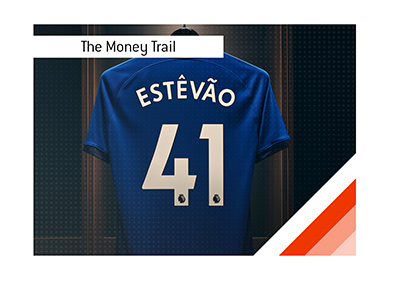
Walk into any team store, pull a $180 jersey off the rack, and you are holding one of the most misunderstood financial products in sports. Most fans assume the player whose name is stitched across the back gets a healthy cut of the sale. The truth is stranger, more interesting, and - once you see it - visible on every rack in North America: the money splits between the retailer, the manufacturer, the league that owns the logos, and a players' union licensing pool that cuts nearly every player an identical equal-share check, whether their jersey sold five hundred thousand units or none at all. On top of that floor sits a second, sales-driven stream that can pay a superstar millions - and once paid a retired quarterback more than anyone still playing. This file traces the whole dollar, league by league: the NFL, NBA, MLB, NHL, MLS, WNBA and the college game, plus the union check itself, the one company quietly manufacturing half the continent's jerseys, and the counterfeit rack that pays nobody at all. Team of eleven, every claim sourced, every myth handled on its way out.
Sports-King Feature
The Jersey Royalty File
The retailer, the factory, the league, the union pool - and the man whose name is doing all the selling. Where every dollar of a $180 jersey actually goes, league by league, myth by myth.
Segments illustrative - exact rates are confidential; the honest ranges are in the fine print
Start with the question every fan has asked at a register: does he get a cut of this? The honest answer is layered, and the layers are the article. The name and number on the back are licensed through the players' union - not the league, and not the player individually - under a system called group licensing, in which nearly every player signs over his identity rights for merchandise and gets paid from a common pool. That pool pays two ways: an annual equal-share check that is functionally identical for almost everyone in the union, and quarterly premium royalties that do track how much product with your name on it actually sold. The royalty itself is smaller than anyone believes - calculated on the wholesale price, not the sticker, at rates the industry keeps confidential but that reporting consistently places in the high single digits to low teens - which is why the biggest slices of your $180 belong to the store, the factory and the brand before anyone in uniform sees a cent. From there the story forks eleven ways: seven leagues with seven different arrangements, one union check worth understanding line by line, one company that quietly makes half the continent's jerseys, and one rack - the fake one - where the whole system gets robbed. The receipts, the ranges and every source live in the fine print.
The Sticker$180
Royalty Math Runs OnWholesale
NFL Equal-Share Floor~$32K
Sanders's Rookie Licensing Year$17.7M
01
Before the leagues, learn the garment. A $180 jersey reaches the rack through a chain that eats the sticker from both ends. The retailer takes the largest single slice - apparel retail runs on roughly doubling wholesale, so something in the neighborhood of half the price stays with whoever rang you up, which is also why the same jersey goes on sale in March without anyone losing money. The manufacturer and the brand take the next block: fabric, stitching, freight, marketing, and the margin that justifies the swoosh or the Fanatics wordmark. Only then come the royalties, and here is the part that rewires how you see the rack: they are computed on the wholesale price, not the $180, at confidential rates that industry reporting consistently pegs in the high single digits to low teens. That royalty then splits again - the league's licensing arm is paid for the team logos and marks, and the union's licensing arm is paid for the player's name and number. By the time the name on the back is actually being compensated, your $180 has become a handful of dollars flowing into a pool shared by every player in the league. The rest of this file is what each league does with that machinery.
02
The biggest jersey business in North America runs on a three-way split of labor: Nike holds the on-field rights and the design pen - under an extension announced in 2024 that runs to 2038 - while Fanatics physically manufactures the Nike-logo authentic jerseys sold online and in stores, and the NFLPA licenses every name and number through its Group Licensing Assignment. The GLA is the system in miniature: any company that wants six or more players on a product licenses through the union, and every player who signs in shares the revenue. The union pays two ways - an annual equal-share royalty that recently meant at least roughly $32,000 to nearly every player in the league, and quarterly premium royalties tied to sales of products carrying your specific name. That second stream is where fame shows up - and lately, where anticipation shows up even harder. In the union's newest filing, covering the 2025 season, rookie Shedeur Sanders banked a record $17.7 million in group licensing and marketing income - shattering Tom Brady's old mark of $9.5 million - with fellow rookie Travis Hunter at $12.8 million and Patrick Mahomes above $8 million. A year earlier the list was led, at $4 million, by J.J. McCarthy, who never took a snap that season. Rookies rule the premium stream for the simplest reason on the rack: their named merchandise is selling for the first time. So does the guy on the back get paid when you buy his jersey? Yes - twice, a little through the floor and possibly a lot through the premium - just never the way the sticker price implies.
03
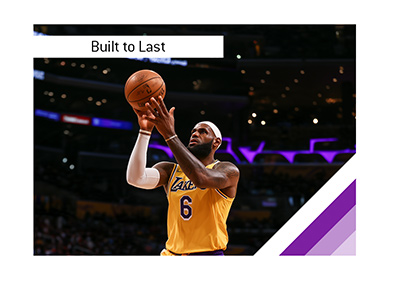
Basketball made the jersey a fashion object, and Nike has held the uniform rights since the 2017-18 season, when the swoosh - and, for the Charlotte franchise, the Jordan brand - replaced adidas on every chest. The licensing machinery mirrors football's: the league licenses its marks, the National Basketball Players Association group-licenses names and likenesses, and the pool pays both equal-share and sales-driven money across a far smaller membership - roughly 450 players, meaning each slice of the pie is fatter per man than the NFL's 1,700-way split. The NBA also owns this genre's greatest counterexample, covered in full in the Record Book below: Michael Jordan, the most marketable athlete who ever lived, walked out of the union's shared licensing agreement in 1992 to sell his likeness himself - which is why a generation of video games starred a mysterious unnamed Bulls guard and why the truest measure of a jersey's value is what happens when the name refuses to be pooled.
04
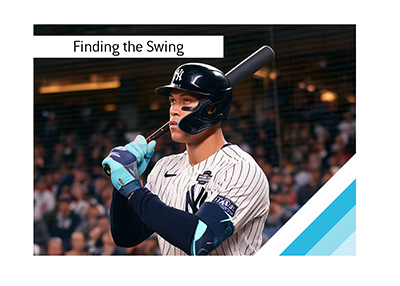
Baseball's union effectively invented group licensing - the MLBPA's program dates back more than half a century, and its licensing checks famously bankrolled the union through work stoppages - so it is fitting that baseball's modern jersey arrangement is the system at its most layered. Nike is the official uniform partner and the name on the chest; Fanatics has physically manufactured every big-league uniform since buying Majestic's Pennsylvania operation in 2017, close to 100,000 uniforms a season; and the MLBPA licenses the names, numbers and likenesses of the roughly 1,200 players on forty-man rosters. The equal-share principle runs deep here: the union has historically distributed licensing revenue evenly, which is why a September call-up and a former MVP have cashed remarkably similar checks. Baseball also supplied both of the system's great stress tests - the only player ever to refuse the agreement outright, and 2024's most public uniform disaster - and both stories get their full airing below.
05
Hockey made history in 2024-25, though not the kind fans celebrate: when adidas chose not to renew, the NHL signed a ten-year deal making Fanatics its on-ice outfitter - the first time the retail giant's own brand has appeared on the game uniforms of a major North American league, after seven years of already manufacturing the league's replica jerseys. The reaction was loud and skeptical, mostly about quality optics, but the business logic was pure vertical integration: the same company now designs, manufactures, licenses, and in many cases retails the product, with the NHL's roughly 750 NHLPA members group-licensed on the back end. For Canadian readers this is the most personal entry in the file - the Leafs, Canadiens and Oilers sweaters hanging in every mall in the country now flow through a single Jacksonville-founded pipeline end to end. Whether that concentration is efficient or alarming is a fair debate; that it is unprecedented is simply a fact.
06
MLS runs the tidiest arrangement in North America: a single league-wide adidas partnership - extended in 2023 in a deal reported around $830 million through 2030, the largest in league history - covering every club's kit, with player rights flowing through the MLS Players Association's group licensing. Then, in the summer of 2023, the system met a stress test named Lionel Messi. His Inter Miami No. 10 immediately became the league's best-selling shirt and one of the best-selling on earth across any sport, with retailers reporting sellouts and months-long backorders - a one-man demonstration that a single name can carry an entire league's merchandise economy. The pooled system meant that windfall spread far beyond one locker: league-wide licensing revenue, adidas's appetite for renewal, and every MLSPA member's share all rose on the pink tide. One name sold the shirt; the machinery paid the room. That is the model working exactly as designed, at maximum volume.
07
No entry shows the gap between demand and infrastructure like the WNBA in the spring of 2024. Within hours of Caitlin Clark being drafted first overall, her Indiana Fever jersey sold out - reported as the top-selling jersey for a draft pick in the league's history, with restocks evaporating for weeks - and the surge lifted the whole league's merchandise business to records. Underneath the phenomenon sits the same machinery as everywhere else: Nike, also an equity investor in the league since its 2022 capital raise, holds the apparel rights; the WNBPA group-licenses player names; and the pooled royalty flows to the smallest membership in this file - still under 200 players even after the league's expansion wave. The honest footnote is the one the empty shelves wrote themselves: for years the league's problem was not licensing mechanics but production commitment - the demand arrived before the inventory did. The equal-share check only grows when somebody actually prints the jerseys.
08
For decades, college jerseys were the system's dirty secret: schools sold shirts in the star quarterback's number with no name on the back, kept the money, and called it amateurism - an arrangement that helped fuel the O'Bannon litigation of the 2010s and collapsed entirely when name-image-likeness rights arrived in 2021. Now the college jersey works like a junior version of the pro model: group licensing agencies aggregate athletes' NIL rights so retailers can finally sell real names on real backs, with participating players paid from the deals. The purest symbol was EA's revived College Football video game, which offered every opted-in athlete a flat payment - reported around $600 plus a copy of the game for the 2024 debut - the same check for the Heisman favorite and the third-string long-snapper: group licensing's equal-share logic, reborn in the one place that spent a century refusing to pay the name at all. The college rack is now the fastest-changing shelf in the store, and it finally points the money at the athlete.
09
Here is the engine room, stated plainly. When a player signs his union's group licensing agreement - and virtually everyone does - he assigns the right to use his name, number and likeness on merchandise to the union collectively, so companies can license a league's worth of players in one deal instead of negotiating hundreds. The pool pays out in two streams. Stream one is the equal-share royalty: an annual distribution that is functionally identical across the membership - per a recent union filing, at least roughly $32,000 to almost every NFL player - the same check for the franchise quarterback and the practice-squad guard. Stream two is the premium royalty: quarterly payments tied to sales of products carrying your specific name, which is how a fifth-round rookie quarterback with the sport's hottest new jersey banked a record $17.7 million in the 2025 season while his own teammates cashed the familiar floor. So the famous myth is half true. The jersey you bought did not send its profit to the name on the back - but the name on the back is absolutely being paid for being sold, once through the floor that pays everyone, and once through the premium that pays the sellers. The system is less a royalty than a guild: the stars pull the wagon, and everybody eats.
10
Trace enough jerseys and every thread runs to the same place. Fanatics manufactures Major League Baseball's Nike-branded uniforms - all thirty teams, close to 100,000 uniforms a season - out of the old Majestic operation it bought in 2017. It manufactures the Nike-logo authentic NFL jerseys sold online and at retail. Since 2024-25 it is the NHL's on-ice outfitter under its own name, the first time its brand has fronted a major league's game uniform. It runs the e-commerce stores for leagues and teams across the continent, owns the throwback house Mitchell and Ness alongside its trading-card and collectibles arms, and counts the leagues themselves among its overlapping circle of investors and equity partners - meaning the leagues profit on the license and again on the company that exploits it. None of this is hidden; it is simply distributed across so many logos that fans rarely assemble it. Assembled, it reads like this: whatever name is on the chest of the jersey you buy, there is a meaningful chance one company stitched it, shipped it, sold it, and banked a margin at every stop.
11
The file ends at the rack that undoes everything above it. Counterfeit jerseys - the $25 stitched replicas from overseas marketplaces, the parking-lot specials outside every stadium - are the sport-merchandise economy's permanent leak, and the enforcement numbers sketch the scale: federal customs agents run a standing operation around every Super Bowl that routinely announces counterfeit sports merchandise seizures valued in the tens of millions of dollars, year after year, and that is only what gets caught at the border. The economics are brutally simple: a fake carries no wholesale royalty, so the league collects nothing for its marks, the union pool collects nothing for the name, and the equal-share checks in every league are incrementally thinner for it. Whatever a fan thinks of $180 stickers - and this file has itemized exactly how much of that price never goes near a player - the counterfeit is the one jersey on earth guaranteed to pay the athlete nothing at all. The fake rack is not a discount. It is a different product that happens to look like this one.
The Full Docket
Every league's arrangement on one rack: who brands the jersey, who physically makes it, who licenses the name on the back, and how the player sees money from it.
| League | Brand on the Chest | Who Makes It | Who Licenses the Name | How the Player Gets Paid |
|---|---|---|---|---|
| NFL | Nike - to 2038 | Fanatics builds the retail authentics | NFLPA group licensing | Equal-share floor (~$32K recently) + sales-driven premium royalties |
| NBA | Nike since 2017-18 | Nike supply chain | NBPA group licensing | Pool split among ~450 players - fattest per-man slices in the file |
| MLB | Nike | Fanatics - every uniform since 2017 | MLBPA - the original program | Historically even distribution across the membership |
| NHL | Fanatics itself - from 2024-25 | Fanatics, end to end | NHLPA group licensing | Pool across ~750 members; one company runs the whole pipeline |
| MLS | adidas - to 2030 | adidas supply chain | MLSPA group licensing | Pooled - and the Messi rack lifted every member's share |
| WNBA | Nike - also a league investor | Nike supply chain | WNBPA group licensing | Smallest pool in the file - under 200 even after expansion; the Clark surge lifted it league-wide |
| College | School apparel partners | Varies by school deal | NIL group licensing agencies | Named jerseys and video-game checks - paid directly since 2021 |
The Arithmetic
Four ways to see the money: the sticker dissected, the two streams drawn to scale, the biggest licensing paydays ever put on paper, and the one factory behind three leagues' racks.
The $180, dissected - honest ranges, not fake precision
Follow the sticker left to right: the store keeps the biggest slice, the factory and brand take the next, and the royalty block - computed on wholesale, not the $180 - splits between the league's marks and the union's pool. The name on the back lives in the gold box, along with 1,699 of his colleagues.
The two streams, drawn to scale - the floor and the premium
The whole union-check system in four bars. The thin gold bar is the equal-share floor nearly everyone gets; the long bars are what the premium stream adds when your name moves product. Both streams come from the same pool your $180 fed.
The disclosed leaderboard - the biggest licensing paydays ever put on paper
The biggest player licensing years the public record has ever shown, drawn to one scale. Every bar is football, and that is the point: the NFLPA's Department of Labor filing is the only union report that itemizes names and dollars. Every other league's pool pays out behind sealed doors.
Outside football, the window changes shape. No other union's public filing names its licensing earners, so the market speaks through two proxies instead: top-seller lists and licensing-and-endorsement estimates. On those measures the biggest names are no mystery - Shohei Ohtani's off-field income was estimated at a record $125 million for 2026, the largest single-year figure ever projected for an active athlete, built on roughly two dozen sponsors plus a Fanatics memorabilia partnership that back-to-back World Series titles supercharged; Stephen Curry has approached $100 million, LeBron James around $85 million, Lionel Messi around $75 million. And towering over everyone, active or not, is the man who refused the pool in 1992: Michael Jordan's royalties on Nike's $7 billion Brand Jordan business were estimated at roughly $300 million for 2024 alone - the opt-out from the Record Book below, still out-earning every union licensing check on earth, thirty years later. Those figures are estimates and they blend endorsements with licensing, which is exactly why this file's charts stick to the one list where the dollars are filed under oath.
One factory, three racks
Three racks, three different logos facing the fan - and one company behind the stitching on all of them, with the leagues themselves among its investors.
The Record Book
The margins of the rack: the two superstars who refused the pool, the retired star who out-earned the active ones, the uniform fiasco that taught fans who makes what, and the union list that fights for the forgotten names.
The Opt-OutsGroup licensing has been refused exactly twice by superstars, and both stories prove the system by exception. Michael Jordan left the NBPA's shared licensing agreement in 1992 to market his likeness himself - which is why nineties basketball games starred an unnamed Bulls guard wearing 99, why EA and Konami hid him behind cheat codes until the union objected, and why the NBA Jam creator built a handful of special Jordan-included machines, one of which famously ended up in Gary Payton's garage. He did not appear properly in a game until NBA 2K11, in 2010. Barry Bonds followed in baseball: ahead of the 2004 season he became the first player in the MLBPA program's three-decade history to decline the agreement, vanishing from licensed cards and video games mid-chase of the home run record. The lesson on the rack: when the name refuses the pool, the product simply loses the name.
The Retired-Star ParadoxThe premium stream does not check your roster status - it checks your sales. In the union's reported year covering the 2019 season, the NFLPA's top royalty earner was Peyton Manning, four years into retirement, ahead of the still-active Tom Brady at $2.99 million; Mahomes, that season's Super Bowl winner, ranked third. A retired legend's throwbacks, collectibles and licensed nostalgia out-earned every active player in the sport. It is the cleanest proof of what a jersey economy actually is: not compensation for playing, but rent on a name - and a great name keeps collecting long after the cleats come off.
The Pants FiascoSpring training 2024 gave fans a crash course in the who-makes-what question. Baseball's redesigned uniforms arrived with smaller lettering and famously see-through pants, and the anger aimed itself at Fanatics - the manufacturer - until Nike publicly acknowledged the redesign was its own. The episode mattered beyond the comedy: it exposed the layered supply chain this file maps (brand designs, factory executes, league approves) and previewed the scrutiny Fanatics would face taking over NHL uniforms under its own name months later. When the chest logo and the factory differ, so does the blame - usually incorrectly.
The Rising Stars ListThe pooled system has a quiet fairness engine. Licensees naturally chase the same twenty superstar names, so the NFLPA circulates an annual Rising Stars List to every licensee - a union-curated push to get underrepresented players onto products, spreading premium royalties beyond the obvious jerseys. It is the rare piece of sports-business machinery built to make the pie less top-heavy, and it explains the odd jersey you sometimes see on a rack: somebody, somewhere, is betting on a name before the market does - with the union holding the list.
Sports-King's Note
Now for the fine print
Scope and sourcing, in the open: this file describes the group licensing systems of the NFLPA, NBPA, MLBPA, NHLPA, MLSPA and WNBPA as documented in union materials and sports-business reporting, and it deliberately trades fake precision for honest ranges wherever the underlying contracts are confidential - which is most places. The split of a $180 jersey follows standard licensed-apparel economics: retail operates on roughly doubling wholesale; royalties are computed on the wholesale price at rates that reporting consistently places in the high single digits to low teens; and those royalties divide between league licensing arms (for team marks) and union licensing arms (for player names and numbers), so the hero graphic's segments are labeled illustrative and sized for story, not audit. The specific dollar figures follow the published record: the NFLPA's Department of Labor filings as reported by Sportico and Front Office Sports run as follows: the year through February 2024 had Patrick Mahomes on top at $3.6 million (Hurts $2.7 million, Allen $2.5 million, Kelce $2.4 million), with nearly every player receiving at least roughly $32,000; the year through February 2025 was led by J.J. McCarthy at $4 million despite his missing the season injured, with Mahomes dipping to $1.9 million - the premium stream is volatile; and the year through February 2026 produced the all-time record, rookie Shedeur Sanders at $17.7 million - breaking Tom Brady's $9.5 million from the 2021 season - with Travis Hunter at $12.8 million, Mahomes above $8 million, and union group licensing revenue reaching $297 million, including $93 million from Panini, no longer the union's official card licensee; the NFLPA's own GLA materials document the six-or-more-players threshold, the quarterly premium and annual equal-share payment structure, and the Rising Stars List; the retired-star figures (Manning atop the royalty list for the year covering the 2019 season, Brady at $2.99 million, Mahomes third at $2.78 million) follow CBS Sports' reporting of the union filing. League arrangements per the record: Nike's NFL extension to 2038 announced in 2024, with Fanatics manufacturing Nike-logo authentic retail jerseys; Nike the NBA's uniform partner since 2017-18; Nike MLB's partner with Fanatics manufacturing all thirty teams' uniforms - close to 100,000 a season - since acquiring Majestic in 2017; the NHL's ten-year Fanatics on-ice deal beginning 2024-25 after adidas chose not to renew, the first Fanatics-branded game uniform in a big-four league, per ESPN and league announcements; MLS's adidas extension through 2030 reported around $830 million; Nike's equity investment in the WNBA's 2022 raise; and the 2024 MLB uniform controversy in which Nike publicly took responsibility for the redesign Fanatics manufactured. The Caitlin Clark jersey sellout and record draft-pick sales, and the Messi Inter Miami No. 10 becoming MLS's and one of the world's best sellers, follow contemporaneous 2023-24 retail reporting. The disclosed-leaderboard figures are all NFLPA filing years as reported (Sanders $17.7 million and Hunter $12.8 million for 2025, Brady $9.5 million for 2021, Mahomes above $8 million for 2025, McCarthy $4 million for 2024, Manning $3.36 million atop the 2019-season list), and the cross-league figures are explicitly estimates from Sportico and Forbes reporting - Ohtani's record roughly $125 million off-field projection for 2026, Curry near $100 million, James around $85 million, Messi around $75 million, and Jordan's roughly $300 million for 2024 via Brand Jordan royalties on about $7 billion in Nike segment revenue - blending endorsements with licensing because the underlying union pools do not disclose. The opt-out histories follow ESPN's archives: Jordan out of the NBPA shared agreement in 1992 (the Player 99 era, the cheat codes, the special NBA Jam machines, the 2K11 return) and Bonds informing the MLBPA in late 2003 that he would not sign for 2004, the first refusal in the program's thirty-year history, with LaVar Arrington the NFL's noted case. College mechanics follow the post-2021 NIL settlement of the O'Bannon-era disputes, with EA's reported roughly $600-plus-game payment to each opted-in athlete for the 2024 revival. Counterfeit-seizure scale follows the annual federal enforcement announcements around the Super Bowl, routinely valuing seized fake sports merchandise in the tens of millions of dollars. What this file does not claim: exact royalty percentages for any specific deal, per-jersey player payouts, or private contract terms - those numbers are confidential, everything here is labeled accordingly, and the ranges are the honest ceiling of what the public record supports.One Last Word
The jersey is sports' most personal purchase - one name, chosen over every other, worn in public. The financial truth underneath it is the least personal system imaginable: a pool, a floor, an equal check for the star and the special-teamer. And somehow that is the satisfying ending. Your $180 did not make your favorite player rich. It made the whole locker room a few cents each, it made his premium check a little fatter for being chosen, and it kept a machine running that pays the name on the back of every jersey - including the ones nobody buys.
The hard numbers, for the road: a $180 jersey's money goes first to the retailer (roughly half, on standard retail markup), then to the factory and brand, with royalties computed on the wholesale price - not the sticker - at confidential rates reported in the high single digits to low teens, split between the league (for the marks) and the players' union (for the name). The union pool pays two streams: an equal-share floor that recently meant at least about $32,000 to nearly every NFL player, and premium royalties whose all-time record now belongs to a rookie - Shedeur Sanders's $17.7 million for the 2025 season - while a retired Peyton Manning once topped the entire list. Nike brands the NFL (to 2038), NBA, MLB and WNBA racks; adidas holds MLS to 2030; Fanatics manufactures MLB's and the NFL's retail authentics and, since 2024-25, fronts the NHL's uniforms under its own name - with the leagues among its investors. Jordan and Bonds are the only superstars who ever walked out of the pool, college jerseys finally learned players' names in 2021, and the counterfeit rack - seized by the tens of millions of dollars a year - remains the one jersey that pays the athlete exactly nothing.