18.9% a Year: How Sports Franchises Outperformed Every Index on Earth
Published on August 13th, 2026Written By: Dave Manuel
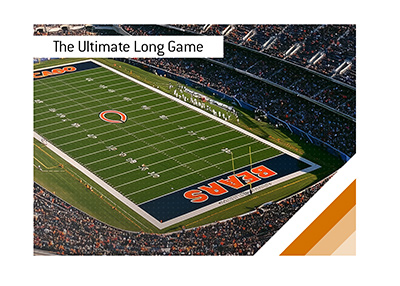
The Los Angeles Lakers changed hands this week at a valuation of $12.5 billion, fourteen months after changing hands at $10 billion, and the same day brought a second set of numbers: the 2026 valuations for all thirty-two National Football League franchises, up an average of thirty-one per cent in a single year. Which prompts the obvious question, and it is a testable one. Going back as far as the records reach - to a hundred dollars paid for the Chicago Bears in 1920 - every major franchise purchase with a documented price has been measured here against the same alternative: putting the identical sum into the American stock market and reinvesting the dividends for exactly as long. Franchises win, in nearly every era, often by margins that look like typographical errors. But the more interesting finding sits underneath that one, and it is this. Almost none of these gains have ever been collected. They are paper valuations printed by magazines, and on the rare occasions somebody has actually sold, the results have ranged from a fortune to an outright loss.
Sports-King Feature
Sports Teams vs the S&P 500
A hundred dollars bought the Chicago Bears in 1920. The same hundred dollars bought a share of the American stock market. One of them is now worth $9.45 billion. Eleven purchases, measured against the only benchmark that matters - and one uncomfortable question about all of them.
Bears, Annual Return Since 192018.9%
S&P 500, Long-Run Benchmark10.0%
NFL Values, One-Year Rise31%
Purchases Here Actually Sold3
A note on how to read the charts, because they are drawn deliberately. Each plots the money on a logarithmic scale, which means a steady compound return draws as a straight line and the slope of that line is the annual rate. Two lines appear on every one: the franchise in green, and the same money in the S&P 500 with dividends reinvested in gold. Where the green line is steeper, the team won. Where it is flatter, the index did. The eleven entries run in order of purchase date, and one column in the ledger below matters more than any other - the one recording whether anybody ever actually sold.
01
Chicago Bears, 1920 to 202618.9% a year
COST ....... $100VALUED 2026 $9.45 BILLION
SAME $100 IN THE INDEX ABOUT $2.4 MILLION
REALISED ... NOTHING. NEVER SOLD.
Start with the one everybody quotes and nobody calculates. In 1920 George Halas paid $100 for the franchise that became the Chicago Bears, and the family has never sold it. On the valuations published this week the team is worth $9.45 billion, a compound return of 18.9 per cent a year sustained for one hundred and six years. The same hundred dollars in the American stock market, with every dividend reinvested through the Crash, the Depression and 2008, reaches about $2.4 million. The Bears beat that by a factor of roughly three thousand nine hundred. Hold on to one detail, because everything below turns on it: not a cent of that gain has ever been converted into money.
02
New York Giants, 1925 to 202618.3% a year
COST ....... $500VALUED 2026 $12 BILLION
SAME $500 IN THE INDEX ABOUT $7.6 MILLION
ADVANTAGE .. ROUGHLY 1,580 TIMES
Tim Mara bought a New York franchise in 1925 for a reported $500, on the reasoning that a franchise in New York for anything was worth $500. A hundred and one years later the Giants are the third most valuable team in American sport at $12 billion, the family still holds a share, and the annual return is 18.3 per cent. Set that beside the Bears and something becomes clear. Two purchases made five years and four hundred dollars apart land within half a percentage point of each other across a century, which is not coincidence. Both are the same instrument: a permanent, protected licence to sell professional football in a city that was going to matter.
03
Pittsburgh Steelers, 1933 to 202617.6% a year
COST ....... $2,500VALUED 2026 $8.7 BILLION
SAME SUM IN THE INDEX ABOUT $17.7 MILLION
HELD ....... 93 YEARS, SAME FAMILY
Art Rooney paid a reported $2,500 for a Pittsburgh franchise in 1933, in the trough of the Depression, when professional football was a marginal entertainment played on Sundays because the college game owned Saturdays. Ninety-three years later the return is 17.6 per cent a year. The pattern across these first three entries gets mythologised and deserves puncturing: these men were not visionaries who identified an undervalued asset class. They were local businessmen paying a league entry fee for something with no proven commercial model. The returns are astronomical precisely because nobody else wanted the thing.
04
New York Yankees, 1964 to 1973minus 3.0% a year
PAID ....... $13.2 MILLION IN 1964SOLD ....... $10 MILLION IN 1973
SAME MONEY IN THE INDEX ABOUT $31 MILLION
STATUS ..... REALISED. A REAL LOSS.
Here is the counterexample, and it belongs early rather than buried. CBS bought the New York Yankees in 1964 for $13.2 million - the first of the modern record sales - and sold nine years later for $10 million. Not a smaller gain than the market. An actual loss of capital, minus three per cent a year, while an index fund roughly tripled. The most famous franchise in American sport, owned by one of the most sophisticated corporations in the country, lost money on it. And this matters more than it first appears, because it is one of the very few genuinely realised results anywhere in this file. Somebody actually wrote a cheque at the end.
05
New York Yankees, 1973 to 202613.8% a year
PAID ....... $10 MILLIONVALUED 2026 $9.4 BILLION
SAME SUM IN THE INDEX ABOUT $1.6 BILLION
ADVANTAGE .. ABOUT 6 TIMES
The man on the other side of that trade was George Steinbrenner, whose group paid $10 million in 1973 and who famously promised not to be involved in the day-to-day running of the club. Fifty-three years later the Yankees are the most valuable franchise in baseball at $9.4 billion, a return of 13.8 per cent a year, roughly six times what the index did with the same money. Notice the step down from the founding era. The Bears and the Giants returned eighteen per cent; Steinbrenner, buying an established and celebrated club rather than an entry fee for an unproven league, got a shade under fourteen. Paying a real price for a real asset lowers the return. That is not a flaw in the market, it is the market working.
06
Lakers, Kings and the Forum, 1979 to 202611.7% a year
PAID ....... $67.5 MILLIONBOUGHT ..... LAKERS, KINGS AND THE FORUM
LAKERS ALONE $12.5 BILLION IN 2026
SAME SUM IN THE INDEX ABOUT $6.0 BILLION
Jerry Buss paid a reported $67.5 million in 1979 in a deal constantly described as buying the Lakers, which it was not. It bought the Lakers, the NHL's Kings, and the Forum they both played in. Measuring the basketball team alone against the entire purchase price therefore understates the return, and it still comes out at 11.7 per cent against an index that did about ten. Read honestly, this entry says the Buss family beat the market on the crudest possible accounting and beat it comfortably once the two uncounted assets are added back. It is also the lowest figure in the file, which says a great deal about how much of the return depends on the entry price rather than the asset.
07
Dallas Cowboys, 1989 to 202613.4% a year
PAID ....... ABOUT $150 MILLIONVALUED 2026 $15.5 BILLION
SAME SUM IN THE INDEX ABOUT $5.1 BILLION
RANK ....... MOST VALUABLE TEAM ON EARTH
When Jerry Jones bought the Dallas Cowboys in 1989 the near-universal verdict was that he had wildly overpaid for a losing football team. The Cowboys are now valued at $15.5 billion, the most valuable sports franchise in the world for a seventh consecutive year, and the return is 13.4 per cent a year. And still - this is the part worth sitting with - the single most celebrated purchase in the history of sports business beat a passive index fund by about three times across thirty-seven years. Three times is a wonderful result. It is not the different universe the founding-era entries occupy, and the club has not reached a Super Bowl since the 1995 season.
08
Patriots and Eagles, 1994 to 202613.7% and 13.4%
KRAFT ...... $172M FOR THE PATRIOTSNOW ........ $10.4 BILLION, 13.7%
LURIE ...... $185M FOR THE EAGLES
NOW ........ $10.31 BILLION, 13.4%
TITLES ..... SIX VERSUS ONE
Two purchases in the same year at almost the same price, followed by wildly different results on the field. Robert Kraft paid $172 million for the Patriots and won six championships. Jeffrey Lurie paid $185 million for the Eagles and won one. Kraft returned 13.7 per cent a year; Lurie returned 13.4. Three tenths of a percentage point separate them across thirty-two years, which is close to a rounding error, and which points at something genuinely uncomfortable: the relationship between winning football games and making money owning a football team is far weaker than anybody involved would care to admit. The asset appreciated because the league's national media contracts appreciated. The rest was noise.
09
Seattle Seahawks, 1997 to 202614.3% a year
PAID ....... ABOUT $200 MILLION IN 1997AGREED SALE $9.612 BILLION, 2026
BUYER ...... THE KHOSLA FAMILY
SAME SUM IN THE INDEX ABOUT $3.2 BILLION
STATUS ..... A REAL PRICE, NOT AN ESTIMATE
This is the cleanest data point in the file and it arrived last month. Paul Allen bought the Seahawks for roughly $200 million in 1997. After his death in 2018 the franchise was always going to reach the market eventually, and it has: the family of the technology billionaire Vinod Khosla agreed to buy at an enterprise value of $9.612 billion, with owners due to vote at the end of August. That is 14.3 per cent a year across twenty-nine years - and unlike almost every other line in this article it rests on a price somebody has agreed to pay rather than a number a magazine printed. It is also a measure of how rarely this happens. The Seahawks are only the fourth NFL team to change hands since 2015.
10
Recent purchases, 2012 to 202311.4% to 18.5%
DODGERS 2012 $2B, NOW $9.05B, 11.4%BRONCOS 2022 $4.65B, NOW $9.18B, 18.5%
COMMANDERS 23 $6.05B, NOW $9.64B, 16.8%
WINDOW ..... THREE AND FOUR YEARS
LAST YEAR .. NFL VALUES ROSE 31% AT ONCE
Here the story refuses to end the way it is usually told. The received wisdom is that entry prices have climbed so far that recent buyers must be earning less. On the valuations published this week they are earning more: the Broncos at 18.5 per cent a year since 2022 and the Commanders at 16.8 per cent since 2023, both comfortably ahead of the index and both ahead of Jerry Jones. Mark Walter's Dodgers, bought at a then-record $2 billion in 2012, sit at 11.4 per cent, comfortably clear of the index in a period when baseball values rose faster than at any time since these rankings began. But those first two figures deserve a warning label rather than a victory lap. They are measured across three and four years, which is nothing, and they exist because NFL valuations rose thirty-one per cent in a single year, the largest jump on record. That is a fact about the estimate as much as about the asset.
11
Green Bay Packers stock0% by design
DIVIDEND ... NONE, EVERAPPRECIATION NONE, BY RULE
RESALE ..... ESSENTIALLY NONE
YOU RECEIVE A CERTIFICATE AND A VOTE
DEMAND ..... ENORMOUS ANYWAY
The last entry exists to demolish the premise of the other ten. The Green Bay Packers are the only publicly owned franchise in major American sport, and several hundred thousand people hold shares in them. Those shares pay no dividend, do not appreciate, cannot be sold at a profit and confer no economic interest of any kind. Judged as a security it is the worst ever issued, and every time the club offers more, people queue. Which is the honest answer to the question in the headline. Nobody has ever bought a sports team purely as an investment, and Packers stock is what remains once you strip out everything except the part that cannot be measured and sell that on its own.
The Full Ledger
Every purchase in this file, in order of the year it was bought. The final column is the one to watch: it records whether the gain was ever actually converted into money.
| Bought | Asset | Price | Worth Now | Return | Index | Ever Sold? |
|---|---|---|---|---|---|---|
| 1920 | Chicago Bears | $100 | $9.45B | 18.9% | 10.0% | No. Held 106 years |
| 1925 | New York Giants | $500 | $12B | 18.3% | 10.0% | No. Family still holds |
| 1933 | Pittsburgh Steelers | $2,500 | $8.7B | 17.6% | 10.0% | No. Held 93 years |
| 1964 | Yankees, CBS | $13.2M | $10M in 1973 | -3.0% | 10.0% | Yes. At a loss |
| 1973 | Yankees, Steinbrenner | $10M | $9.4B | 13.8% | 10.0% | No |
| 1979 | Lakers, Kings and Forum | $67.5M | $12.5B | 11.7% | 10.0% | Yes. Sold 2025 |
| 1989 | Dallas Cowboys | About $150M | $15.5B | 13.4% | 10.0% | No |
| 1994 | New England Patriots | $172M | $10.4B | 13.7% | 10.0% | No |
| 1994 | Philadelphia Eagles | $185M | $10.31B | 13.4% | 10.0% | No |
| 1997 | Seattle Seahawks | About $200M | $9.612B | 14.3% | 10.0% | Yes. Agreed 2026 |
| 2012 | Los Angeles Dodgers | $2B | $9.05B | 11.4% | 10.0% | No |
| 2022 | Denver Broncos | $4.65B | $9.18B | 18.5% | 10.0% | No. Four-year window |
| 2023 | Washington Commanders | $6.05B | $9.64B | 16.8% | 10.0% | No. Three-year window |
The Arithmetic
Annual return by year of purchase, against the benchmark
Each dot is one purchase, placed by the year it was made. Almost everything sits above the gold line. The ringed dot is the Seahawks, the only entry here priced by an actual buyer rather than an estimate. The single point below the axis is CBS, and it is also one of the few that ever got sold.
Paper gains against money actually collected
This is the distinction the headline numbers hide. A share of an index fund can be sold any weekday afternoon at a price the market agrees on. A franchise is worth whatever a publication estimates until the day somebody signs, and only four NFL teams have changed hands since 2015.
The Record Book
The Fourteen-Month TradeThe transaction that prompted this article is also the one that best proves its point. Mark Walter took control of the Lakers at a $10 billion valuation in June 2025, approved that October, and agreed to sell at $12.5 billion in August 2026 to a group led by Josh Kushner and Bob Iger. Annualised, that is roughly 21 per cent in fourteen months on the largest asset in this file - and crucially it is realised. Somebody paid it. Almost nothing else here can say the same.
Where the Money Actually Comes FromNone of these returns were generated by selling tickets. The engine is national media rights, which in the NFL run to about $125.5 billion in contracts through 2033 - roughly $380 million a year to every club before anybody walks through a turnstile. That is why all thirty-two franchises are profitable, why the least valuable of them is worth $7.4 billion, and why on-field results barely register in the returns. It is also the unpriced risk: a buyer at today's valuations is making a leveraged bet that the next television deal is bigger than the last one.
The Year Everything JumpedThe reason the recent buyers look so good is that the ground moved underneath them in the last twelve months. The average NFL franchise valuation rose thirty-one per cent in a single year, from about $7.13 billion to $9.34 billion - the largest annual increase since these valuations began. Nine clubs now sit above $10 billion. Read the Broncos and Commanders entries with that in mind: their spectacular annualised returns are three and four years long, and most of the gain arrived in one of those years.
The Thing an Index Fund Cannot DoEvery comparison here is unfair in one direction and it should be said plainly. A share of an index fund can be sold on a Tuesday afternoon for whatever the market says it is worth. A franchise cannot be sold in part without permission, cannot be sold at all without the approval of the other owners, pays no meaningful dividend, and takes months or years to convert into cash. Illiquidity of that order should demand a higher return than the market, not the same one. Measured against that standard, several entries here look considerably less impressive.
Sports-King's Note
Now for the fine printThis comparison rests on two sets of numbers that deserve very different levels of trust, and the gap between them is the point of the article. Purchase prices are historical and generally well documented, though the earliest - the Bears at $100 in 1920, the Giants at $500 in 1925, the Steelers at $2,500 in 1933 - are league entry fees reported contemporaneously rather than audited records, and are the closest thing those never-sold franchises have to a cost basis. Jerry Jones's purchase of the Cowboys is variously reported between $140 million and $150 million depending on whether the Texas Stadium lease is included; the higher figure is used here, which if anything understates his return. Present-day figures are Sportico's 2026 valuations, published on August 12, 2026, which combine the enterprise value of a franchise with the value of team-related businesses and real estate holdings - so they are broader than the price of the team alone, and they are estimates rather than transactions. Different outlets publish materially different numbers for the same clubs. Where a franchise has actually sold, the transaction price is used instead, and those entries are flagged in the ledger. On the market side the benchmark is a long-run S&P 500 total return of about 10 per cent a year with dividends reinvested, the figure produced by the standard academic series covering 1928 onward. Two caveats follow. The S&P 500 in its present form did not exist before 1957 - it was a 90-stock composite from 1926 and anything earlier is a reconstruction - so a comparison beginning in 1920 runs against a backfilled index rather than an investable product, index funds not existing until the 1970s. And applying one average rate across every period smooths away the sequence of returns, which for any individual investor determines the outcome. All figures are nominal rather than inflation-adjusted; a real-terms comparison would reduce both sides by roughly three points a year without changing the ranking. Returns computed over three and four year windows, as for the Broncos and Commanders, are extremely sensitive to a single year of revaluation and should be read as provisional. Nothing here is investment advice.
One Last Word
So the answer to the question in the title is yes, comfortably, in almost every era, and by margins the stock market cannot approach at the long end. A hundred dollars in 1920 bought a football team now valued at nine and a half billion. But hold the second finding alongside the first. Ten of the thirteen purchases in this file have never been sold, which means their returns are not returns at all - they are estimates published by a magazine about an asset that changes hands once a decade. Three were actually converted into money. One of those three lost money. The greatest investment in the history of American business is also the one almost nobody has ever cashed.
The hard numbers, for the road: the Chicago Bears cost $100 in 1920 and are valued at $9.45 billion, a compound return of 18.9 per cent a year over 106 years, against roughly $2.4 million for the same money in the stock market. The Giants have returned 18.3 per cent since 1925 and the Steelers 17.6 per cent since 1933. George Steinbrenner made 13.8 per cent a year on the Yankees from 1973, Jerry Jones 13.4 per cent on the Cowboys from 1989, Robert Kraft 13.7 per cent on the Patriots from 1994. Paul Allen's $200 million for the Seahawks in 1997 became an agreed $9.612 billion this year, 14.3 per cent a year and an actual price rather than an estimate. The S&P 500 has returned about 10 per cent a year with dividends reinvested over the long run. The Dodgers have returned 11.4 per cent since 2012; the Broncos 18.5 per cent since 2022 and the Commanders 16.8 per cent since 2023, both flattered by a single year in which NFL valuations rose 31 per cent. CBS bought the Yankees in 1964 for $13.2 million and sold in 1973 for $10 million, the only loss in the file. And Green Bay Packers stock, the only publicly held equity in American sport, pays no dividend, cannot appreciate and cannot be resold at a profit.