From Game Checks to Emergency Funds: How Fine Money Really Moves Through Pro Sports
Published on September 19th, 2026Written By: Dave Manuel
Somewhere in a league office right now, a form is being filled out. It has a name on it, a violation, and a dollar figure that will lead every sports site's push alert by dinner. What it will not lead with - what almost never gets asked - is the fourth field on the form: where does the money actually go? The answer is stranger than you think. It is four different systems in four leagues, a hundred-million-dollar ticket written to a race team, the commissioner's general fund, a union trust that pays for retired players' cognitive exams, one league that will not show you the end of its own pipe - and a billionaire who cheerfully pays every fine twice. This is the Fine File. Bring a pen.
The Field Nobody Reads
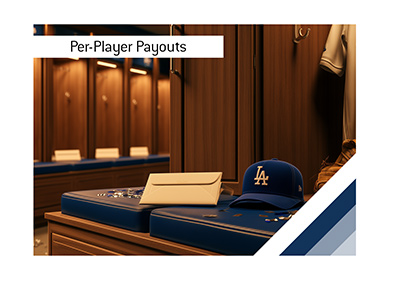
Every fine in professional sports is a form, and every form has the same fields: who did it, what they did, and what it costs. Those three get all the attention. The fourth field is the one this article is about - PAYABLE TO - because almost nobody can tell you where the money actually goes, and the answers turn out to be four different systems, one per league, ranging from admirably transparent to genuinely secret. Here is the master form. We are going to fill it out eleven times.
Two ground rules before the file opens. First: a fine is not revenue. In every major North American league, the money that comes out of a player’s game check does not land in the league’s operating budget - by collectively bargained design, it leaves the building. Second: the ticket is the opening bid, not the final price. Fines get appealed, reduced, overturned and converted, which is why several of the forms below carry stamps you will not find at the DMV.
The Four Trails
Start with where an ordinary on-field fine goes, league by league, because no two leagues run the same pipe.
The NFL: fifty-fifty, in writing
The NFL’s trail is the most explicit, because the players negotiated it into the collective bargaining agreement: half of all player fine money goes to the Gene Upshaw Player Assistance Trust, the union-run fund that helps retired players in crisis - unaffordable medical situations, cognitive evaluations, life after a career that typically ends before thirty - and the other half goes to charities jointly chosen by the league and the union, with the NFL Foundation the league’s listed preference and names like the Player Care Foundation appearing over the years. The league has said fine money has flowed to those programs at a pace of roughly four million dollars a season since 2011. Players have occasionally asked to direct their own fine to a pet cause; the league says no. The pipe is the pipe.
The NHL: two pipes, priced by salary
Hockey runs a dual track that almost nobody outside the league office knows about: money forfeited by players - fines and suspension pay alike - goes to the Players’ Emergency Assistance Fund, while money forfeited by coaches, staff and clubs goes to the NHL Foundation. Two different kinds of offender, two different destinations. The NHL is also the only league that prices player fines as a share of salary rather than off a flat schedule: a fine can run up to half of one day’s pay, capped at $10,000 for a first offense and $15,000 for the next one inside twelve months, and suspension forfeitures are computed straight off a player’s average annual salary. More on why that design is smarter than it looks in a moment.
MLB: charities on the field, a general fund upstairs
Baseball’s player fine money has been described by the league as flowing to MLB Charities - a nonprofit supporting groups like the Boys & Girls Clubs and the Jackie Robinson Foundation - and to the Baseball Assistance Team, which quietly helps former players in financial need. But baseball also has the least explicit written policy of the four, and that gap matters at the top end of the file: when the league fines a club, baseball historians at SABR say that money has historically gone to the commissioner’s general fund, with charity only when the league chooses to flag it. The policy, they note, is not spelled out in the Major League Constitution. Hold that thought for Citation No. 0006.
The NBA: half a trail
The NBA splits fine money down the middle with its union, same as football. The union’s half is public: it goes to the NBPA Foundation, which in a recent year reported moving about $2.5 million out the door across 141 grants. The league’s half is the strange one. When reporters went asking in 2017 - CNN, specifically - the NBA declined to name a single charity that had received fine money, making it the only major league that would not show the end of its own pipe; the league later pointed to its NBA Cares umbrella. Maybe every dollar lands somewhere wonderful. But in a file where the NFL publishes its split and the NHL names the exact fund, half of basketball’s trail simply goes dark, and that is worth saying out loud.
The Price List
The other thing fans rarely appreciate: most fines are not improvised. The NFL publishes a collectively bargained schedule before each season - a literal menu with a price for a facemask, a late hit, a horse-collar - with amounts that escalate for repeat offenses. The NBA’s CBA prices life away from the court, too: $2,500 for a first skipped practice, $20,000 for blowing off a promotional appearance or a mandatory education program, $5,000 for skipping the league’s business-of-basketball course. In modern sports, the cost of everything is negotiated in advance and printed where everyone can read it.
Which exposes the flat schedule’s honest flaw: the same $10,000 line item is a rounding error on a supermax game check and a genuine bite at the league minimum. A price list punishes the bottom of the roster hardest - and that is precisely why hockey went the other way and priced fines as a percentage of a day’s salary instead. Same misconduct, same proportional sting, whoever you are. It is the fairest fine machine in sports, and it is buried in a league bylaw nobody reads.
The File: the Biggest Tickets Ever Written
Now the citations themselves - the largest fines in the history of sports, filed in descending order, each with the field that matters filled in.
The biggest fine in sports history was not written to a player, a coach or an owner - it was written to a race team. In 2007 the FIA concluded that Ferrari technical information had made its way into McLaren hands, fined the team one hundred million dollars, and stripped every one of its constructors’ championship points, while letting Lewis Hamilton and Fernando Alonso keep their driver points. As for the PAYABLE TO line: the money went to motorsport’s governing body, which has never itemized its spending of it line by line. The largest check in the file, and the trail ends at the front door.
The biggest bill ever addressed to one person arrived with poetry: the league announced Snyder’s $60 million resolution of the White investigation’s findings - workplace misconduct, financial improprieties - on the same day the owners approved the sale of the Commanders to Josh Harris’s group. One envelope closed an era. The all-time record for an individual, and the league did not have to chase the payment: it was, functionally, a condition of leaving.
The NCAA’s 2012 fine - sized at roughly one year of the football program’s gross revenue - is the counter-example the rest of the file needs: a giant fine with a designated, published destination, endowing programs for preventing child sexual abuse and assisting survivors. It can be done. When the cause is grave enough, the PAYABLE TO line gets filled in for everyone to read - which makes the blank ones elsewhere in this file a choice, not a law of nature.
Ten million is not what the NBA thought Sarver’s conduct was worth - it is the most the form allows, the maximum fine permitted under league rules, stacked with a one-year suspension. The league said the money would be donated to organizations addressing race- and gender-based workplace issues. The market then finished the sentence the rulebook could not: under mounting pressure, Sarver announced he would sell the Suns and Mercury. The fine hit its ceiling; the consequences kept going.
The largest fine ever levied on an NFL player did not come off a schedule - it came out of a settlement, alongside an eleven-game suspension, and the league said the money would seed a fund supporting nonprofits working on sexual-misconduct prevention and education, with the league and the club adding contributions of their own on top. A reminder that at the top of the file, fines stop being prices and start being negotiated outcomes.
The most fascinating ticket in the file. Five million dollars - the maximum allowed under the Major League Constitution - plus first- and second-round picks in consecutive drafts, plus a suspended manager and general manager who were fired within hours. And the destination of the biggest fine in baseball history? When a Houston TV station’s verify team went asking, the historians at SABR gave the honest answer: internal club fines have historically gone to the commissioner’s general fund, charity only when the league flags it, and the policy is not spelled out in the constitution. The league itself never provided a definitive answer. The sport’s most famous fine, and the PAYABLE TO line is blank to this day.
The cap-circumvention classic: a secret series of below-market deals with Joe Smith, uncovered in 2000, drawing a $3.5 million fine and the stripping of five first-round picks, two of which were later restored. Everyone remembers the picks and nobody remembers the check - which is the correct weighting. The dollars were the smallest part of the punishment; the three vanished first-rounders re-priced the franchise’s entire decade.
Hockey’s version of the same lesson: a front-loaded, decades-long contract the league ruled a circumvention of the salary cap, a $3 million fine, and a draft-pick penalty stacked on top. Note the routing, per the league’s own rules: club money like this flows on the organizational track, not the players’ emergency fund - the two-pipe system working exactly as designed.
The original Spygate, 2007: half a million from the coach personally - the largest coach fine the league had ever written - a quarter million from the club, and a first-round draft pick gone. The pattern by now is familiar: at the institutional end of the file, the money is the headline and the non-monetary line items are the punishment. Nobody in Foxborough missed the $750,000. The pick, they missed.
The machinery ticket. A third hip-drop violation drew a one-game suspension; Luvu appealed to the jointly appointed officers the union helped choose, and the ban was converted into a $100,000 fine - he never missed a snap. This is the part of the fine economy fans see least: the appeal window, where suspensions become fines, fines get reduced, and the ticket on the windshield turns out to be an opening offer. The due process is real, it is collectively bargained, and it changes both the punishment and where the money lands.
The repeat-offender file needs a face, and it has worn the same one for twenty years. Cuban’s career fine tab - built almost entirely on saying what he thinks about officiating - long ago ran into the millions, and it comes with the file’s best twist: his stated habit of matching every fine with an equal charitable donation of his own. The league routes his money to its causes; he routes the same amount to his. The most-fined man in basketball has, by his own accounting, effectively paid double for the privilege of his opinions - and seems entirely at peace with the arithmetic.
The Receiving End
Flip the file over and read it from the other side, because the destination, in the leagues that publish one, is not random. The average NFL career is over before thirty; the fine economy’s biggest published pipes - the Upshaw Trust, hockey’s Players’ Emergency Assistance Fund, baseball’s Assistance Team - all point at the players who came before: the retired, the injured, the broke, the ones whose careers ended in an era that paid less and promised nothing. By collectively bargained design, a late hit on Sunday becomes a deposit in a fund that pays for a cognitive evaluation, an emergency grant, a former player’s rent. It is the rare piece of sports finance that is genuinely easy to feel good about - which makes it stranger, not less, that any league would decline to show the trail.
The file never closes. Somewhere there is an envelope with the next record inside - unaddressed for now, because the one constant across a century of sports discipline is that someone, eventually, always tops the tab. When it arrives, read the fourth field first.