Manchester City's 114 Charges: Will the Punishment Fit?
Published on October 20th, 2026Written By: Ariel Noel
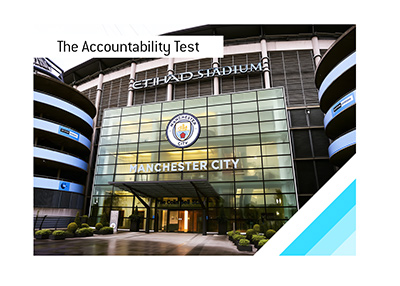
Manchester City has been found guilty of 114 breaches of Premier League financial rules, with more than £900 million in financial irregularities identified.
The club has appealed, maintaining its innocence.
But if the findings stand, what exactly would be an appropriate punishment?
A fine? A points deduction? Relegation? Stripping City of some of its Premier League titles?
And perhaps the bigger question.
Is Manchester City simply too big to punish?
When Money Goes Beyond Football
In 2008, Sheikh Mansour purchased Manchester City and began transforming the club into one of Europe's football powerhouses.
That same year, an Abu Dhabi investment connected to Mansour provided approximately £3.5 billion to Barclays Bank during the global financial crisis, helping the bank avoid a British government capital bailout.
And Barclays was not just any bank.
It was the title sponsor of the Premier League.
The investment was a commercial transaction, and the Abu Dhabi investors subsequently exited their position. Barclays remains the Premier League's official banking partner today.
None of this proves any improper influence over the current investigation.
But it does raise an interesting question.
When the people behind a football club have financial and political relationships extending far beyond the sport, how complicated does punishing that club become?
The political dimension is already apparent.
British Prime Minister Andy Burnham has spoken positively about the enormous investment City's ownership has brought to Manchester and expressed concern about the possibility of losing those investors.
Meanwhile, David Kogan, chairman of the Independent Football Regulator, has stated that his organization could force club owners to sell if they fail its suitability requirements.
That would require a separate investigation, and no such decision has been made.
Still, the stakes are clearly much bigger than football.
What About the Rest of Football?
There is another issue that rarely gets enough attention.
Manchester City has spent years near the top of football's financial food chain.
When clubs backed by enormous wealth compete for the best players, what happens to transfer fees and wages?
If one club is willing to pay more, do selling clubs begin demanding more from everyone else?
And how much of that additional cost eventually works its way through the rest of European football?
City certainly has not been alone in driving football's spending boom. But it has been one of its major participants.
If the club gained an unfair financial advantage, how do you measure the consequences for everyone else?
What about Manchester United and Liverpool, who finished second to City during some of the seasons under investigation?
Should those championships be reassigned?
What about clubs that missed Champions League qualification, lost prize money or were priced out of signing certain players?
You cannot simply go back and replay those seasons.
So What Would Be Fair?
A financial penalty would be the easiest solution.
But would a fine of even £100 million mean much to an ownership group with billions at its disposal?
A significant points deduction would have more immediate consequences. Relegation would be even more dramatic.
And stripping City of titles would raise another uncomfortable question.
Can you erase achievements that millions of people watched happen?
City supporters would understandably feel aggrieved by severe punishment, particularly after years of success on the pitch.
But how would supporters of other clubs react if City escaped with little more than a financial penalty?
Everton and Nottingham Forest have already faced points deductions for financial rule breaches. What message would a considerably lighter punishment send?
And what would the other Premier League clubs make of it?
Manchester City deserves its appeal, and any punishment must follow the final findings rather than public pressure.
But if those findings stand, the Premier League faces a decision that goes well beyond one club.
It has spent years telling clubs that financial rules matter.
Now it may have to prove it.
Because this is no longer just about how much Manchester City can afford to pay.
It is about whether football can afford to let them off lightly.