The Most Expensive Fabric in Sports
Published on August 4th, 2026Written By: Dave Manuel
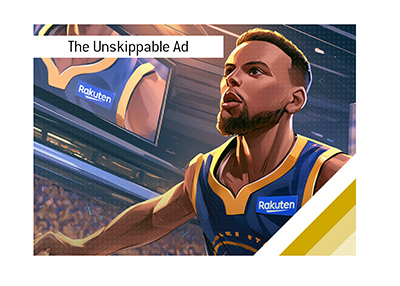
In 2017 the Golden State Warriors sold a three-inch square of fabric on the left shoulder of their jerseys to the Japanese technology company Rakuten for a reported $20 million a year. It was, at the time, nearly double the second-largest such deal in the NBA, and it was widely described as an eye-watering sum for a patch most fans assumed they would never stop resenting. By 2023 that same square was estimated to be worth $45 million a year. This summer the Warriors announced a new tenant, the Australian AI cloud provider IREN, in a deal reported at more than $50 million a year - described by the reporter who broke the figure as the richest sponsorship agreement in the history of North American team sport. Nine years, one piece of cloth, and a two-and-a-half-fold increase. The patch is now among the fastest-appreciating assets in professional sport, and the escalation is not confined to basketball: the Yankees put a sponsor on the most sacred uniform in American baseball for $25 million a year, the NHL turned a pandemic revenue emergency into a permanent helmet business, and beginning this season American college programmes may sell commercial patches for the first time in history. This file tracks every surface, every price, and every rung of the ladder that got them there.
Sports-King Feature
The Patch Economy
Three square inches of fabric, sold and resold. What every league charges for the space on a player's shoulder, and how the price climbed from novelty to fifty million dollars a year.
The Escalator · One Patch, Golden State Warriors, Left Shoulder2017$20MRakuten2023$45MRakuten, estimated2026$50MIREN, reportedThe same square of cloth, two and a half times the price, in nine years.NBA Patch Program, Now~$300M
Richest Single Patch$50M
MLB Clubs With a Sleeve Deal29 of 30
NFL Game-Jersey PatchesZero
There is a particular kind of sports story that ends with fans getting used to something they swore they never would, and the uniform patch is the cleanest example of the genre. Every league that has sold this space promised it would be tasteful, modest and limited. Every one of them then watched the price double, and then double again. The reason is simple arithmetic that took a decade to become obvious: a patch is the only advertisement in sport that appears in every broadcast, every photograph, every highlight, every replica sold, and every social post, without a viewer being able to skip it. This file walks the ladder rung by rung - the deals that set each new benchmark, the leagues that followed each other in an order most people get backwards, the rules that govern what may appear, and the one major league still refusing to sell. Eleven entries, each with its own escalator.
01
Escalator 01 · Golden State Warriors2017$20MRakuten, 3 yrs, $60M2023$45Mestimated, top in US sport2026$50MIRENRakuten reported a 300 per cent rise in brand recognition among American basketball fans.When Rakuten signed in September 2017 the deal was worth a reported $20 million a year across three years, and it nearly doubled the next-largest patch agreement in the league, held by Cleveland. The Warriors president at the time framed it as the programme working exactly as intended: a partner the club had never done business with, an international player, and a lift in the team's value outside North America. Rakuten got what it wanted too, reporting that brand recognition among US basketball fans rose 300 per cent. Rakuten then extended, and by 2023 Sportico was valuing that extension at an estimated $45 million a year - the largest jersey logo deal in American sport, though some outlets continued to cite the original $20 million figure for the life of the arrangement. Rakuten held the patch from 2017-18 through 2025-26. In June the Warriors announced IREN, an Australian AI cloud provider founded in 2018 that began as a bitcoin miner, at a reported more than $50 million a year - which Sportico called the richest sponsorship deal in the history of North American team sports. One honest caveat: that figure buys more than the shoulder. The agreement spans the whole organisation, putting IREN on the WNBA Valkyries' warm-ups and the G League Santa Cruz Warriors' jerseys, with prominent branding through Chase Center. Rakuten did not disappear either - the two sides announced a separate continuing partnership days before, including an upcycled merchandise line made from old jerseys carrying its own badge.
02
Escalator 02 · Los Angeles Lakers2017$12-14MWish, three years2021$27MBibigo, signed at 5 yrs / $100M+2026$30M+AlbertThe Bibigo deal was the richest in the league when signed. Five years later it was replaced by a bigger one.The Lakers held out at first - they were among the big-market clubs still without a patch a month before the inaugural season - and have since run through three tenants at steadily rising prices. Wish paid a reported $12 to $14 million a year across three years, which at the time put it in the league's top tier. Bibigo, the Korean food brand owned by CJ CheilJedang, replaced it in 2021 on a five-year agreement worth more than $100 million, the richest patch deal in the league at the time; its chief marketing officer explained the price by calling the Lakers a cultural icon rather than a basketball team. By 2023 Sportico was valuing the Bibigo arrangement at around $27 million a year, third in the league behind Golden State and Brooklyn's $30 million deal with Webull - the top three patches alone generating roughly $100 million between them in a single season. This summer Bibigo made way for Albert, a personal-finance app, at a reported annual value north of $30 million, with the logo now on the upper left chest of all four Lakers uniforms. The sequence tells you something about who buys this space: an e-commerce disruptor, then a global food conglomerate, then a fintech.
03
Escalator 03 · NBA Jersey Patch Programme, League-Wideest.$100Minitial projection2021$225MBoardroom estimate2026~$300Mapproaching, per SportBusinessNBA team sponsorship revenue overall: $1.62 billion, up 91 per cent in five years.When the idea was first floated publicly by Adam Silver at the turn of the 2010s, the projected combined impact was around $100 million a year across all thirty teams. It launched for the 2017-18 season as a three-year test. By 2021-22 the programme was valued at $225 million, more than double the original estimate, and it is now approaching $300 million a season, with some analysts placing the range at $300 to $350 million. That growth sits inside a wider surge: NBA team sponsorship revenue reached $1.62 billion, up 8 per cent in a year and 91 per cent across five. Patch deals more than doubled year over year in the most recent count, with six first-time partners contributing more than $80 million in new spending, and the typical agreement running three years. The test run became the template.
04
Escalator 04 · New York Yankees Sleeve2022$0no patch permitted2023$25MStarr Insurance, through 2031term$200Mreported deal ceilingThe most spartan uniform in American sport - no names on the back - now carries a sleeve advertisement.Baseball approved sleeve patches in its 2022 collective bargaining agreement, and the Yankees waited until the 2023 All-Star break before announcing Starr Insurance would appear on their sleeves from July 21, through the 2031 season. The reported terms - at least $25 million a year and up to $200 million overall - made it the richest patch agreement in the sport, topping the reported $18 million a year MassMutual pays Boston on a ten-year, $170 million arrangement. The Yankees were the thirteenth club to sign. The reaction was the loudest the category has produced, because these are the pinstripes: no player names on the back, no colour, no adornment, and now a logo on the arm. It is the single clearest data point in this file about what a patch is actually worth, because the Yankees were the club with the most to lose aesthetically and they still sold.
05
Escalator 05 · MLB Sleeve Patches2022~$10MPadres and Motorola, the first2023$18MRed Sox and MassMutual2023$25MYankees and StarrOnly the Tampa Bay Rays have yet to sign a sleeve partner.The San Diego Padres moved first, announcing Motorola in April 2022 at a reported $9 to $10 million annually, before any patch had appeared on a field. What followed was the fastest adoption curve in the category's history: twenty-nine of thirty clubs now carry a sleeve sponsor, with only Tampa Bay yet to sign. The spread is wide - Miami's ADT deal was reported at $5 million a year across three seasons, against Boston's $18 million and New York's $25 million - and the recent arrivals show how the market has broadened, with Colorado signing the aerospace firm York Space Systems through 2030, the White Sox adding CME Group ahead of this season, and San Francisco bringing in the financial platform Airwallex. Baseball opted for the sleeve rather than the chest, which is a deliberate choice: it is the surface a camera sees during a pitcher's delivery and a batter's stance.
06
Escalator 06 · NHL2020$15Mhelmet ads, league-wide total2022$5-10Mjersey ads, per teamIntroduced to offset pandemic losses. The pandemic ended; the advertisements did not.Hockey's route in is the most instructive, because it was explicitly framed as temporary. Helmet advertisements arrived for the 2020-21 season to offset revenue lost to the pandemic, generating a modest $15 million across the entire league in year one. They were never removed. Jersey advertisements followed for 2022-23, expected to generate $5 to $10 million per club - a far larger sum than the helmet decals, on a far more visible surface. The pattern is worth noting because it recurs across this whole file: a small, apologetic, clearly-labelled-as-exceptional intrusion establishes the principle, and the principle is what gets expanded. Nobody sells the whole uniform at once.
07
Escalator 07 · Order of Adoption2007MLSReal Salt Lake and XanGo2017NBAchest patch2020NHLhelmet, then jersey2023MLBsleeveThe order runs the opposite way to how Americans usually tell it.The usual telling has the NBA as the brave innovator that dragged American sport into the modern era. The record says otherwise. Major League Soccer became the first major North American league to permit jersey advertising in 2007, with Real Salt Lake signing the dietary supplement company XanGo - a full decade before the NBA sold a patch. And MLS was itself following the global standard, because European football had been selling shirt fronts since the 1970s. The line of influence runs international football to MLS to the NBA to the NHL to MLB, which means every American league in this file was a follower. It also means the ceiling is set abroad: Manchester United alone earns a reported $185 million a year from jersey sponsorship, more than the entire NBA patch programme was worth in 2021.
08
Escalator 08 · What Is Actually Permitted, MLBsize4x4 inmaximum, either sleeveappr.Bothleague and players must approvebannedThreealcohol, betting, media brandsThe categories willing to pay the most are frequently the ones not allowed to.The patch is a regulated space, not an open market. Under baseball's arrangement the sleeve patch may be no larger than four inches by four, positioned on either sleeve, and both the sponsor and its specific logo must be approved by the league and the players for every club - with alcohol, betting and media brands excluded from consideration entirely. Those restrictions matter more than they sound, because they remove several of the categories that would otherwise bid hardest, which is part of why the winning bidders in this file are so often insurers, fintechs, food conglomerates and crypto companies rather than the brands most associated with sport. The category mix is not a reflection of who values the space most. It is a reflection of who is permitted to buy it.
09
Escalator 09 · NCAA Division I · Effective August 1, 2026beforeNoneno commercial patches permittednowTwoon uniforms and apparelplusOneon equipment - helmets, bagsplusOneextra for conference championshipssize4 sq inmaximum per logoApproved January 23. In force since Saturday. Not permitted at NCAA championships - yet.The timeliest entry here, because the rule took effect on Saturday. The NCAA's Division I Cabinet approved it on January 23, and from August 1 programmes may carry up to two commercial logos on uniforms and apparel plus one on equipment - a helmet, a bag - during the preseason and regular season, with one further logo permitted for conference championships. Each is capped at four square inches, and all of them sit on top of the manufacturer branding already there. Placement will be settled sport by sport, with logos kept clear of the areas officials need to read. They are not yet allowed at NCAA championships, partly because a school's sponsor might compete with the NCAA's own; that is under review, and the College Football Playoff is separately examining its postseason. The Cabinet chair tied the decision directly to funding athlete benefits, which is the honest reading: this arrived because schools now owe their athletes money. Some programmes did not wait, with LSU among those reported to have lined up patch-ready deals before the vote.
10
Escalator 10 · National Football League2009Practicejersey ads permittednow$0game jerseys, still cleancontext$2.5Bteam sponsorship revenueThe richest league in the world, declining the category its rivals cannot get enough of.Football is the last one standing. NFL clubs have sold advertising on practice jerseys since 2009, but the game uniform remains free of commercial patches, and the league has never set a date to change that. The scale of what is being declined is the point: NFL team sponsorship revenue runs to roughly $2.5 billion, comfortably ahead of the NBA's $1.62 billion, and if patches were priced on the NBA's tiers with the NFL's audience, the programme would plainly be the largest in the world. Nothing about the league's history suggests permanent restraint - it is simply the last domino, and every other league in this file swore the same thing before selling. The interesting question is not whether the NFL eventually does it, but what the first club charges when it does.
11
Escalator 11 · Price Against Measured Valuepaid$13MWish, per year, approxmeasured$199MNielsen media value, one seasonThe gap between those two numbers is the entire sales pitch - and the reason to be sceptical of it.Here is the number every rights-holder quotes. Nielsen assessed the sponsor media value delivered to Wish by the Lakers patch at $199 million for the 2019-20 season alone, against a three-year deal reported at $36 to $42 million in total. On that arithmetic the patch returned roughly fifteen times its cost. Treat it carefully. Media value models convert on-screen logo exposure into a notional advertising equivalent, and they are commissioned by the industry that benefits from large answers; a logo glimpsed on a shoulder during a fast break is not worth what a viewed commercial is worth. The more sober measure from the same era put average per-team quality-adjusted media value at $1.85 million, with the best team reaching $8 million - well below what clubs were charging. Both figures are real. Which one you believe determines whether this market is efficiently priced or a bubble in embroidery.
The Full Rack
Every reported patch deal in this file, by annual value. All figures are reported or estimated rather than filed, because none of these contracts is published.
| Team | League | Sponsor | Reported Annual | Term |
|---|---|---|---|---|
| Golden State Warriors | NBA | IREN | $50M+ | From 2026-27 |
| Golden State Warriors | NBA | Rakuten | $20M, extension est. $45M | 2017-18 to 2025-26 |
| Brooklyn Nets | NBA | Webull | ~$30M | Reported |
| Los Angeles Lakers | NBA | Albert | $30M+ | From 2026-27 |
| Los Angeles Lakers | NBA | Bibigo | est. $27M | 2021-2026 |
| New York Yankees | MLB | Starr Insurance | $25M, up to $200M total | 2023-2031 |
| Boston Red Sox | MLB | MassMutual | $18M | 10 years |
| Los Angeles Lakers | NBA | Wish | $12-14M | 3 years from 2017 |
| San Diego Padres | MLB | Motorola | $9-10M | From 2023 |
| NHL clubs | NHL | Various | $5-10M | From 2022-23 |
| Miami Marlins | MLB | ADT | $5M | 3 years |
| NBA, lower tier | NBA | Various | $3-6M | Typically 3 years |
The Arithmetic
The programme, league-wide
Tripled against its own launch projection. The programme was sold to owners as a modest supplementary revenue line and became a category of its own.
Who fell, and when
Each league watched the one before it, waited, and then moved. The gaps between the dots have been getting shorter.
The Record Book
The Twenty Million Dollar StuntBefore the Yankees signed with Starr, the adult website Stripchat publicly offered them $20 million to become their exclusive patch sponsor for the 2023 season, complete with a mocked-up image of the logo on the pinstripes. It was a publicity stunt and everybody involved knew it - the category is expressly forbidden - but it made a serious point that the eventual $25 million deal confirmed. Once a surface is for sale, the club is no longer arguing about whether to sell it. It is only arguing about price and about who is permitted to pay.
The Categories Nobody Talks AboutBaseball's rules exclude alcohol, betting and media brands from sleeve patches, and both the sponsor and the specific logo require approval from the league and the players for every individual club. That is a meaningful constraint on price discovery, because it removes several of the deepest-pocketed bidders in sports marketing from the auction entirely. It also explains the strange demographic of winners across this file - insurers, payment platforms, a Korean food conglomerate, a bitcoin miner, a grocery retailer. The patch market is not a straightforward auction. It is an auction with a guest list.
Everything Else On the ShirtThe patch was never going to be the end of it. The NBA approved a separate Shooting Shirt Patch Program in December 2021, allowing sponsor logos on warm-up tops and shooting shirts at three inches square, placed either on the empty right sleeve or beside the primary logo. Hockey sold helmets before it sold jerseys. Baseball has openly discussed helmet decals. Each new surface is introduced as a small, discrete addition, and each one establishes that the surface has a price. There is no reason to believe the inventory is finished.
The Number That Sells the DealThe single most-quoted figure in this business is Nielsen's assessment that the Lakers patch delivered $199 million in sponsor media value to Wish in one season, against a deal reported at $36 to $42 million across three years. Every rights-holder pitching a patch has some version of that slide. What is rarely shown alongside it is the same era's more conservative measure, which put the average NBA team's quality-adjusted media value at $1.85 million and the best in the league at $8 million - numbers considerably below the prices being charged. Both are produced by the measurement industry. Only one tends to appear in a sales deck.
Sports-King's Note
Now for the fine printEvery financial figure in this file is reported or estimated. Uniform sponsorship agreements are private commercial contracts between clubs and brands, none are filed publicly, and the numbers that circulate come from sources close to negotiations speaking to journalists - so treat the precision as approximate throughout. Specifics as reported: the Warriors' 2017 Rakuten agreement at a reported $20 million a year across three years, described at signing as nearly double the next-largest deal in the league; the same partnership estimated at $45 million annually by Sportico following an extension, though other outlets continued to cite $20 million for the life of the deal, which ran from 2017-18 through 2025-26; and the incoming IREN agreement reported by Sportico at more than $50 million a year and described there as the richest sponsorship deal in North American team sports history. That IREN figure covers an organisation-wide partnership including the WNBA's Golden State Valkyries and the G League's Santa Cruz Warriors as well as arena branding, so it should not be read as the price of the shoulder alone; Bloomberg first reported the tie-up without a value. The Lakers sequence - Wish at a reported $12 to $14 million a year across three years, Bibigo signed at more than $100 million across five years from 2021 and later valued by Sportico at around $27 million annually, and Albert at a reported annual value north of $30 million from 2026-27 - follows Sports Business Daily, Los Angeles Times, Sportico and ESPN reporting; Sportico also put Brooklyn's Webull deal at $30 million and noted the league's top three patches generated roughly $100 million combined in a single season. League-wide NBA programme values are estimates: around $100 million at initial projection, $225 million for 2021-22 per Boardroom, and approaching $300 million for 2025-26 per SportBusiness, with one analysis placing the current range at $300 to $350 million; NBA team sponsorship revenue of $1.62 billion and the NFL's roughly $2.5 billion are SponsorUnited figures. Baseball: the Yankees-Starr agreement at a reported minimum $25 million a year and up to $200 million total through 2031, the Red Sox-MassMutual arrangement at a reported ten years and $170 million, the Padres-Motorola deal at a reported $9 to $10 million and the Marlins-ADT deal at a reported $5 million across three years; twenty-nine of thirty clubs carrying a sleeve sponsor with Tampa Bay the exception. MLB rules limiting patches to four inches square on either sleeve, requiring league and player approval of both sponsor and logo, and excluding alcohol, betting and media brands, are per reporting of the 2022 collective bargaining agreement. NHL helmet advertising began in 2020-21 generating a reported $15 million league-wide in year one, with jersey advertising following in 2022-23 at an expected $5 to $10 million per club. MLS permitted jersey advertising in 2007, Real Salt Lake signing XanGo as the first such deal in a major North American league. NCAA Division I patch rules are per the NCAA's own announcement of the Division I Cabinet decision of January 23, 2026: effective August 1, up to two additional commercial logos on uniforms and apparel and one on equipment during preseason and regular season, with one further logo permitted for conference championships, each limited to a maximum of four square inches and all in addition to existing manufacturer branding, with placement to be determined by the relevant playing rules subcommittees and logos required to sit outside areas needed for officiating. The rules do not currently extend to NCAA championships, which the association has said it is exploring. Reporting that LSU and others had prepared patch-ready deals ahead of the vote, and that the College Football Playoff is examining its own postseason, is per ESPN and law-firm client briefings. The Manchester United jersey sponsorship figure of approximately $185 million annually is a reported estimate. Media value figures are commissioned industry measurements rather than audited financial results, and this file treats them as contested for the reasons set out in entry eleven. Deal terms change frequently in this category and several of the agreements above were announced within weeks of publication.
One Last Word
The patch won because it is the only advertisement left that nobody can avoid. You can skip a commercial, block a banner, mute a broadcast and scroll past a sponsored post, but you cannot watch the game without watching the shoulder. That is what the price is really measuring - not the fabric, not the impressions, but the last few square inches of guaranteed human attention in a business that has run out of everywhere else to put a logo. The college uniforms go on sale this season. The NFL is the only clean shirt left, and nobody in this file has ever stayed clean for long.
The hard numbers, for the road: the Golden State Warriors' shoulder patch has gone from a reported $20 million a year with Rakuten in 2017, to an estimated $45 million after an extension, to a reported more than $50 million with IREN from this coming season - called the richest sponsorship deal in the history of North American team sport, though that figure covers an organisation-wide partnership rather than the shoulder alone. The Lakers have run Wish at $12 to $14 million a year, Bibigo at an estimated $27 million, and now Albert at more than $30 million. The NBA's league-wide programme has grown from an initial projection near $100 million to $225 million in 2021-22 and is approaching $300 million today, inside team sponsorship revenue of $1.62 billion. In baseball the Yankees sold their sleeve to Starr Insurance for a reported $25 million a year through 2031, ahead of Boston's $18 million and San Diego's $9 to $10 million as the first mover, and twenty-nine of thirty clubs now carry one - only Tampa Bay does not. Hockey's helmet advertisements arrived as a pandemic measure worth $15 million league-wide and never left. MLS started all of this in 2007. The NCAA's rule permitting two four-square-inch uniform patches, plus one on equipment, took effect on August 1. And the NFL, with $2.5 billion in team sponsorship revenue, still has not sold a single square inch of its game jersey.